The Robot Factory: Dyadrine, Synthesis Amalgam Deck Tech
Since robots seem to be doing everything for us these days, we might as well see how they handle playing a game of Commander.


Throughout the history of the Commander format, Selesnya has long been the default color for three things: +1/+1 counters, tokens, and Enchantress. While the former two have relatively little overlap with the latter, there is one win condition that ties them all together: victory via combat damage and overwhelming board advantage.
White-green is a tough color pair to brew at the moment. It’s been a long while since the color combination has received a commander that really tickles fancies, and it’s hard to print new commanders in the existing strategies that can topple some of the behemoths. If you look at the most popular Selesnya commanders on EDHREC, you’ll find a pretty depressing sight.
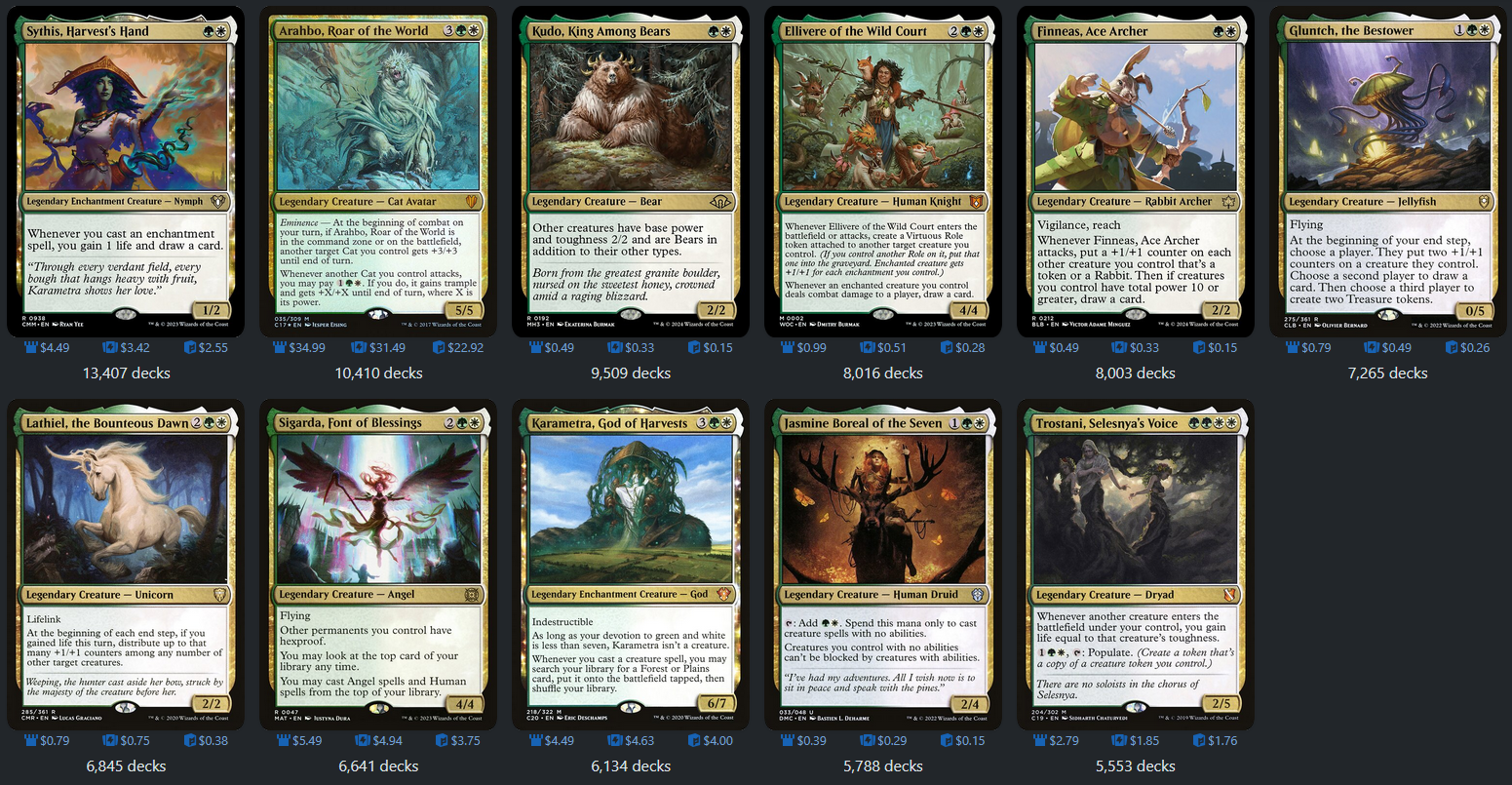
Two Enchantress commanders (three if you count Karametra, God of Harvests, which is frequently played as such), two Kindred commanders, and several commanders representing a combination of tokens, +1/+1 counters, and a slight hint of lifegain. These commanders are some of the best-in-class for each of their respective strategies, and scrolling down doesn’t reveal any hefty competition. Sythis, Harvest’s Hand is arguably the most competitive Enchantress commander ever printed and will likely remain as such for a long time, and it’s tough to argue against Finneas, Ace Archer and Trostani, Selesnya’s Voice as the strongest commanders for different flavors of token production. The problem is, it’s not like you’re looking at Izzet — there are at least a few interesting spins on Spellslinger to come out of recent sets, and some other interesting one-off cases like Zndrsplt, Eye of Wisdom partnered with Okaun, Eye of Chaos.
Still, I had a set of Guilds of Ravnica Guild Kits basics from the Selesnya deck gathering dust, and when it comes to excuses to build new Magic decks, I take just about anything I can get. I didn’t want to let the lack of interesting choices deter me, so I set about trying to come up with an interesting take on a well-established theme, and Dyadrine, Synthesis Amalgam was just the robot I ended up using for my purposes. It’s a less powerful spin on token generation and +1/+1 counters, but the friendly-looking (if a little morose in appearance) Construct still felt like a meaningful signpost for what the deck wants to achieve.
March of the (tiny) Machines
As a Bracket 2 deck, I aimed for this decklist to skew towards being affordable and functional. Though it's by no means a deck with a specific budget in mind, I find that constraining individual card price is often a good method to keep a deck's power level in check.
While the construction of this deck is somewhat unconventional, the strategy is still familiar. The plan is simple: flood the board with tokens — ideally artifact creatures — and buff them up with as many +1/+1 counters as possible, then swing in for massive damage. In this strategy, Dyadrine is more of a wheel-greaser than a payoff; it provides you with a little bit of card draw and one token per turn at the cost of some counters peeled off of creatures. There will be so many counters on your board, however, that this cost is pretty negligible. I also wanted to build for a lower power level, since I’ve mostly been focused on my more powerful Bracket 3 brews, so this deck has a slower, grindier gameplan that would feel comfortable at Bracket 2 tables.

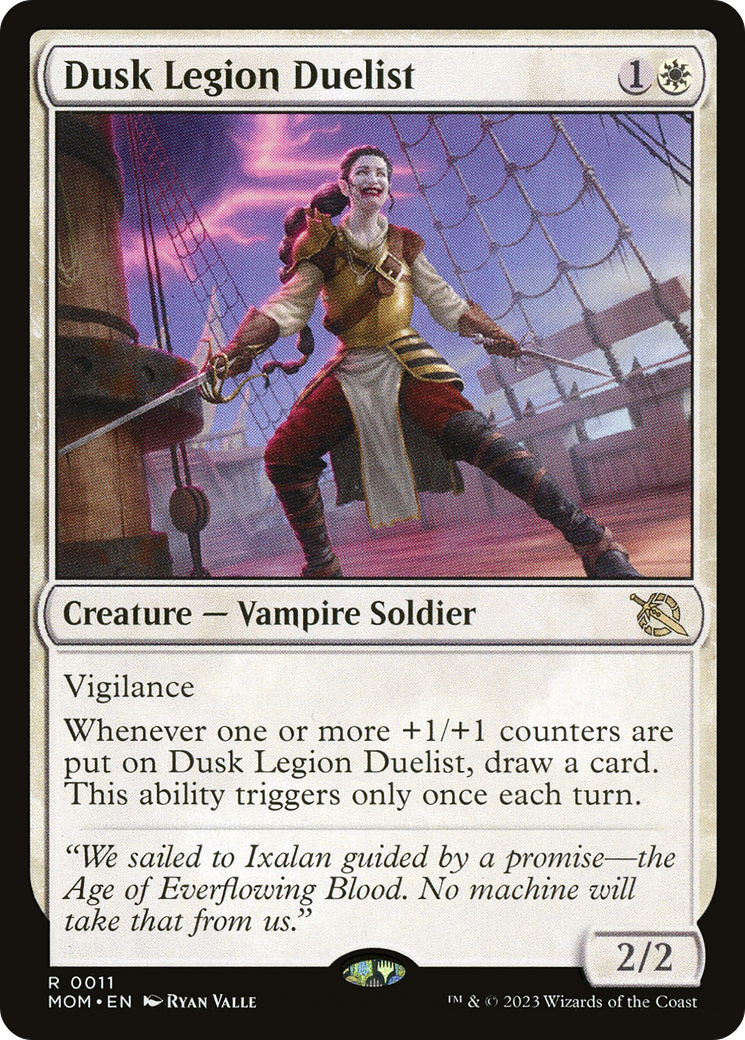

To start out, the deck needs to put bodies on the board and inject them with some +1/+1 counters so Dyadrine can begin production of Robots. You want to aim for lower-cost creatures, since your commander specifies two creatures as counter donors for its trigger. Notably, the creatures that are stripped of counters do not have to be the ones attacking, so you can pretty easily put down durdly creatures like Gala Greeters or Dusk Legion Duelist which will slowly accumulate counters over time or provide additional value.
Hangarback Walker can certainly fill the role of early board presence, and it presents a nice blocker that threatens further token generation. It can also put counters onto itself independently, which can be important if you’re struggling to find some of the other counter generators in the deck. Don’t forget that Dyadrine can also remove counters from itself if you’re in a pinch, but you still need to have at least one other creature with counters on it as well.
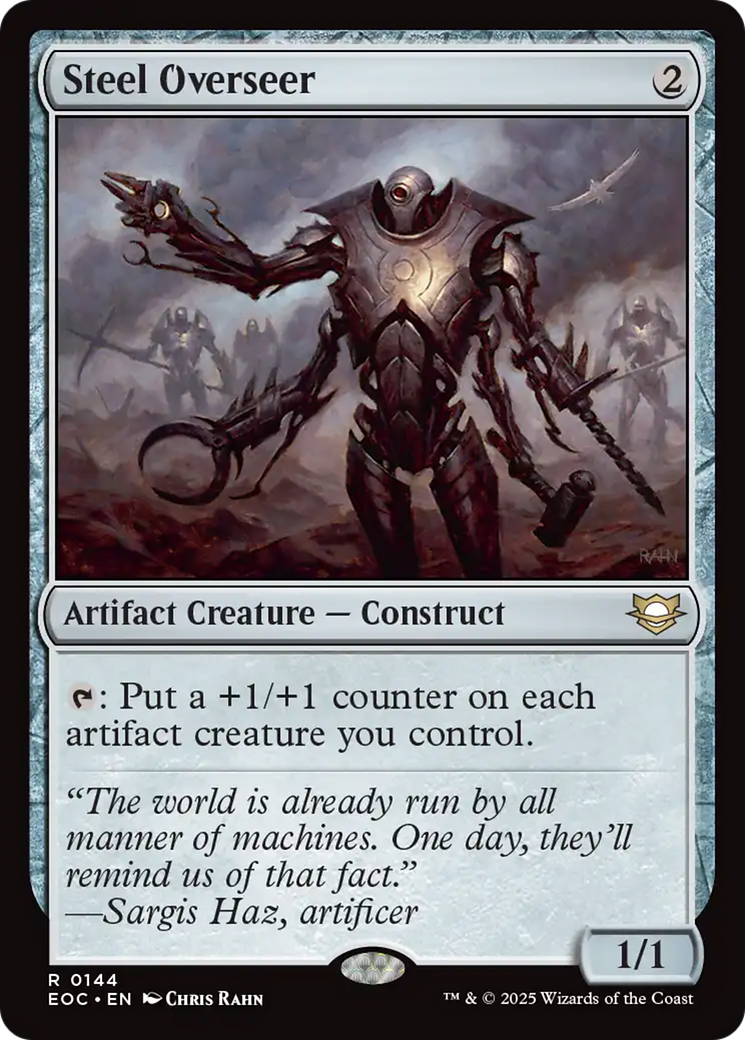
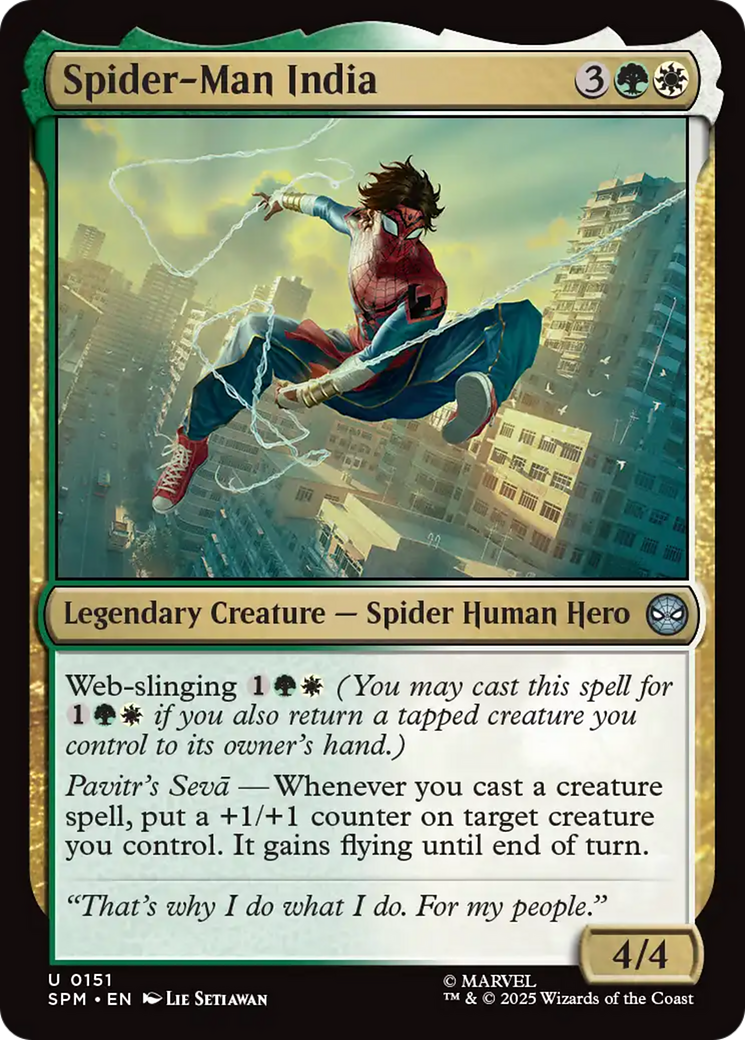
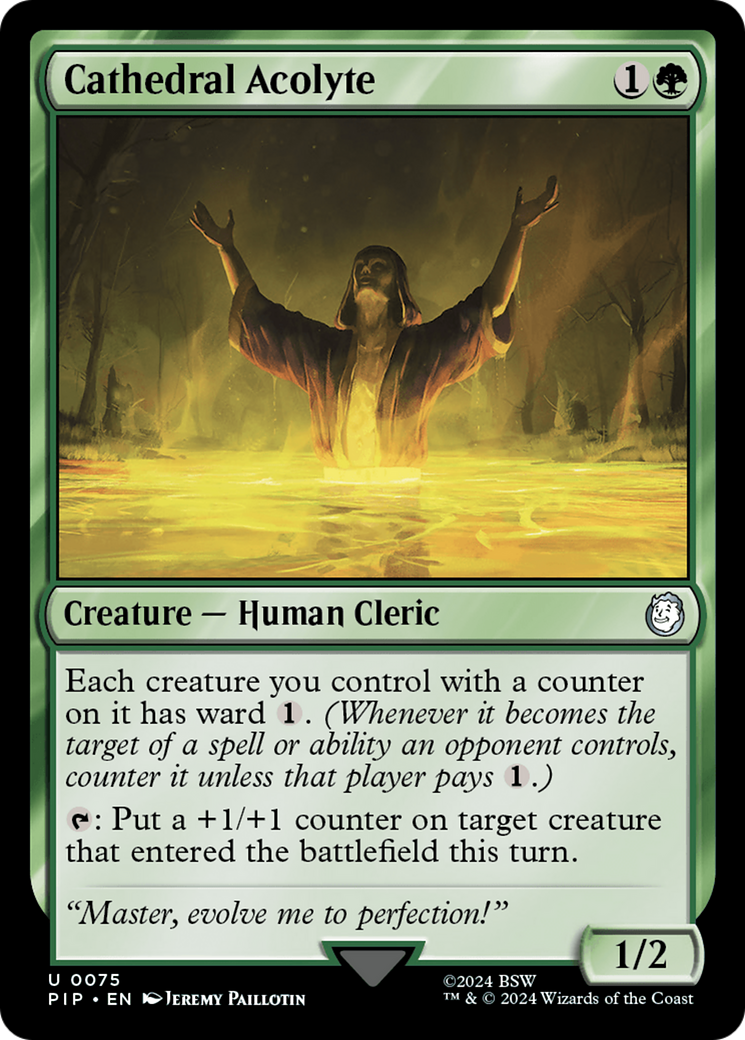
Once you’ve got creatures on board, you’ll need a way to buff them up so Dyadrine can produce more robots. I’ve been playing a lot of Satisfactory, and something about stripping machines for parts by removing counters off of creatures, creating Robot tokens who then receive upgrades of their own, feels like creating an optimized production line. The sequential gameplay blueprint is mechanized, efficient, and sleek.
Steel Overseer can produce a huge number of counters once you’ve produced a sufficient amount of Robots, and Spider-Man India provides extra value for each creature you cast by continuing to retrofit your mechanical monsters. It even has the benefit of granting flying to creatures that receive its counters, which makes for a safer attack. Cathedral Acolyte can only buff one creature per turn, but it provides a layer of protection by granting all of your be-countered creatures ward 1.
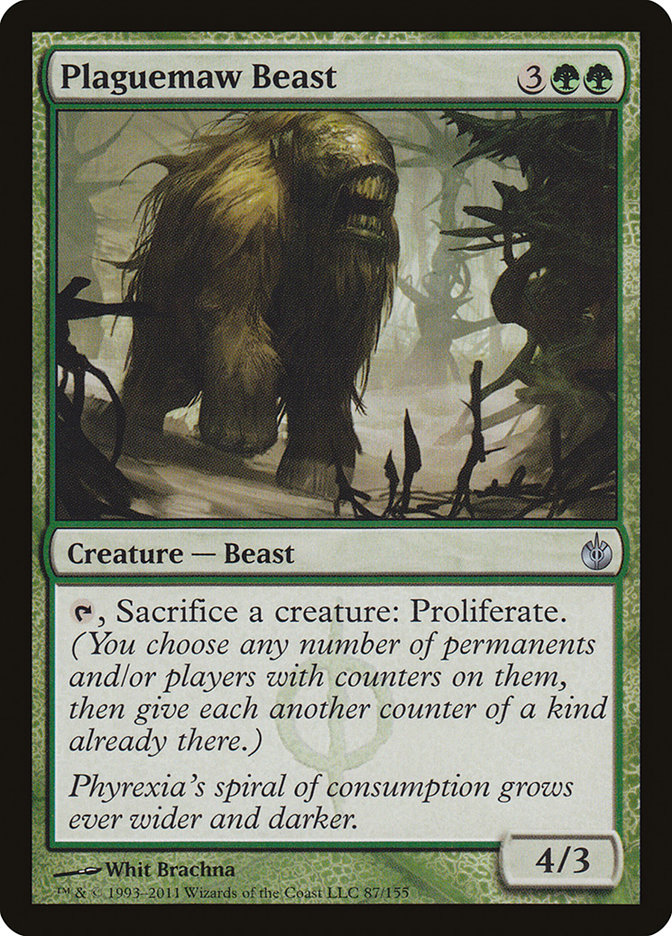
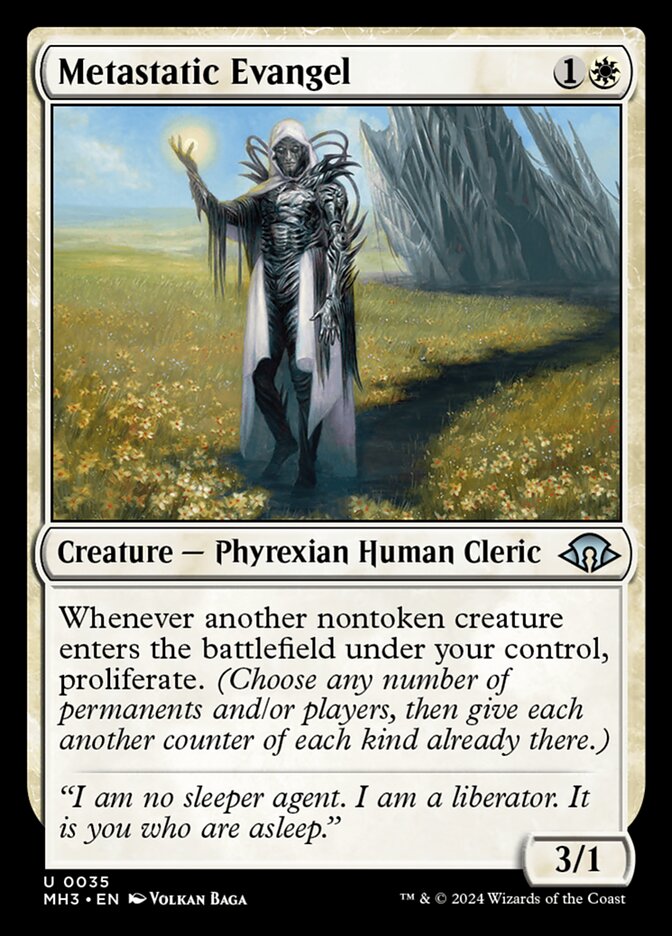
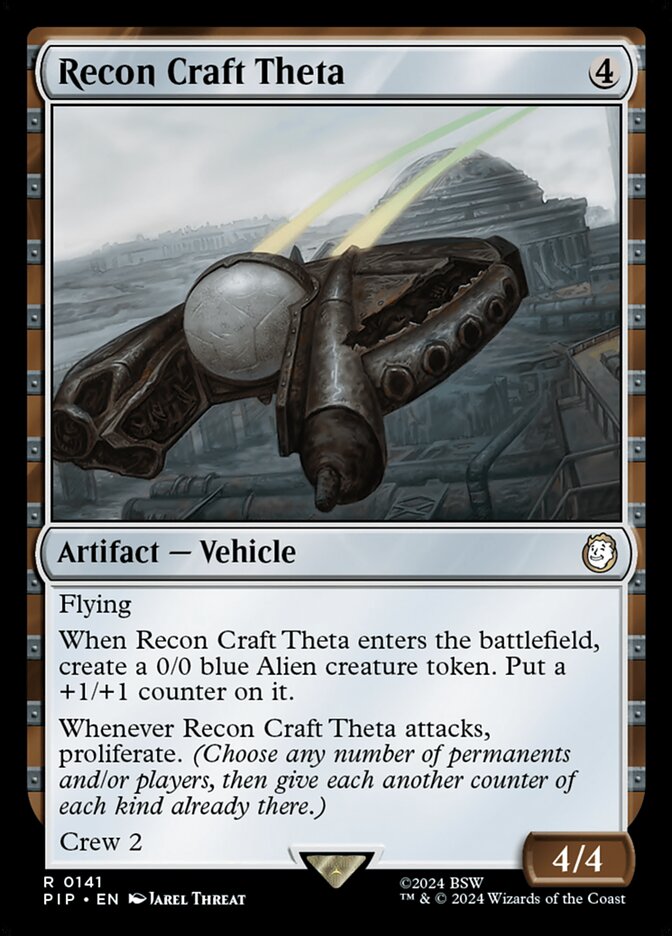
Proliferation helps to pay back some of the counters that Dyadrine strips from your creatures for Robot production, and each of these creatures provides some way of proliferating at least once to keep the snowball rolling down the hill. Plaguemaw Beast recycles Robot tokens for spare parts (a.k.a. counters), while Metastatic Evangel rewards you for continuing to cast creatures from the 37 available in this decklist. As a vehicle, Recon Craft Theta has some dastardly synergies with some of the other cards in this deck, and is an evasive threat with which to proliferate your counters.

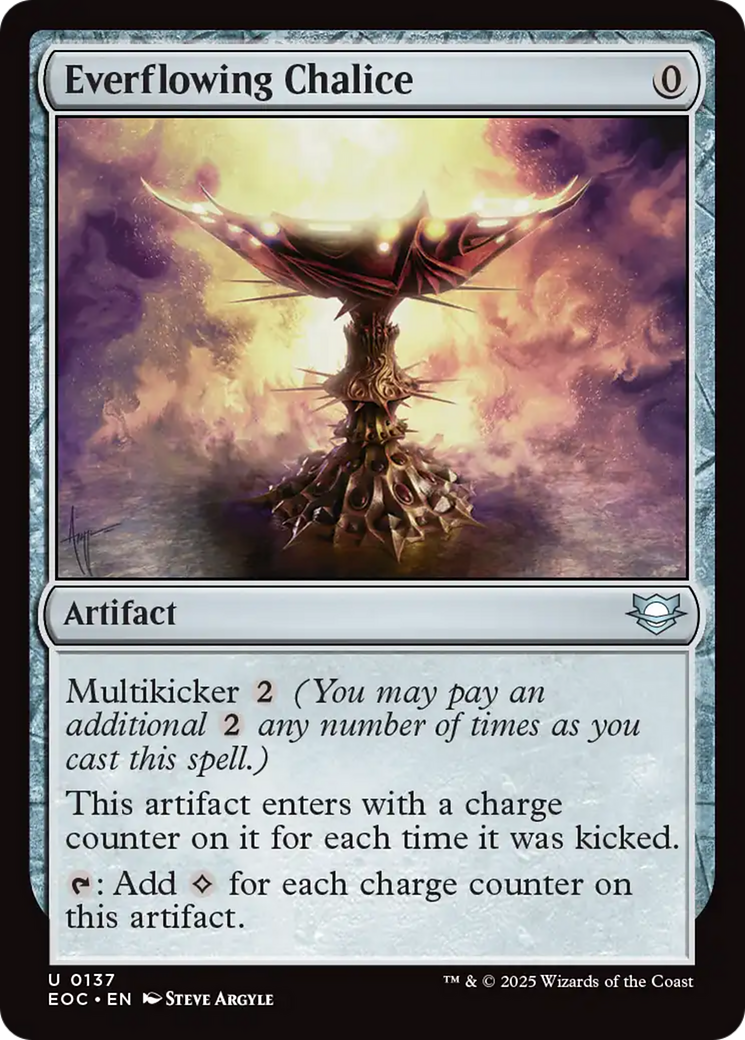
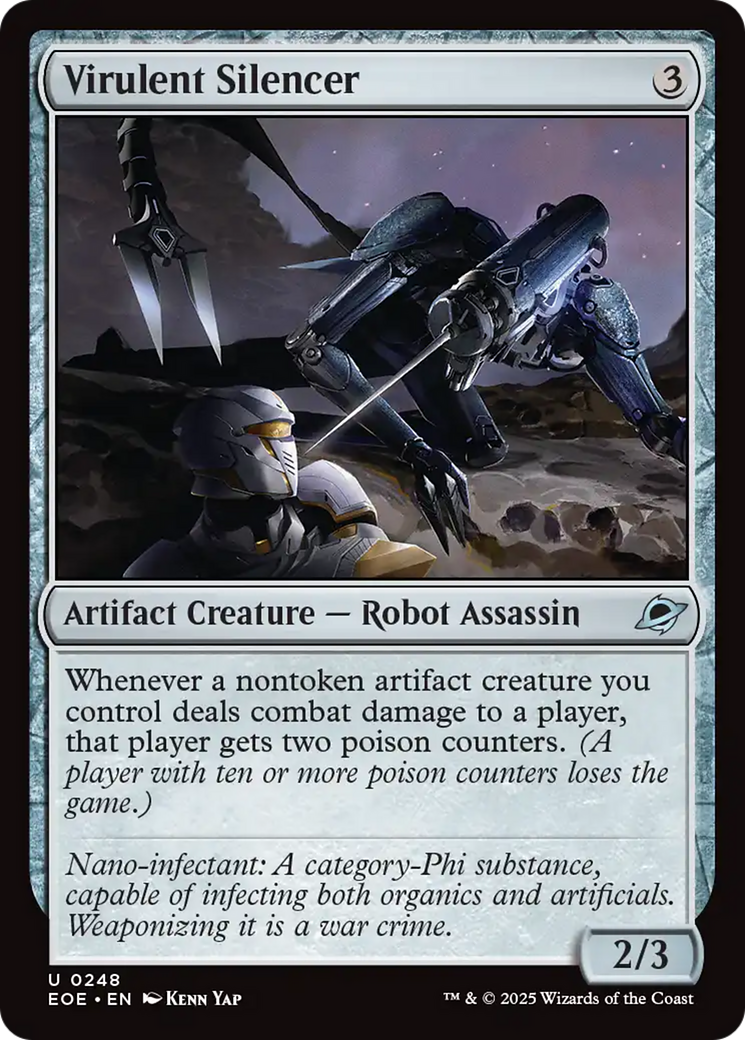
On the topic of proliferation, there are several cards in the deck that don’t deal with +1/+1 counters but are happy to be proliferated. Astral Cornucopia and Everflowing Chalice are mainstays of many different proliferate decks, and each of them can create a massive return on investment even if they start at just a single charge counter apiece. Virulent Silencer, on the other hand, is one of the aforementioned dastardly synergies. While you can’t infect your opponents with Dyadrine’s Robot helpers, artifact creatures like the alien spaceship or Threefold Thunderhulk can sneak some poison counters onto your opponents, and from there proliferation can help deal with pesky lifegain players.
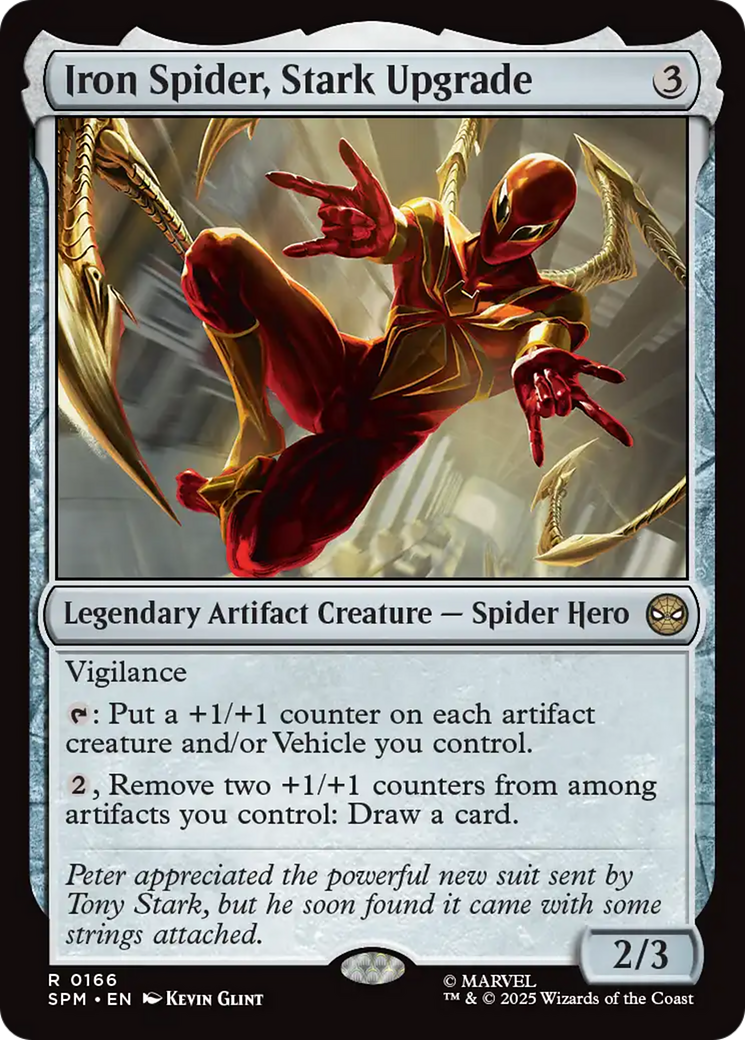
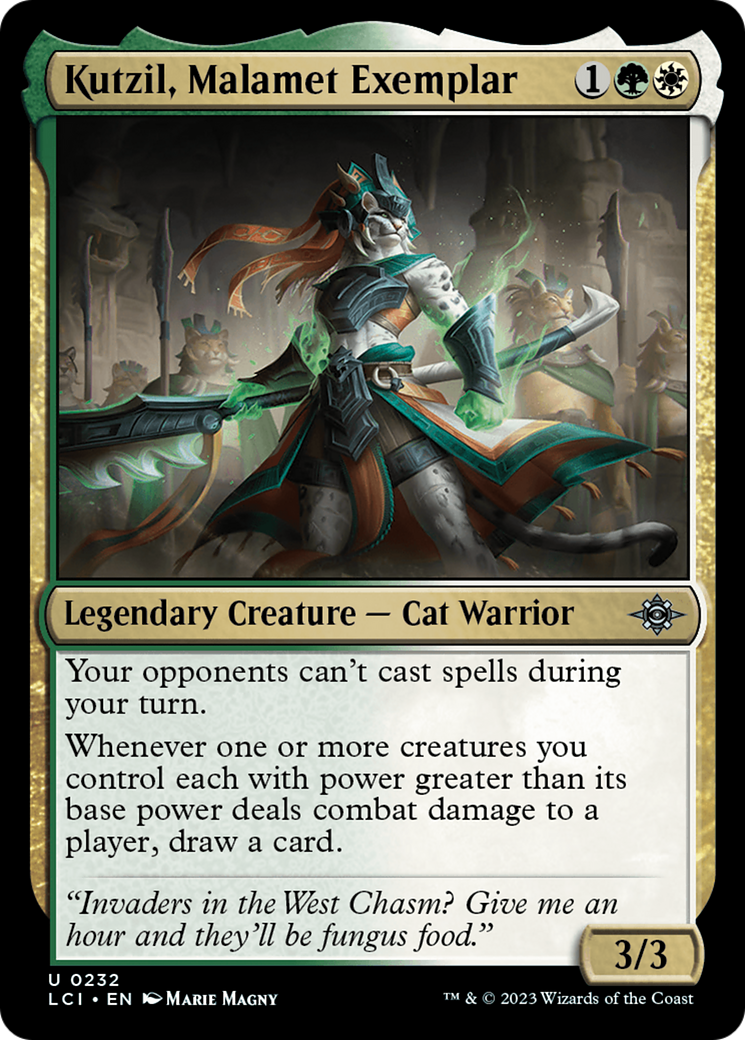
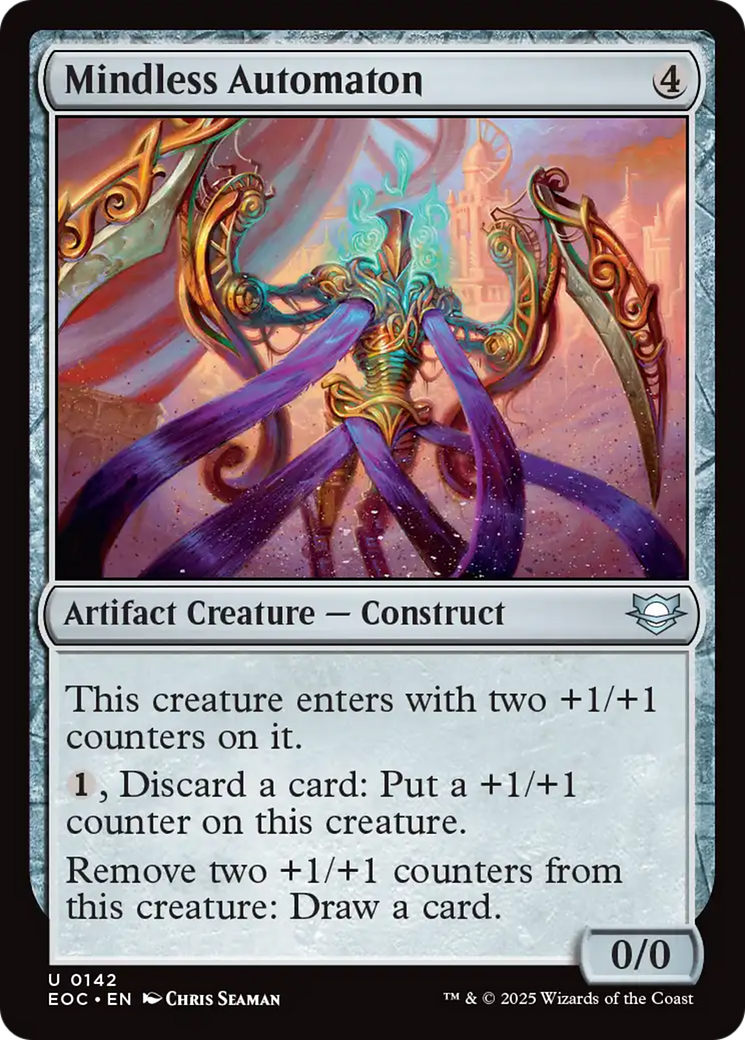
Counter proliferation can help out with your card draw needs as well. Iron Spider, Stark Upgrade and Mindless Automaton exchange counters for cards, with Mindless Automaton being capable of drawing multiple cards without the need to spend mana. Kutzil, Malamet Exemplar, on the other hand, rewards you for connecting with opponents' faces with creatures bearing a +1/+1 counter. It also stops your opponents’ ability to meddle with your attacks, or countering any of your spells, by preventing them from casting spells on your turn.
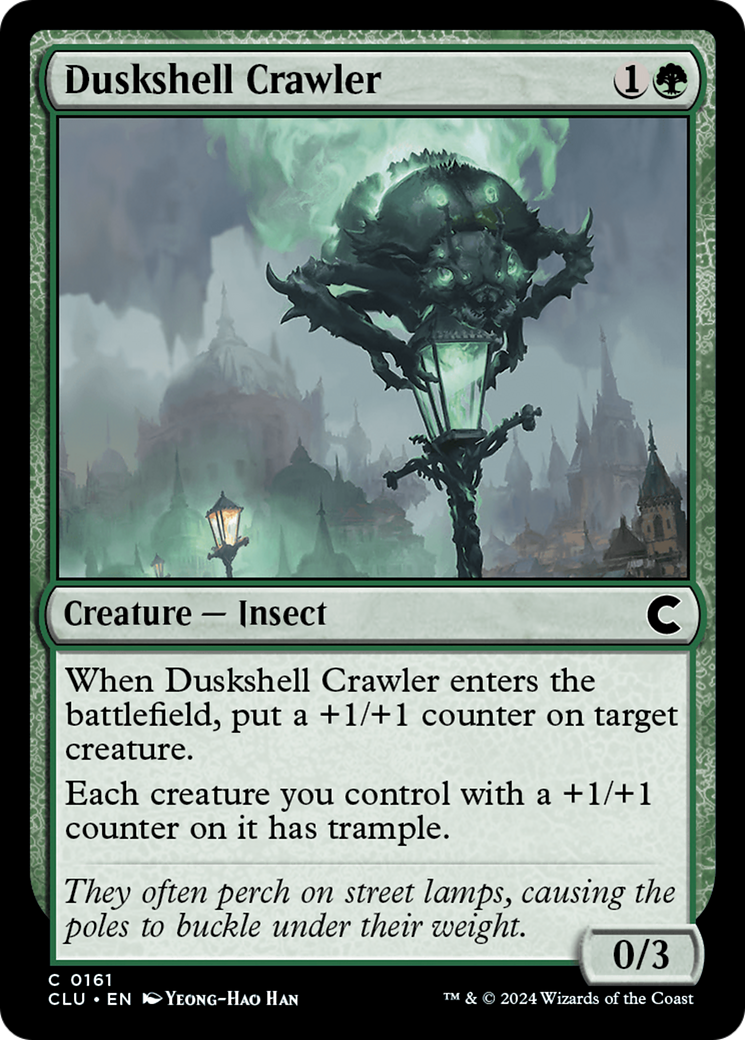
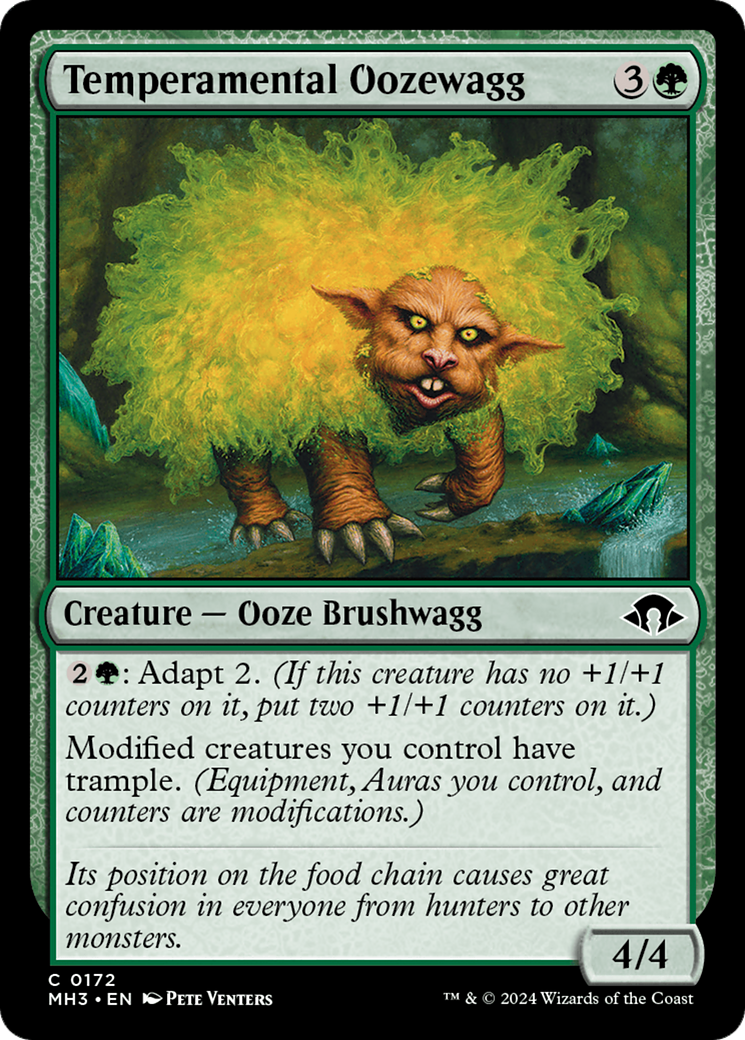
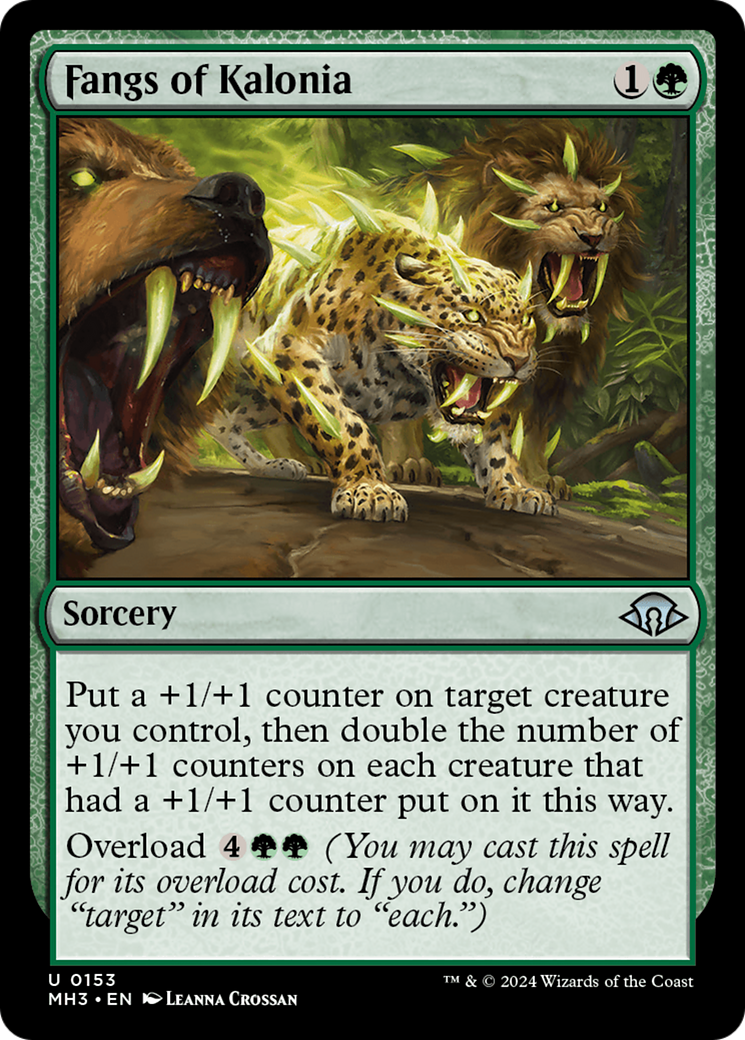
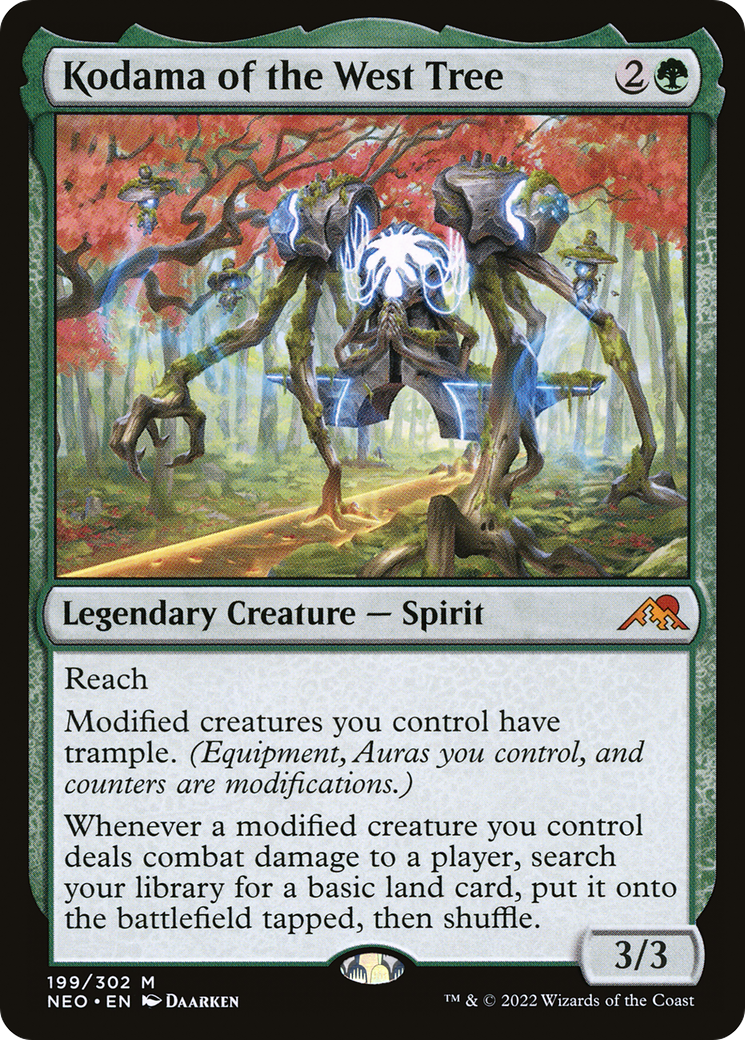
While this deck is aimed at Bracket 2, the game still has to end eventually. Luckily, combat damage win conditions are in plentiful supply in green, and these options synergize specifically with your +1/+1 counter theme. Emil, Vastlands Roamer and Temperamental Oozewagg each grant trample to your entire board of modified creatures. With these creatures to grant trample and Fangs of Kalonia to create a staggering number of counters on your already-endowed creatures, your board will overshadow the rest of the battlefield and smash faces for a huge, stompy win.
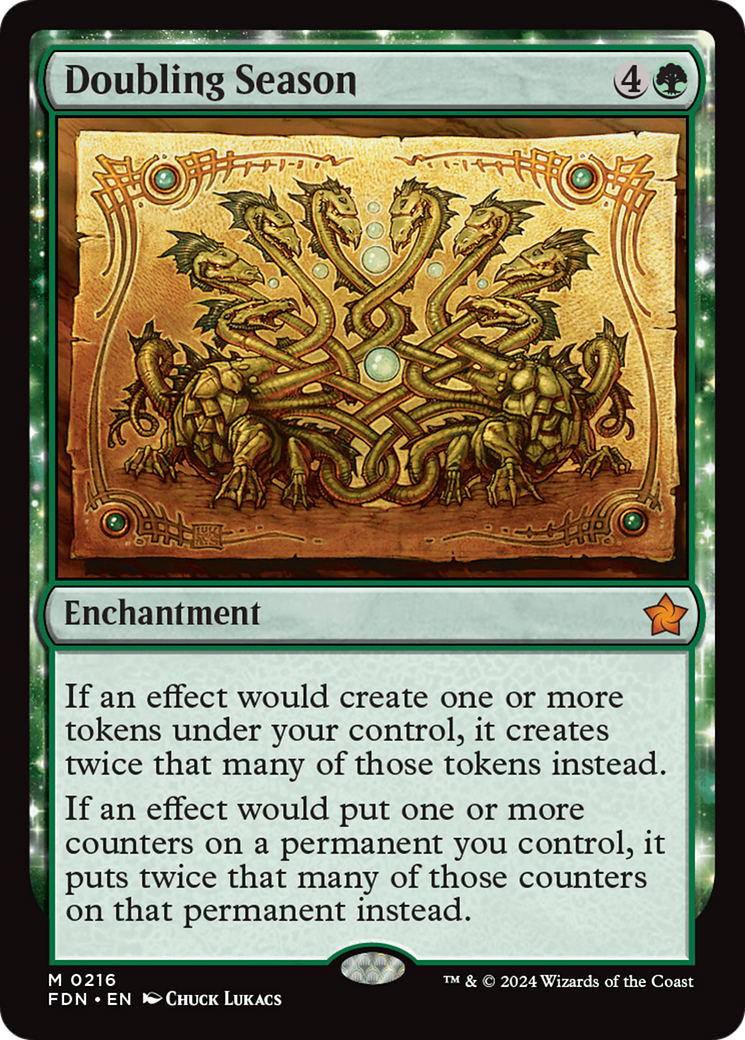
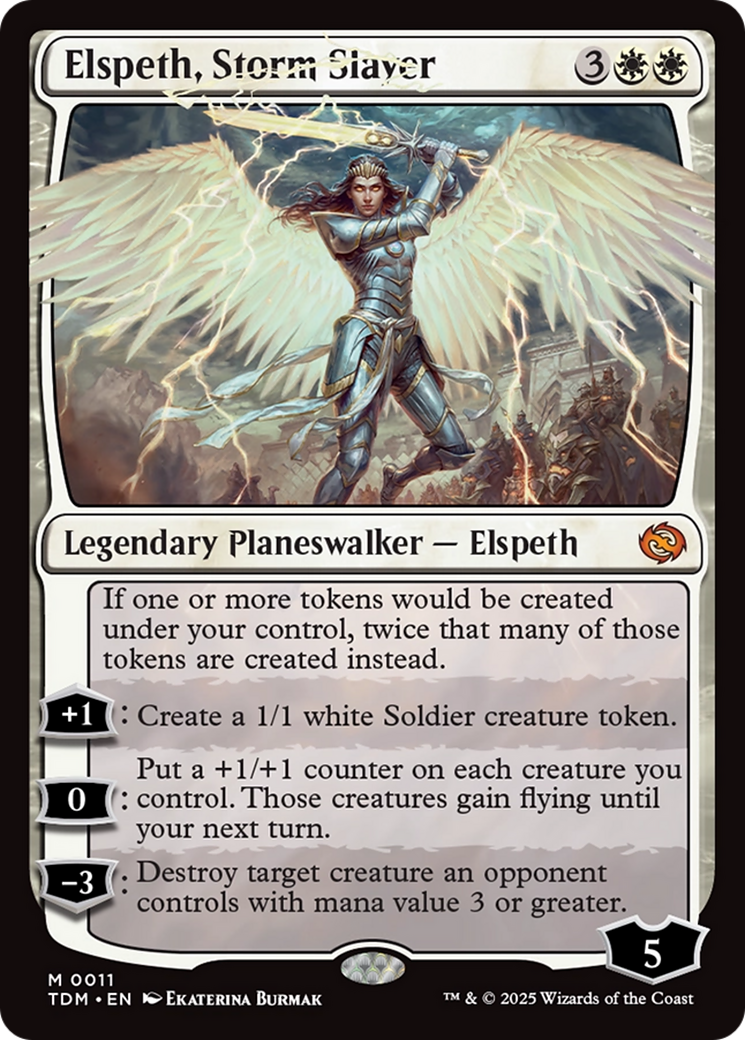
If you like the premise of the deck but have a bigger wallet than me (or you just like to take advantage of playing Commander on free platforms online), there’s a whole world of possibilities out there for you to explore in terms of big-budget upgrades. Token and counter multipliers like Doubling Season, Ojer Taq, Deepest Foundation, and Mondrak, Glory Indominus can take Dyadrine’s triggered ability from okay-at-best to seriously threatening. +1/+1 counter finishers like Bristly Bill, Spiny Sower or engines like Ouroboroid can massively speed up the clock this deck presents, and a special shoutout to Triumph of the Hordes for being another nasty way to put poison counters on your opponents.

If this deck tech has grabbed your interest at all, feel free to boot it up on EDHLAB’s Multiplayer platform and have a chill pod at Bracket 2 by favoriting this deck list. I hope you enjoyed this creation I came up with!
What do you usually do when you can’t find an interesting commander for a color pair you’re struggling with? What are your favorite ways to spice up old and tired-out mechanics like +1/+1 counters or tokens in colors that provide strong support? Hit me up @shadedfall on our Discord server if you’d like to chat about it!
The Best Way to Play Commander Online
For the easiest way to play Commander online with your friends or meet new opponents on the field of battle, use EDHLAB.gg's Play Online feature!
EDHLAB maintains a strict policy against the use of generative AI in the production of creative media. All blog articles and images hosted by EDHLAB are made without the use of generative AI.