Magic's Old School: Silverquill, the Disputant Deck Tech
Have the last word by copying powerful instants and sorceries.


Each of the new Elder Dragons from Secrets of Strixhaven has an incredibly splashy effect but they're not new auto-includes for every deck that can run them. They all synergize uniquely with casting instant and sorceries.

The one that landed squarely in my wheelhouse is Silverquill's very own Silverquill, the Disputant (I'll refer to the color pairing as Orzhov and the legendary Elder Dragon as Silverquill for the rest of the article for clarity).
I started playing in the mid-'90s, and I've always wanted to relive the dream of stripping an opponent's hand with the likes of Hypnotic Specter and Hymn to Tourach while controlling the flow of the game with powerful white sorceries like Armageddon and Balance. Early Magic was defined by powerful spells, and bringing your opponent's life total to zero was handled by the few playable creatures in the format. Magic design has drastically changed since then, and some of the strongest effects ever printed are attached to creatures. Relegating these effects to creature abilities makes them easier to remove from play, but also gives us little reason to ever run substandard noncreature threats.
Silverquill gives us an opportunity to show off the best instant and sorceries in the Orzhov color pairing. There is, of course, some fine print in the deal.
Structuring the Argument
Orzhov's colors are best known for removal: hand removal, land removal, creature removal, one by one, or all at once. The problem we're presented with is this: what's so valuable to cast and copy that we will sculpt our whole deck around it? I elected, naturally, for sorceries that would end the game on the spot.
Here are the components we need for this deck to reach its goal:
- Fodder, usually tokens, for Silverquill's casualty 1 ability
- Ramp to play Silverquill and follow up with a spell immediately, or to hold up protection
- One-sided removal to stabilize the board while we find our wincon
- Protection spells to keep Silverquill alive
- Finisher spells
- Synergy pieces
We'll cover each of these bases in order, then look at some upgrades and sidegrades to better fit your budget, or lack thereof (if, for example, you play online for free).
Fodder
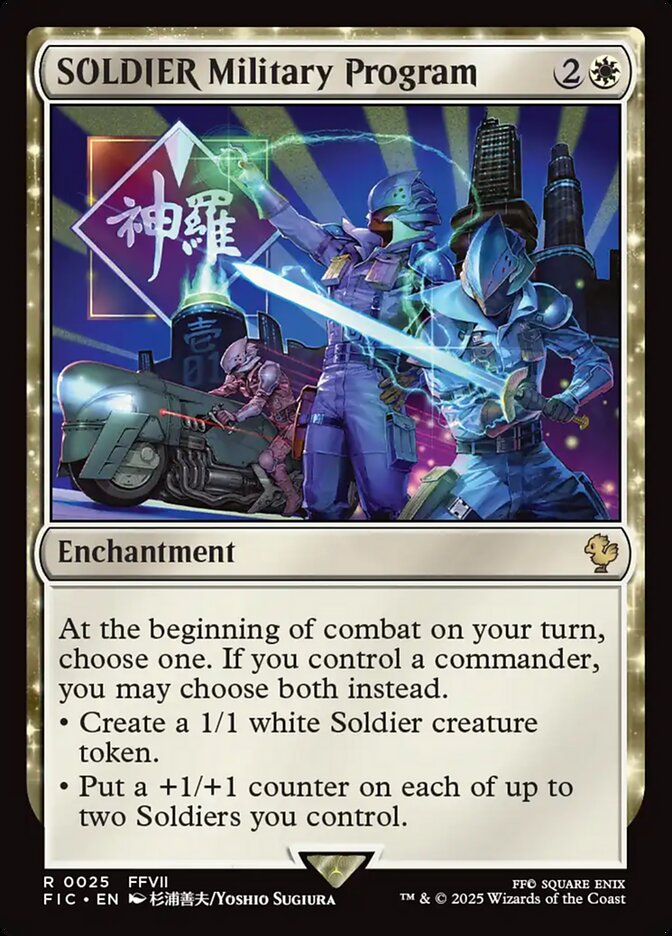
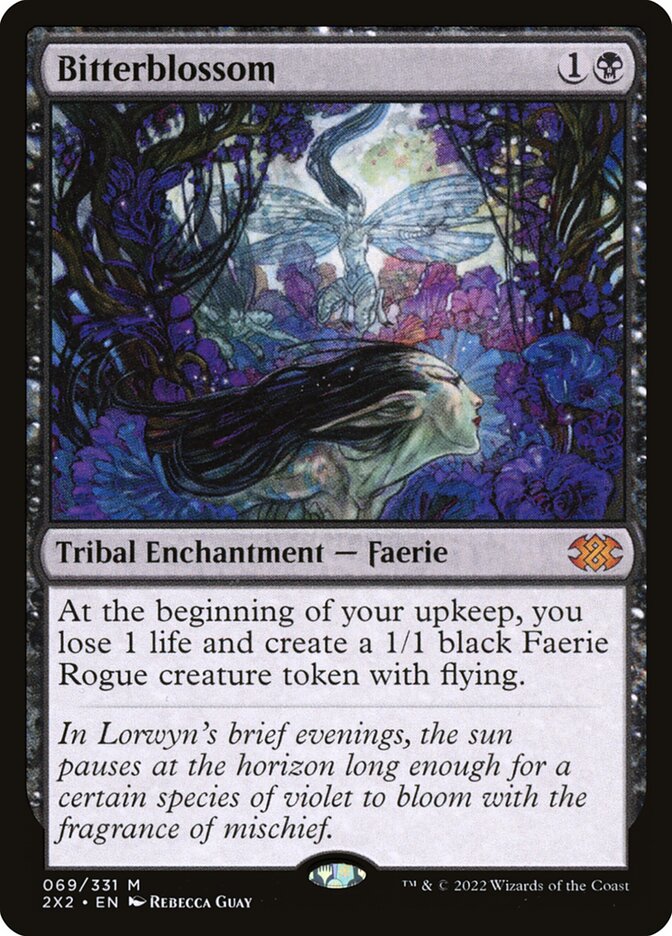
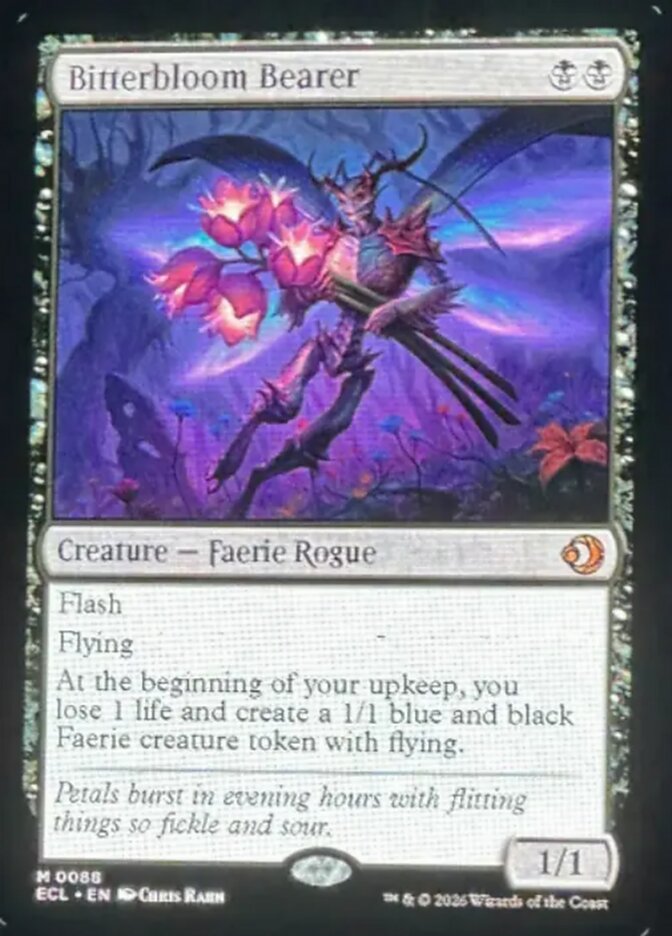
The best kind of fodder-generating spell is the kind that brings a nearly endless supply. Bitterblossom and SOLDIER Military Program generate one token per turn, so we should get them on the battlefield as early as possible. This sets up later turns that look something like this:
- Cast Culling the Weak, sacrificing a creature
- Sacrifice a creature to Silverquill, the Disputant's casualty cost to copy it
- Cast Breach the Multiverse
- Sacrifice a creature to Silverquill, the Disputant's casualty cost to copy it
The result of this sequence is each player milling 10 cards, choosing the best creature or planeswalker from each graveyard and putting them on our battlefield, then doing it a second time. Afterwards, we'll have a board state where we're almost assured to win in the next couple of turns, having plucked the most powerful threats from the top 20 cards of everyone's decks.
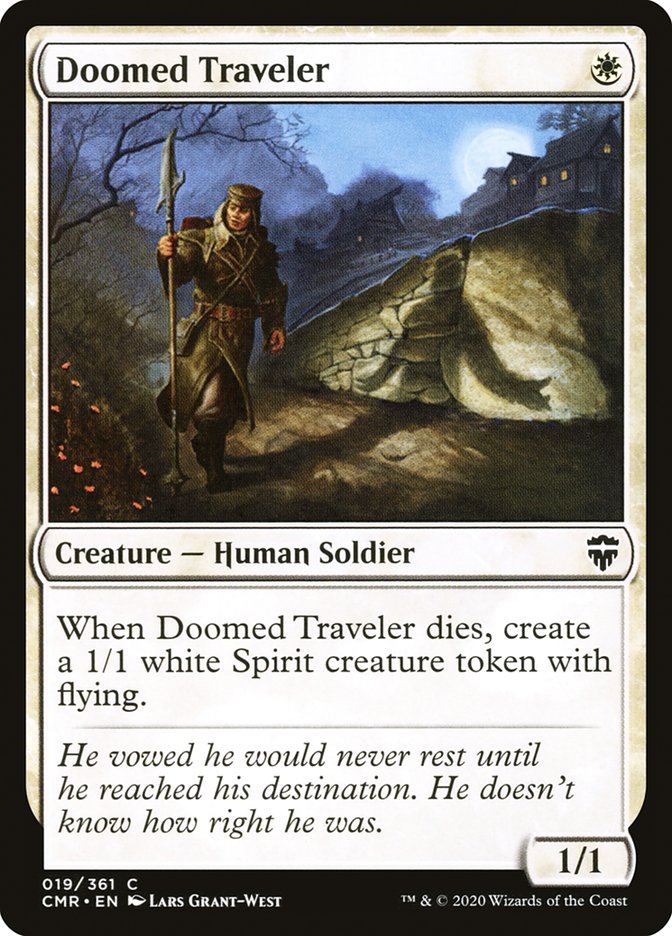
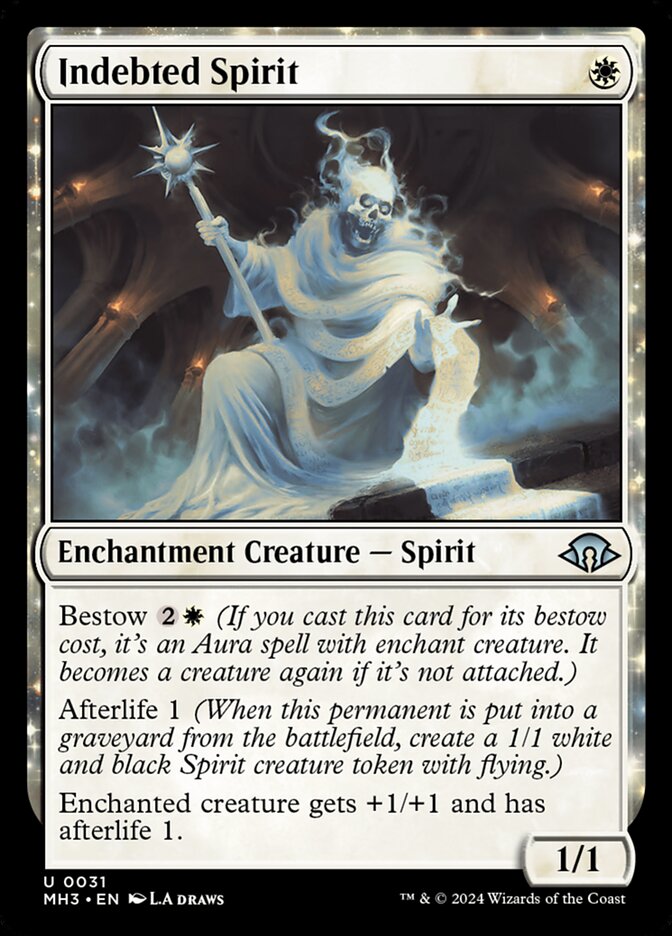
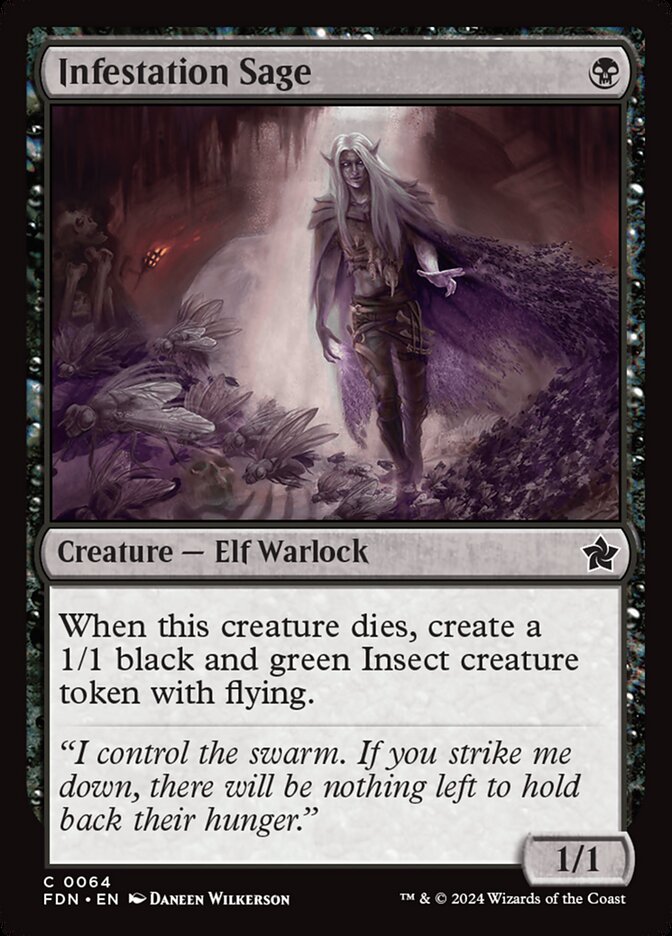
The second-best kind of fodder is cheap fodder that can be played just before casting a high-impact instant or sorcery. If you cast one of these on an early turn, you set up two possible sacrifices on future turns. They also fuel our early card draw from sources like Village Rites and Skullclamp and leave a body behind.
Ramp
I include five mana rocks in my list, including the two usual suspects and the heaviest rock of them all, Thran Dynamo. I also include Land Tax, a low-cost, high-reward way to consistently make your land drops. Having been recently reprinted in a preconstructed deck, now is a great time to pick up a copy.

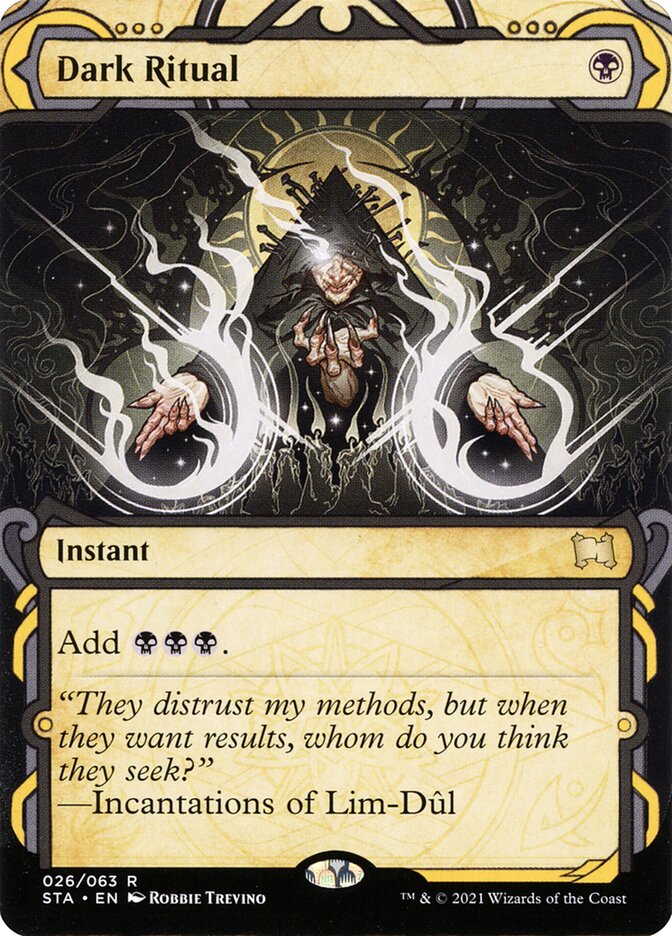
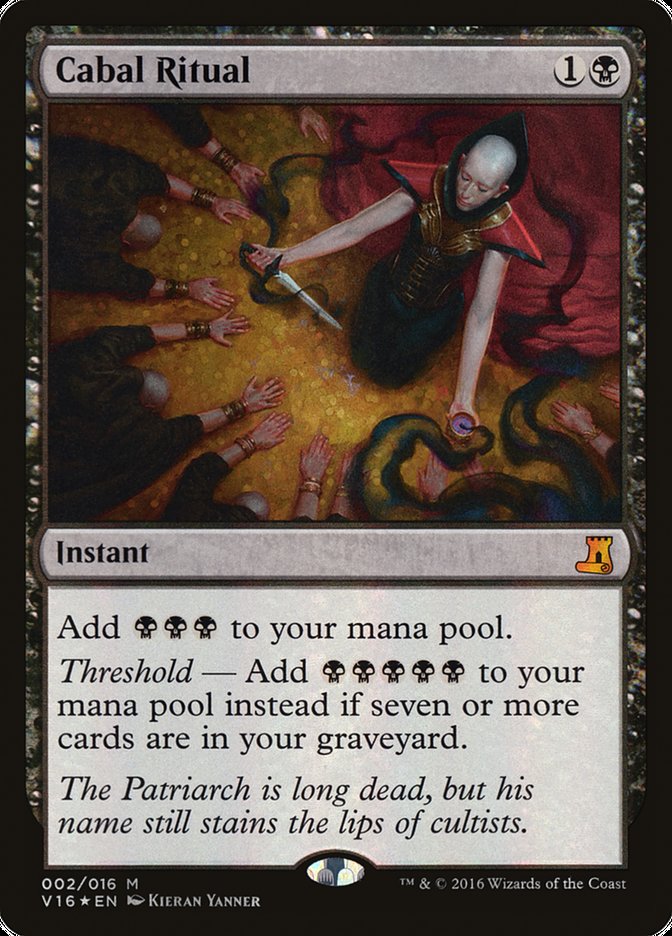
Silverquill's casualty ability makes excellent use of rituals so long as he has fodder with which to copy them. A single Cabal Ritual copied in the late game can net you a total of 10 mana, which is more than enough to cast Breach the Multiverse, or an Exsanguinate for X=8 (which can be doubled to 16 life drained per opponent if you have yet another creature to sacrifice).
Removal

This deck's gameplan is pretty straightforward and your lack of board presence early on will make that evident to your opponents. While you're getting set up to copy an epically powerful spell, they're already pressuring life totals and ramping out big threats, and they might see you accruing cards and correctly assume you're secretly "The Problem" at the table.
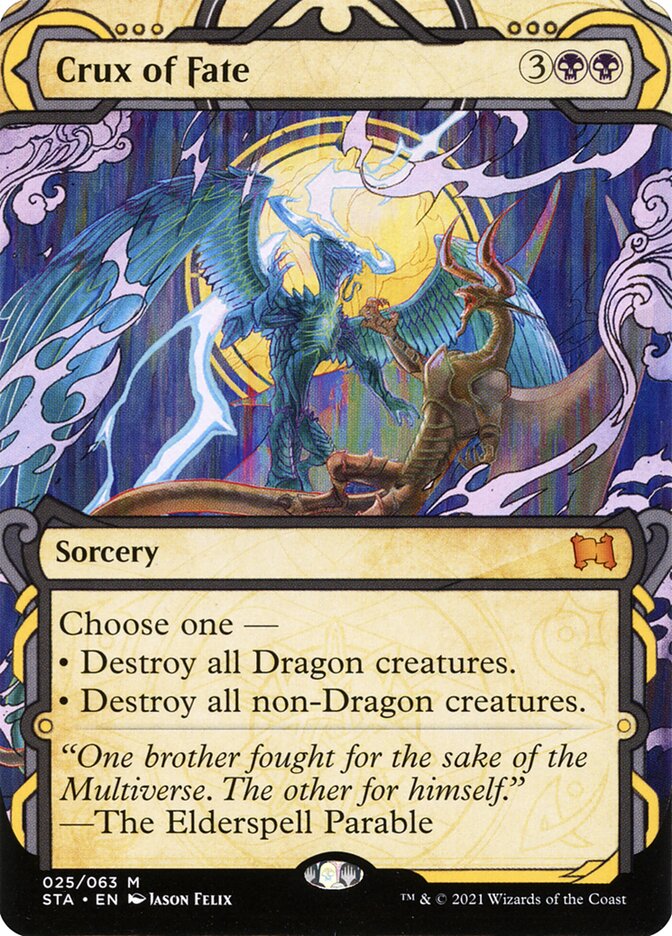
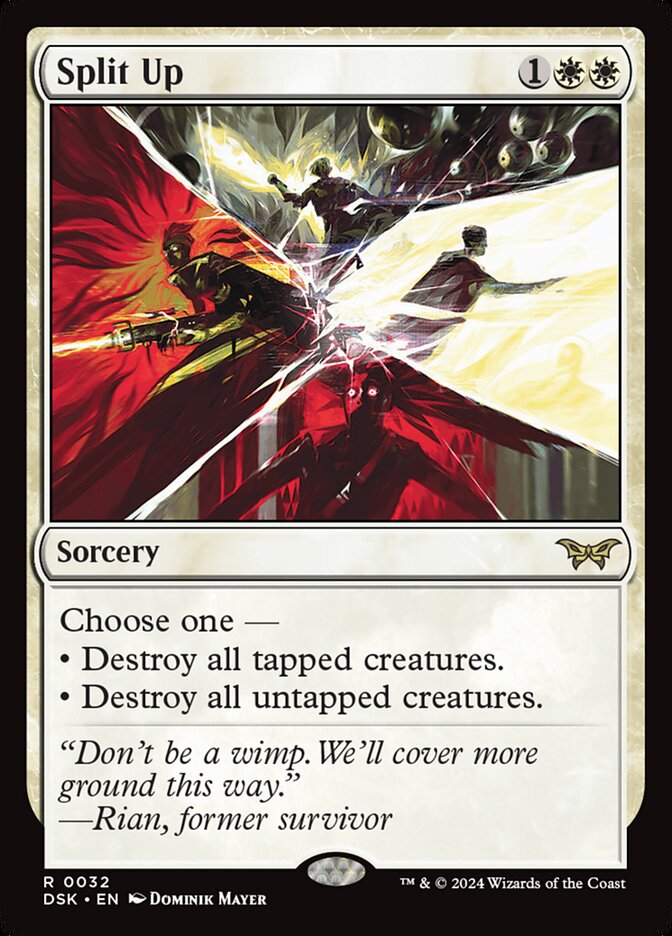
Cards with an additional cost such as Bitter Triumph only need to pay that extra cost once if you copy it with Silverquill's casualty ability. It's a mainstay for many of my black-inclusive decks, and it's even better here. Crux of Fate and Split Up are one-sided board wipes that leave your board mostly intact. Crux of Fate will wipe out any fodder you might have built up, but will keep your commander in play for a bigger and better follow-up turn.
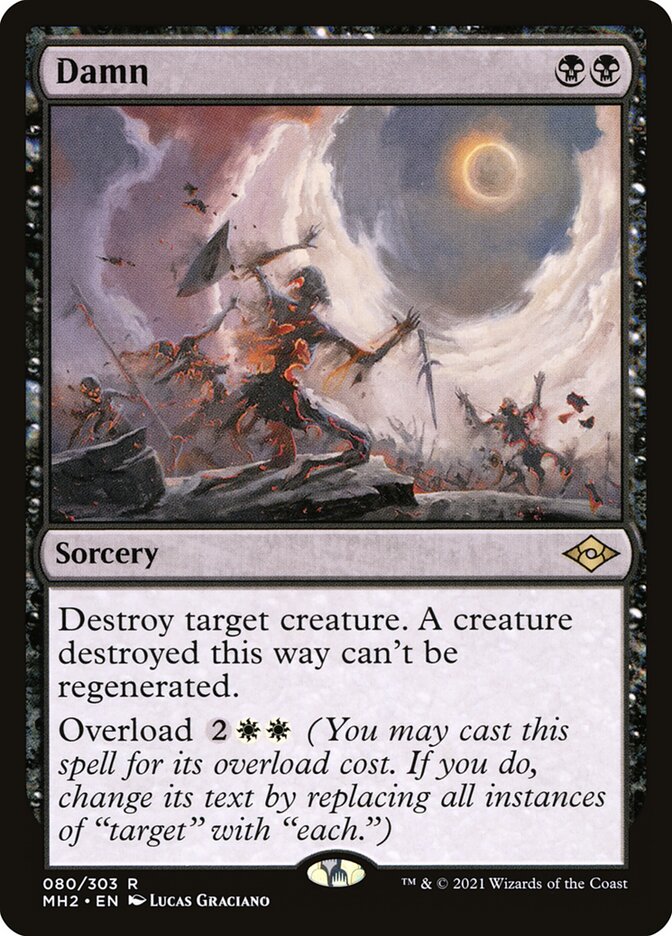
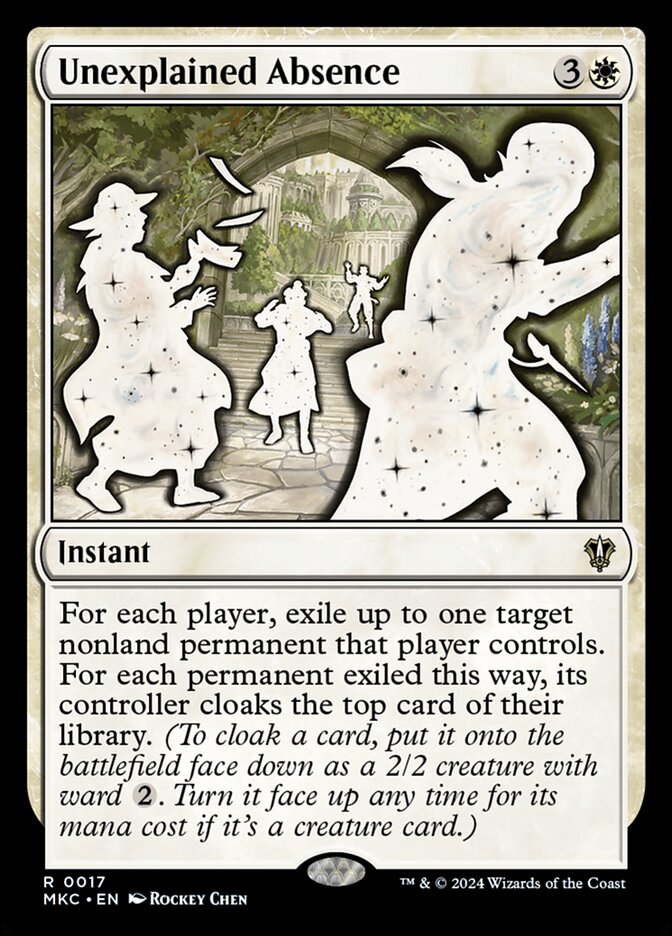

Damn is one of the most flexible creature removal spells in the game. Unexplained Absence scales based on the number of opponents you have and, especially when copied, can replace all their most powerful nonland permanents with unknown 2/2s from the top of their library. Sheoldred's Edict gets more and more pressuring the more you can repeat its effect. Another possible inclusion is Soul Shatter which limits opponents' choice of what to sacrifice even further.
Protection

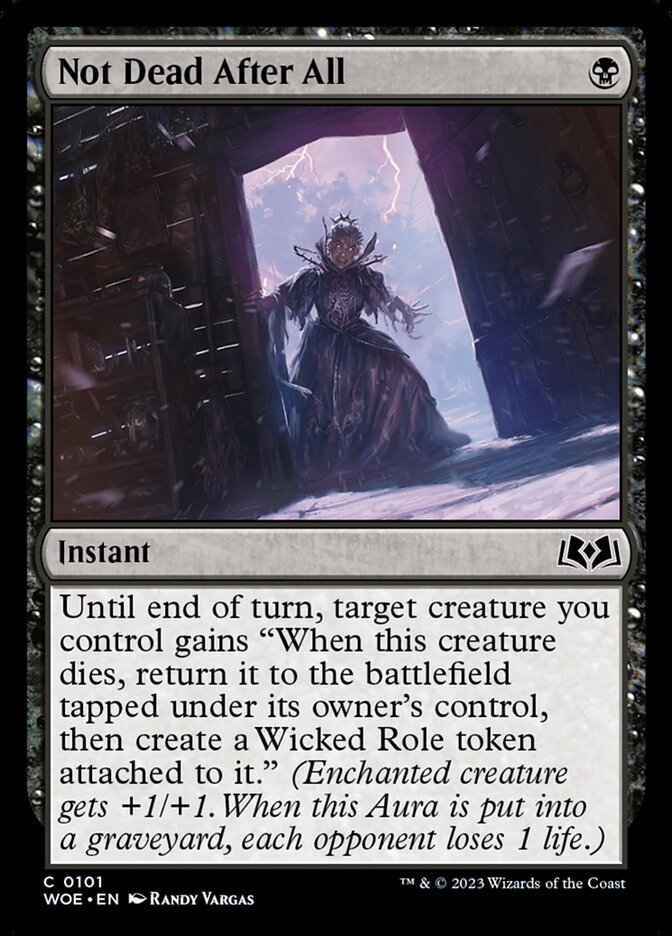
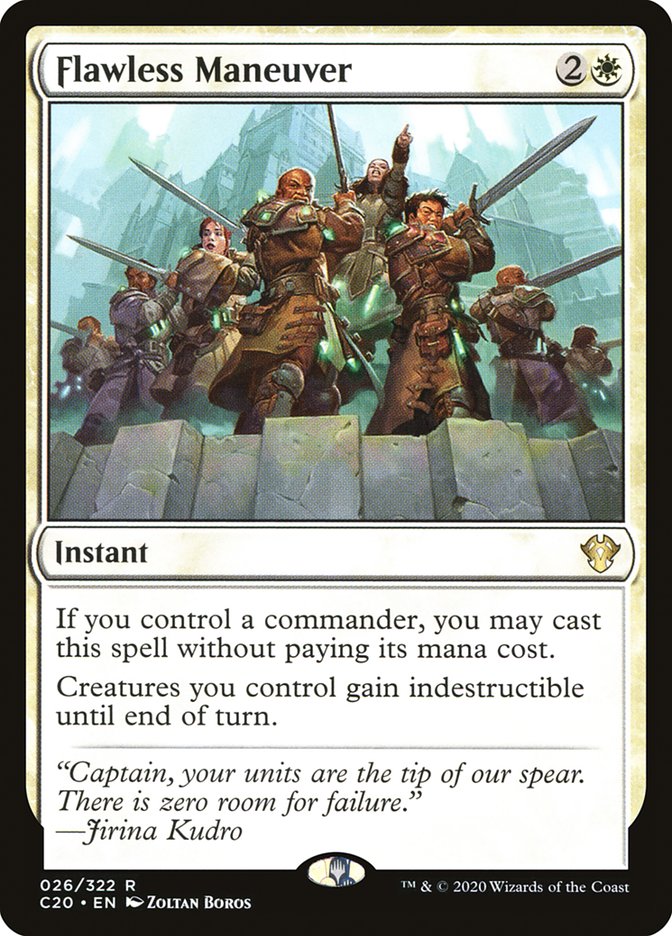
This deck is very commander-centric and we need the commander to survive at least a turn cycle on the board to start benefitting from his uniquely powerful spell-doubling ability. Our late-game haymakers function just as well when you have the lands in play to power them out, but the commander sets that clock a few ticks earlier. Silverquill will often be the only creature worth removing on your board, and you need ways to dodge a couple of bullets.
Loran's Escape, similar to Blacksmith's Skill, is an instant-speed protection spell that will save Silverquill from board wipes and targeted removal alike. Not Dead After All, Undying Malice, and other equivalent cards in black will take the board wipe on the chin and have Silverquill return to the battlefield immediately afterwards. These two forms of protection have their strengths and weaknesses; Not Dead After All will bring Silverquill back from a Toxic Deluge or Black Sun's Zenith, but will do nothing to stop him from being exiled. Loran's Escape stops both targeted removal and board wipes with "destroy" effects, but fails against mass sacrifice removal like Blasphemous Edict, as well as the previously mentioned toughness-reducing board wipes like Toxic Deluge or the extremely rare Flowstone Slide.
Finishers
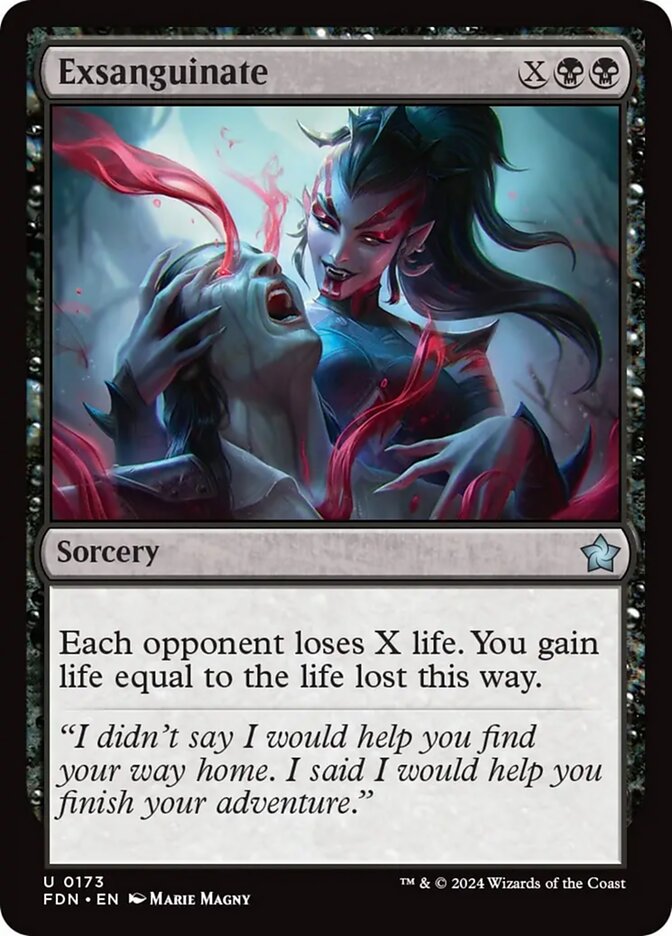
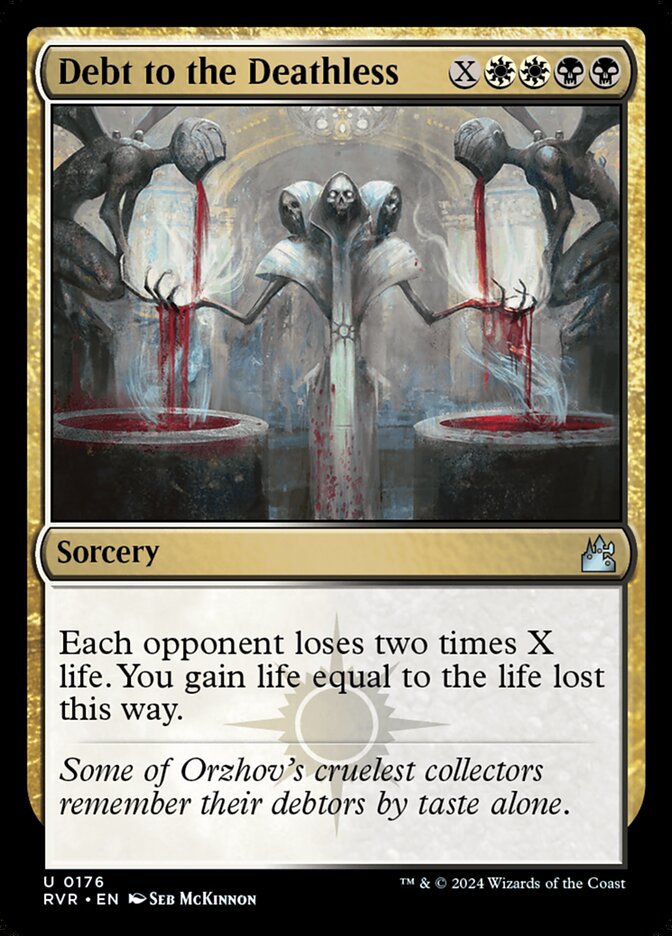
This is what we do all the work for.
With Silverquill's casualty ability, even if an opponent has a counterspell, we still get a copy of the finisher we cast on the stack immediately upon casting (for a deeper dive into casualty's rules, check out the casualty entry on MTG.wiki).
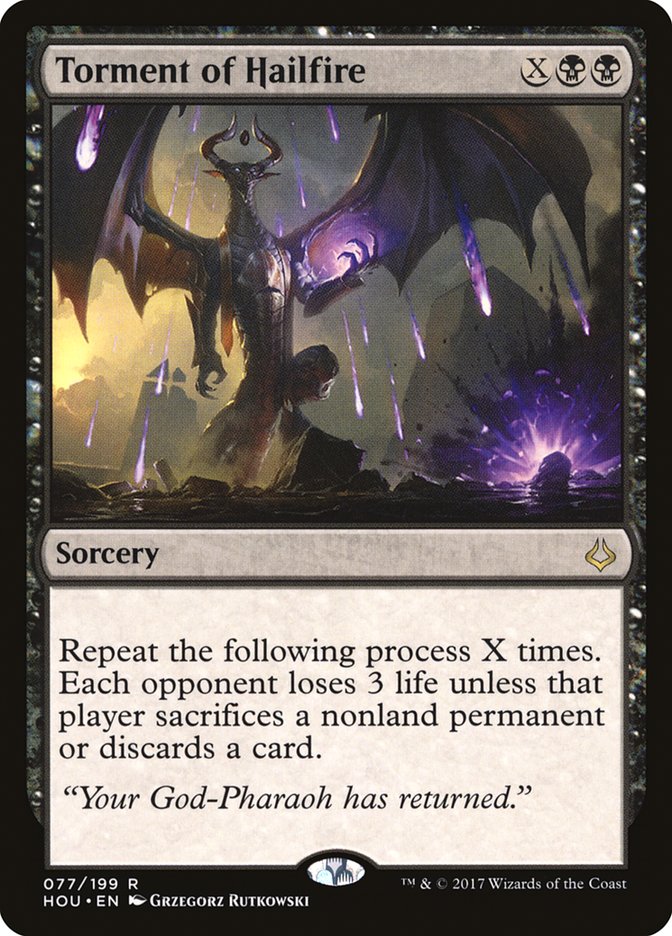
Exsanguinate and Debt to the Deathless refill our life total from whatever our opponents have been doing to us all game and will hopefully inflict enough life loss to bring one or more opponents to zero life. Torment of Hailfire has trouble chewing through the durable board states of go-wide token strategies, but against a deck that doesn't flood its board with nonland tokens, crossing that threshold of X=7 will most often get you into the zone of spending one mana per three life lost.
Powerful Synergies
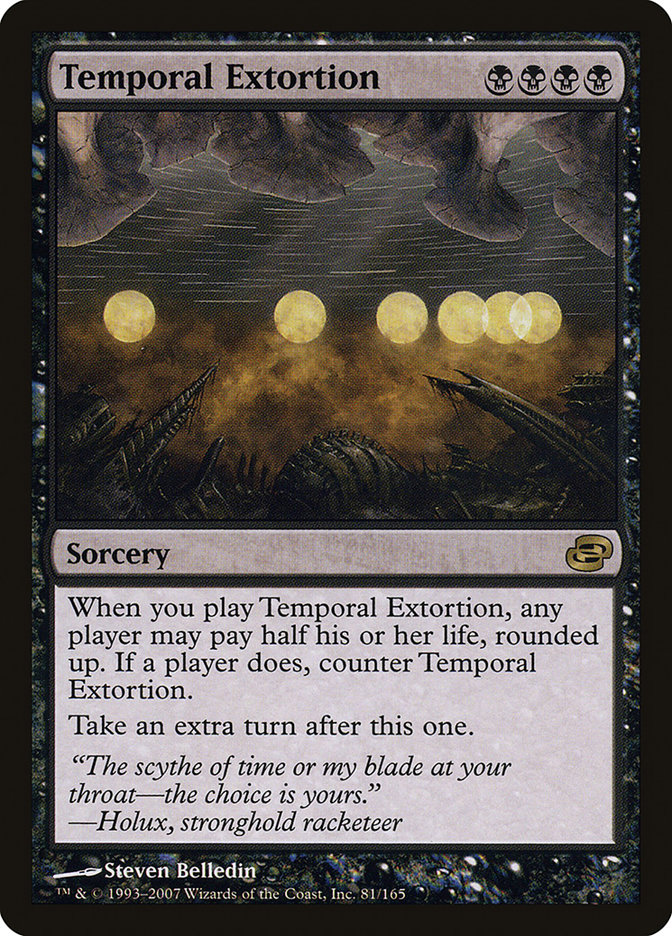
Temporal Extortion is normally one of those cards where the opponents will always choose the option that's the least beneficial to you. Luckily, copying Temporal Extortion takes that option away completely! Temporal Extortion's updated oracle text reads:
When you cast this spell, any player may pay half their life, rounded up. If a player does, counter Temporal Extortion.

Take an extra turn after this one.
Note the important first clause: "When you cast this spell." A copied version of this spell doesn't generate the on-cast trigger that prompts your opponents to respond. It just resolves, and then you're taking an extra turn with a black spell unless they have their own counterspell to stop it.
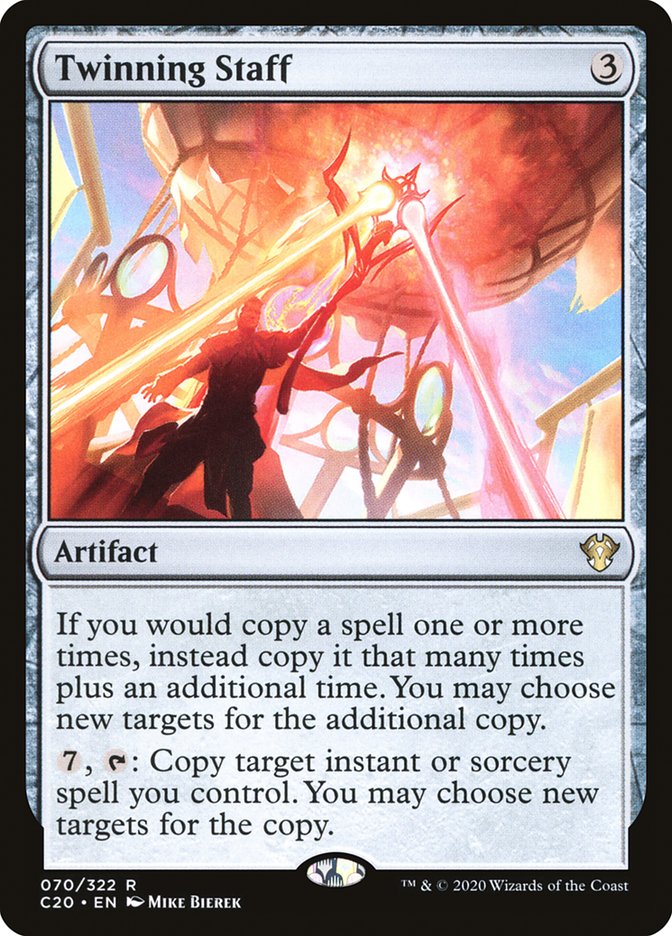
Twinning Staff adds a third copy to any instant or sorcery we copy. Three Dark Rituals is better than two, just like three Exsanguinates, or three Temporal Extortions. Its activated ability is just too expensive to be useful, but its static ability does more than enough to justify a space in the list.
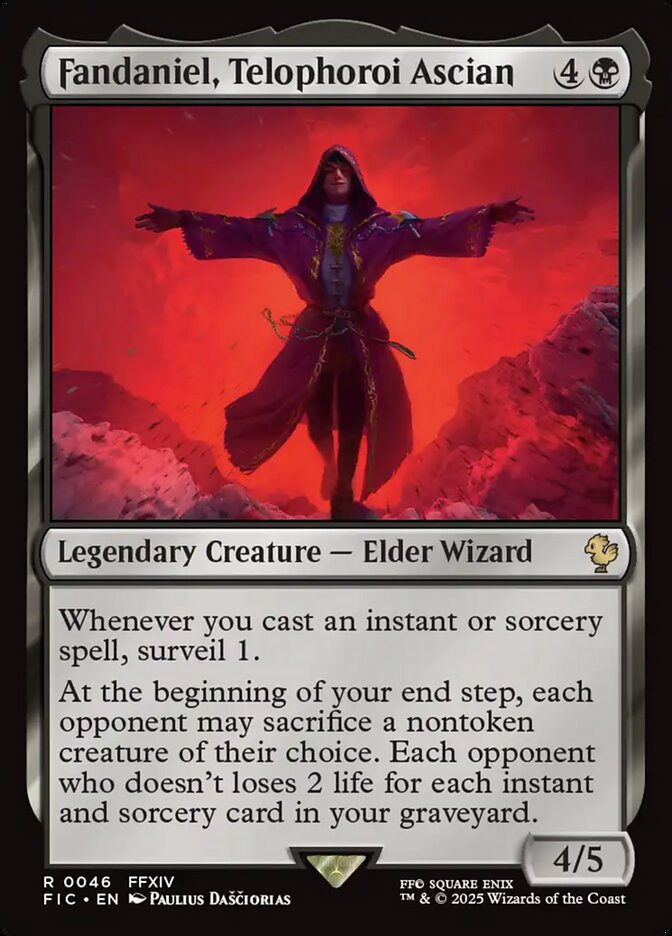
Fandaniel, Telophoroi Ascian has one of the deadliest end-step triggers in all of Magic:
At the beginning of your end step, each opponent may sacrifice a nontoken creature of their choice. Each opponent who doesn't loses 2 life for each instant and sorcery in your graveyard.
Our list is packing a combined total of 35 instants and sorceries. Just 10 in our graveyard will force a creatureless opponent to take 20 damage with one Fandaniel trigger. In the late game, Fandaniel can push us over the finish line if big swings like Exsanguinate and Torment of Hailfire didn't get us there. Even in the early game, he gives us card selection with his surveil trigger and starts pressuring life totals early, making the game-winning math equation in later turns easier to solve.
Upgrades

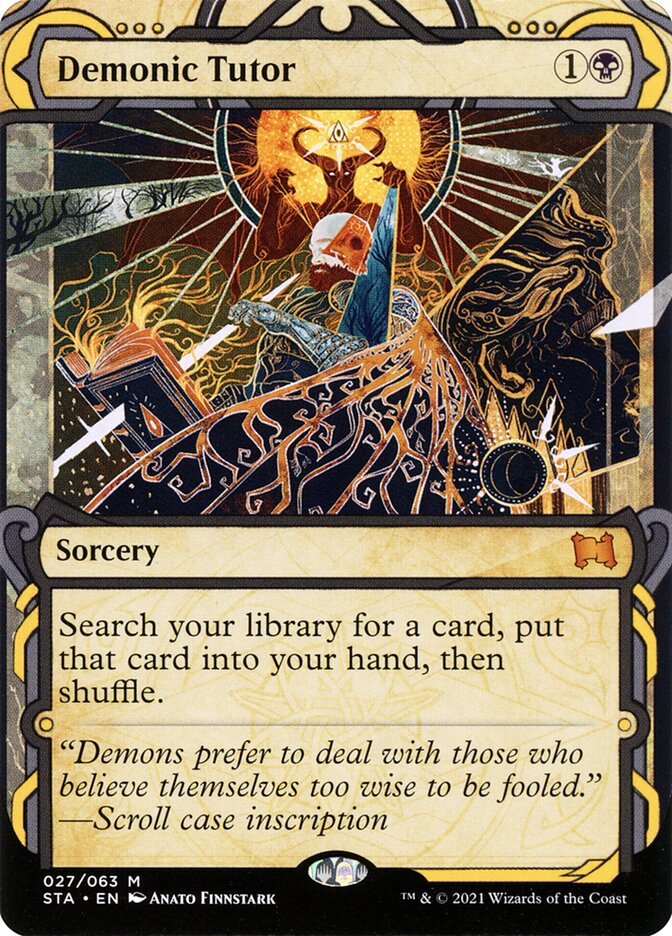
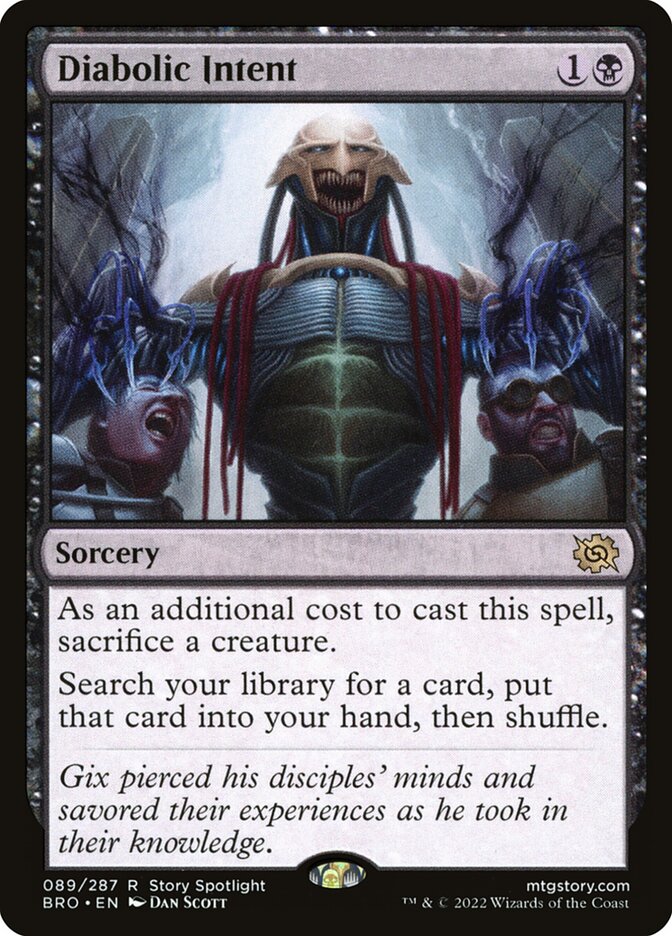
Tutors! If you want to increase the power level of this deck and get removal, ramp, and finishers exactly when you need them, you should make space for tutors. These are generally expensive cards and frowned upon in lower-power play.
In testing, I've found that even without tutors, Silverquill can land a knockout blow against a table of Bracket 3 decks.

Voice of Victory completely stops opponents from using spells to counter your finishers. It can also generate temporary tokens as long as there's an open opponent or two to attack. Tokens from mobilize triggers last until the end step and can pay casualty costs for spells cast during combat or in the second main phase.
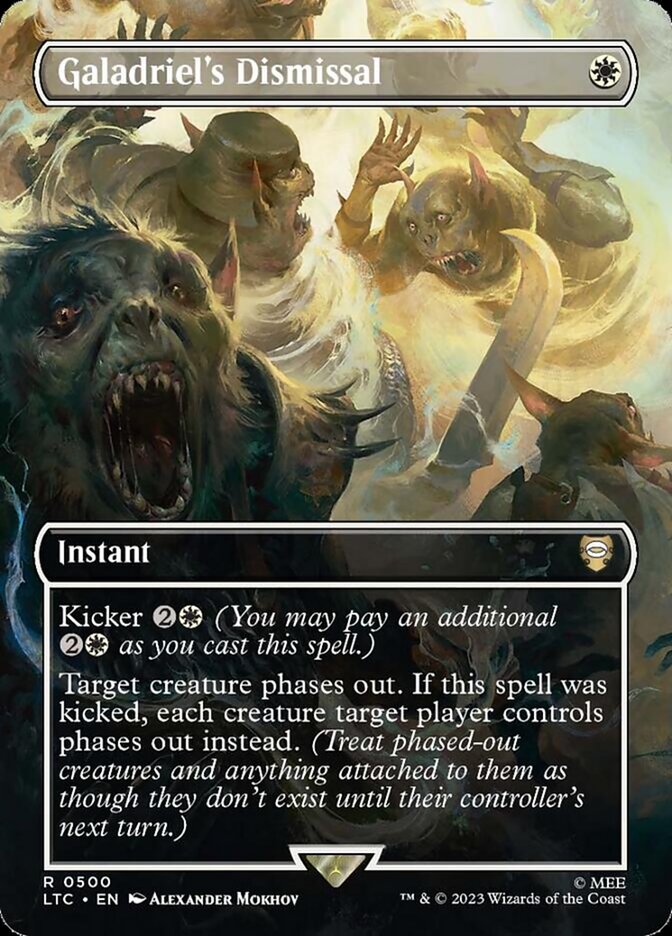
Galadriel's Dismissal can protect your creatures or your life total. For one mana you can phase out Silverquill in response to a board wipe or targeted removal. When kicked, you can phase out your whole board and preserve all of your creatures. But one of the best uses is stopping an alpha strike against you; you can target your opponent's creature, or their entire board if kicked, phasing them out at instant speed and removing them from combat. When they get phased out on their own turn, they won't be back for an entire turn cycle. Unfortunately, until a timely reprint (perhaps in a bonus sheet for the upcoming The Hobbit set?), this is a costly upgrade that offers excellent utility, but is by no means necessary for the deck's main plan.
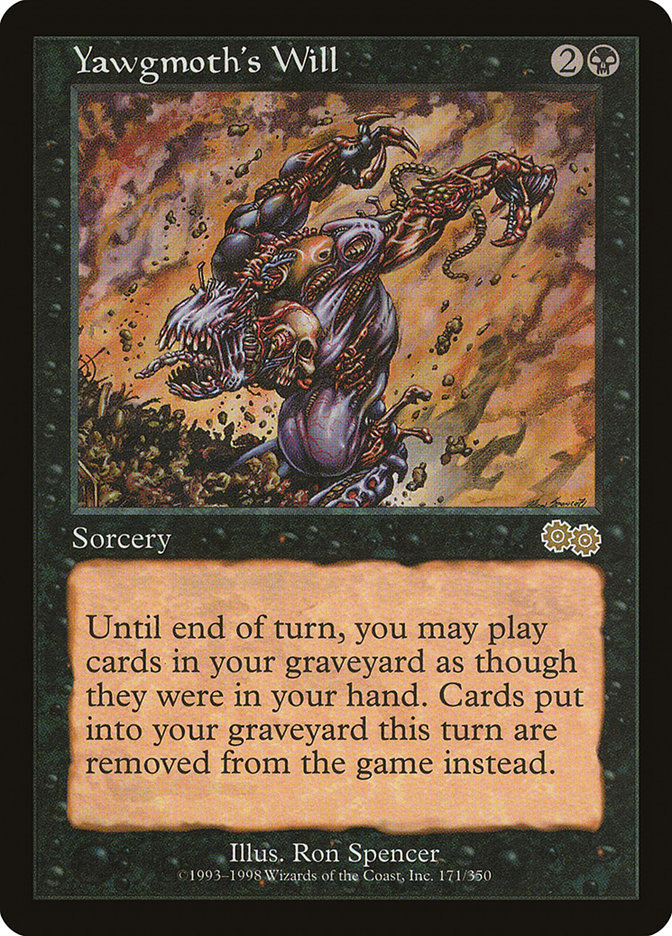
Yawgmoth's Will is an excellent card for people who play digitally or who use playtest cards. As a Reserved List card, there just aren't enough copies of this powerful spell for everyone who wants one. If you can find a way to play it, this card lets you reuse your finishers, removal, and rituals in the late game, or even bring back threats and synergy pieces. You can cast literally anything that's in your graveyard! The only minor downside is that anything that would go to the graveyard for the rest of the turn gets exiled instead.
Sidegrades


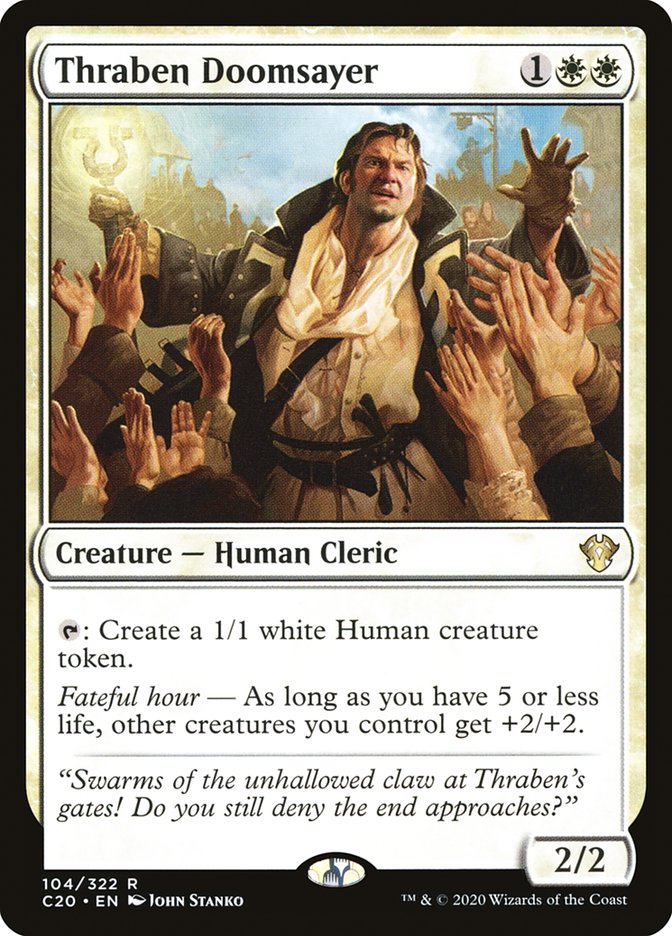
These are cheaper alternatives to costly token-generators like Black Market Connections, Sedgemoor Witch (whose price climb began when Silverquill was first spoiled), and Bitterblossom.
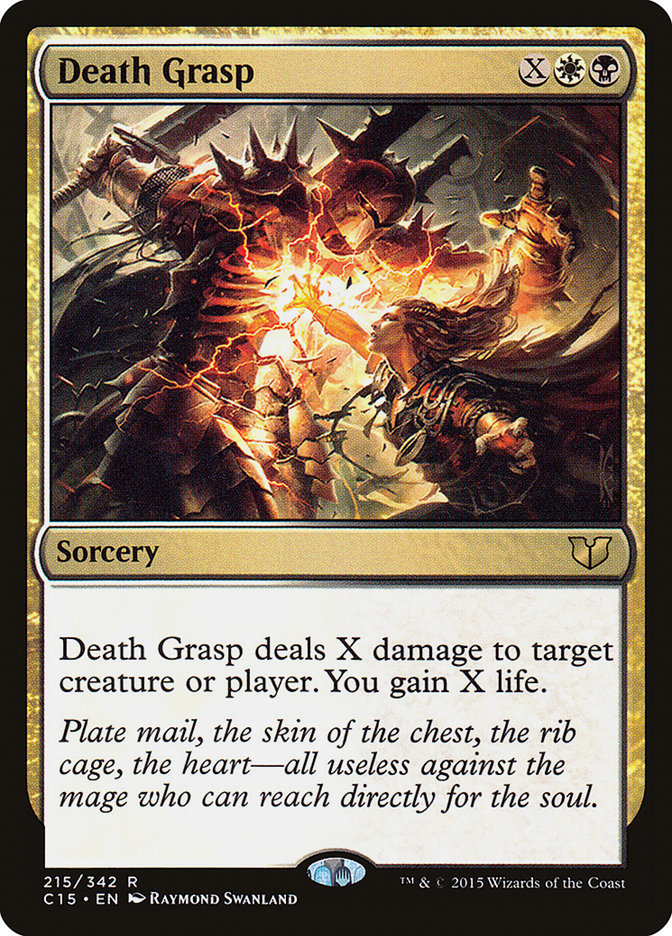
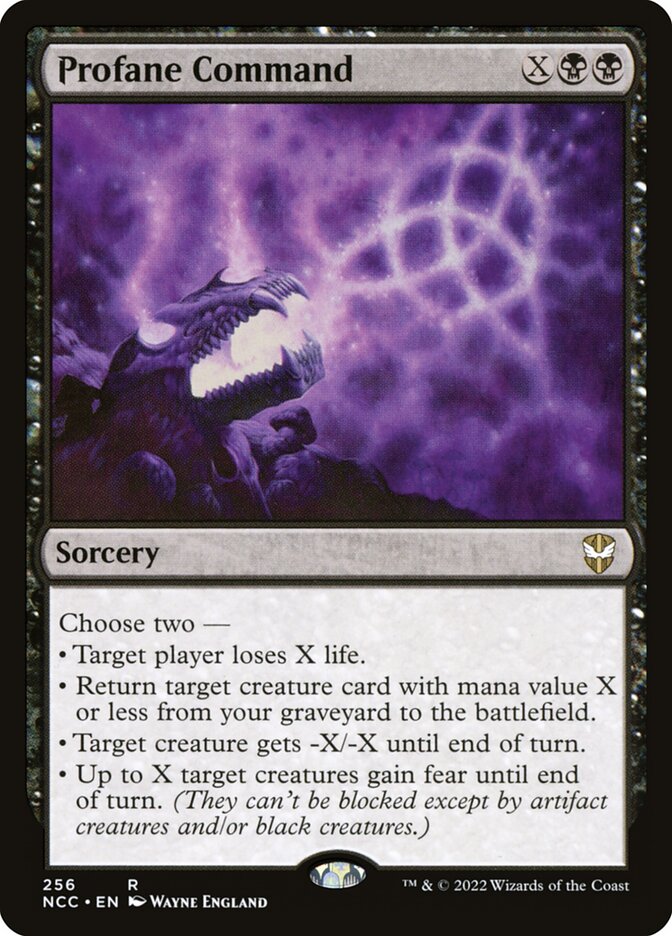
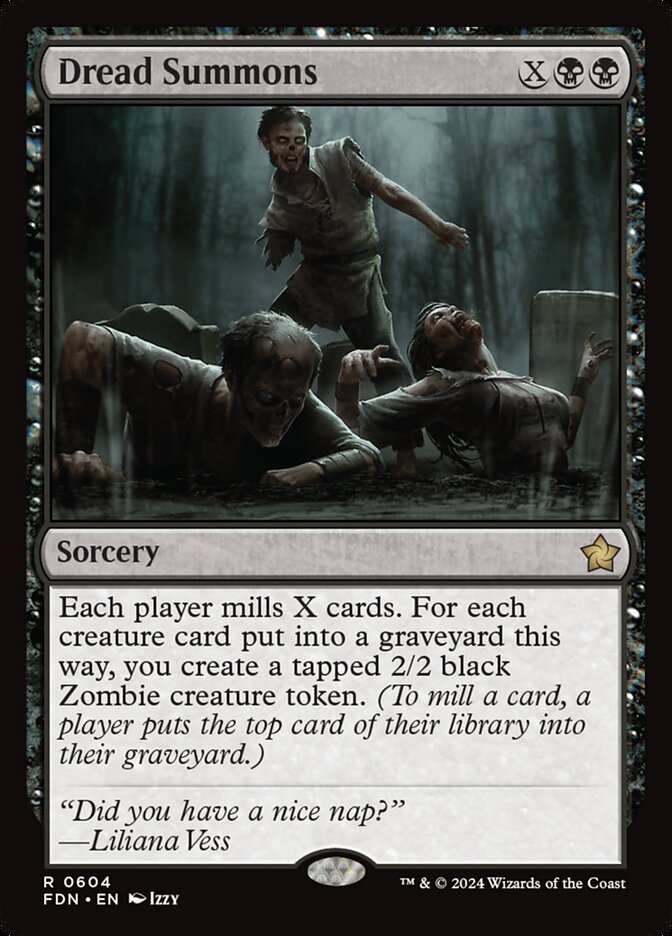
Nothing hits as hard as Torment of Hailfire, but if that's out of reach you can use one of these cheaper alternatives. Profane Command and Death Grasp limit you to just draining one player (or, with a copy, two players). Dread Summons, against your average creature-based deck, should net you a scary number of zombie tokens when you cast it and copy it.
Closing Statement
Below is the decklist for my build of Silverquill, the Disputant. There are other paths this legendary Elder Dragon can take, such as focusing on token generation or Aristocrats-style sacrifice payoffs, but other commanders are better-suited to those archetypes. I emphasized what he does best: presenting the table with a one-two punch of a finisher and an extra copy to make sure to get the job done.
View the decklist on EDHLAB and add it to your favorites to try it out in multiplayer, or in our full-table Playtester.
The Best Way to Play Commander Online
For the easiest way to play Commander online with your friends or meet new opponents on the field of battle, use EDHLAB.gg's Play Online feature!
Join our Discord server and have a chat with us about your favorite new brew!
EDHLAB maintains a strict policy against the use of generative AI in the production of creative media. All blog articles and images hosted by EDHLAB are made without the use of generative AI.