The Commander Banlist: A House of Mirrors
For a format with over 30,000 cards available and more coming all the time, an effective banlist is exceptionally difficult to maintain.

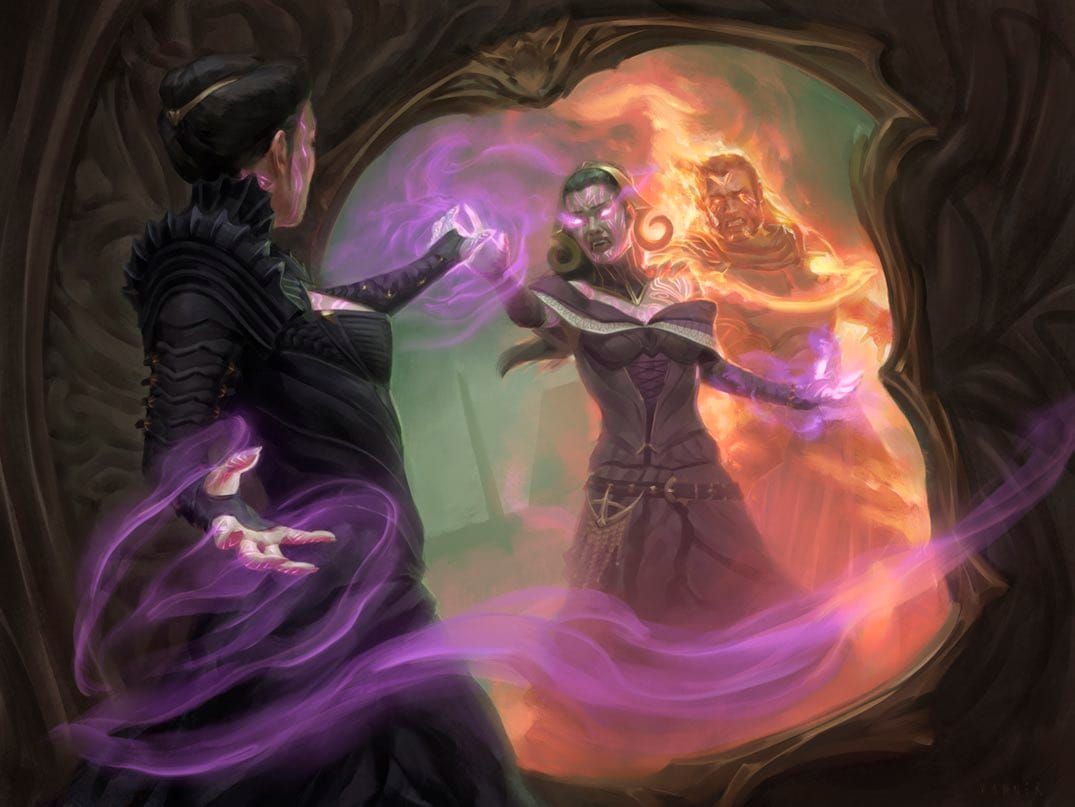
If you’ve ever been to a carnival and walked through a house of mirrors, you’d know that it’s a bizarre and disorienting experience. You can hardly tell where you’re going or whether you’re going to walk face-first into a solid wall, and your reflected proportions are smashed flat or inflated to humorous degrees on the walls beside you. You see the worst and ugliest versions of yourself, twisted and absurd images to highlight you as you should be seen — a human being, no uglier or more beautiful than the next to walk the hall.
The old Commander format banlist was like a more utilitarian version of the idea behind the house of mirrors. The philosophies and values of the venerated founders and stewards of Commander were best illustrated by what cards are banned from the format, and a little investigation will reveal far more about these principles than the literal written explanations from those same individuals who banned those cards in the first place.
Looking Back
To understand the state of the format and its governance today, it is necessary to grasp how we arrived at this point to begin with. Let’s explore the annals of Commander history.
There Can Be Only One
By now, almost every Commander player — even those joining the format in recent years — has heard the name Sheldon Menery, may he rest well. But not everyone knows Adam Staley, a former competitive player from the infant days of Magic who quickly grew tired of playing meta matchups against the same decklists over and over. He invented the Highlander format, inspired by the tagline of the 1986 film: “There can be only one!” Each Highlander deck could only have a single copy of any card in the deck, and each player had a whopping life total of 100, forcing players to dig deeper into the available card pool not only to fill out their massive decks, but to be able to press through such a huge number.
Legends released in 1994, and two years later, Staley iterated on his custom game by adding a “leader” mechanic, allowing players to select one of the five original Elder Dragons as the centerpiece of the deck, and added in a restriction that we know and love today: each deck could only contain spells that had the same colors as the Dragon at the helm. In 1996, Staley would begin to play in the same circles as Sheldon Menery, who was stationed at a US Air Force base in Alaska, and while Menery did not actively participate in games of what was now known as Elder Dragon Highlander — or EDH — he would take the idea and tinker with it, bringing it to the wider world during international Pro Tours as a competitive judge offering an interesting, casual game mode for other judges to try in between grueling rounds of cutthroat play. Sheldon introduced such rules as beginning the game with your General (the new term for the deck’s leader) already in play, or opening up the General position to any legendary creature in the pool.
In 2004, Sheldon published an article for Star City Games discussing the EDH format, and the idea gained traction, culminating in a big kickoff after Scott Larabee, Wizards’ Pro Tour manager, played his first game in 2005. Though initially skeptical, Larabee was a huge fan of the ability to play cards that had already rotated out of Standard and lacked the power to live in Type 1 (the original version of Vintage), and he brought the rules and ideas behind EDH back to Wizards HQ with him. In 2006, Sheldon joined with Gavin Duggan and Duncan McGregor, two other Pro Tour judges, and eternalized the EDH format by forming a Rules Committee (RC) and publishing an official website.
Sheldon, Gavin, and Duncan were all high-level Pro Tour judges looking for a reprieve from long days in the trenches judging competitive Magic and who were enthusiastic about having a place to play cards that didn’t fit in the high-power landscape of competitive formats.
Good Vibes Only
The first recorded banlist came in October of 2002, and it matched the existing banlist for Type One with the notable difference that Test of Endurance was banned. This was due to the higher life totals in EDH that made it difficult to play around. In 2003, Sheldon finally unrestricted basic lands, meaning that players could finally create better-functioning mana bases for their decks. That year, he also made the decision to ban Burning Wish and its analogues that reference a sideboard, since EDH didn’t have a sideboard, but these were unbanned shortly afterward in 2004. Beacon of Immortality was banned in the same update for prolonging games in a time that predated Craterhoof Behemoth enabling arbitrarily high amounts of combat damage. The sideboard-referencing cards still do not work within the rules to this day, however, though some players like to allow them for a little extra spice.
Early in April 2005, the infamous Power 9 cards (with the notable exception of Timetwister) were banned, along with several oppressive cards and win-out-of-nowhere spells like Biorhythm, Library of Alexandria, or Worldgorger Dragon (famously a combo with Animate Dead). It's worth noting that the Power 9 cards (the Moxen, Black Lotus, Ancestral Recall, and Time Walk) were not banned strictly on the basis of their power individually, but to dispel the perception that Commander required rare and expensive cards in order to play. Crucible of Worlds was a way to be resilient to land destruction effects and reuse the fetchlands printed in 2002, and Shahrazad was a way to drag out games to untenable lengths, so both of them were banned.

In 2006, the RC introduced a list of cards that were banned as commander only, though Heartless Hidetsugu, Kaervek the Merciless, and Niv-Mizzet, the Firemind — initial inclusions on this list — would be removed from this list later that same year. These commanders each had access to oppressive two-card combos (or were simply unfun to play against, like Kaervek), but their high mana costs helped to offset their otherwise oppressive play patterns.
From here, the bans proceeded relatively regularly, with the format receiving tweaks and nudges at least twice per year through 2013. New additions to the banlist were almost always a part of problematic strategies, unfun play patterns, or were wildly powerful commanders. The first Wizards-official Commander product was launched in 2011 - a cycle of five preconstructed decks, led by five enemy-tri-colored commanders with two optional commanders per deck. This product achieved quite a lot: it showcased Wizards' new name for the format, introduced new Commander-exclusive cards, and showed Wizards’ respect for Sheldon’s vision by adding fun and interesting multiplayer mechanics. These decks were a huge departure from the competitive-minded design philosophies of 60-card format products, and provided a great way for players to take their first steps into the Commander format, despite the fact that Wizards was not taking any official part in the format besides printing the decks.
Sheldon and his peers prioritized the protection of their vision of EDH as a place to play by continuing to ban out cards that locked players out of the game or were simply too powerful to interact with meaningfully. Some of these cards banned in the middle period are exemplary of an evolution in the philosophy: Erayo, Soratami Ascendant was banned as a commander due to the slog of playing into its repeating counterspell ability, Prophet of Kruphix created an imbalance in time equity (the amount of time each player actually spends taking game actions during a match) by allowing the controller to essentially play an additional turn per each player that took one turn, and Trade Secrets allowed two players to essentially decide the fate of the game on the spot with no interaction for the other two players.
Though these cards were certainly powerful in their own right, they were demonstrative of a larger issue. Cards that created a “feels-bad” gameplay experience for other players were undesirable in the eyes of the RC, even if they were interactable or counterable in some way, and several of these cards remain banned despite the opinion of some players that they are not nearly as powerful in the high-speed landscape of modern Commander. These cards remain on the banlist to reflect that sentiment from the Rules Committee of yore: Commander is a place for Magic players to have fun with their friends and find fun and interesting strategies to show off, not a place to grind opponents into dust. Tension remained, however, from players who resented the idea that a casual format, which was gaining traction and popularity amongst the wider population, was governed by a body external to Wizards and who these players felt were dictating acceptable playstyles to the wider Commander community.

The Awkward Years
These problems would continue to worsen after the banning of Paradox Engine and Iona, Shield of Emeria in 2019. By this point in the format’s lifespan, bans were becoming sparser and sparser, with fewer cards being banned at a time, and several older relics like Coalition Victory sat rotting on the banlist as the format rapidly outpaced the likes of eight-mana win conditions with difficult setups. Paradox Engine was not particularly controversial, as its ability lends itself to long, non-deterministic turns that are highly complex and difficult to resolve. Iona, on the other hand, was not exactly a beloved or iconic card in the format, but the notion that players were roaming the format and locking mono-colored decks out of the game, coupled with the assumption that other players couldn’t interact with the Angel seemed out-of-touch with what was actually going on in the format at the time.
The next controversial ban came in 2020, when the Rules Committee threw a bone to the competitive EDH scene, or cEDH (the history of which deserves its own article) by banning Flash, taking action against a card that saw next to no play in casual settings. Based on the language used in the announcement itself and the reluctance to acknowledge the state of cEDH by the RC around this time, it was obvious they had little interest in cEDH at best, and actively reluctant in engaging with or acknowledging the format at all at worst. Though most casual players didn’t (and still don’t) particularly care about Flash as a card, some felt that banning cards just because of a subformat that had less broad appeal was unfair to the larger community with little influence over a banlist that was increasingly seeming out-of-touch with “real” community problem cards.
In 2021, the format newcomers Hullbreacher and Golos, Tireless Pilgrim were banned. Hullbreacher was considered far too oppressive for most tables when combined with wheel effects, and Golos quickly overcentralized decks — it was powerful in such a generic way and was a clear-cut obvious choice for so many decks that it warped the face of five-color deckbuilding entirely. This is where the house of mirrors analogy rears its head once more, so let’s take a brief pause from bans.
In June of 2021, shortly before Hullbreacher was banned, Sheldon Menery posted a set analysis and review of some cards from the new Modern Horizons 2 set from that summer. In this article he expresses a lot of opinions that most readers, myself included, did not take well. He stated he was “not an advocate of allowing [players] to do anything at all,” called Cabal Coffers — one of the most iconic lands in the format — “borderline unhealthy for the format,” and perhaps most shocking, claimed that “Wheels are the unhealthiest thing in Commander.”
I have a lot of respect for Sheldon and what he did for the format as an unpaid game veteran who simply wanted people to have fun playing a game that he loved. He was a great guy by all accounts and the game is certainly worse off without his voice in the control room. But many players felt that voice no longer represented their experiences at the table, despite the fact that Sheldon was just one of a larger RC. As the “Godfather of Commander,” Sheldon's opinions made many players, especially those who like to play Wheels decks, feel discouraged. This was exacerbated when, barely one month later, a card that heavily synergized with wheel effects was banned outright. It’s worth acknowledging that most Commander players agree that this ban was not a bad thing, and the format is almost certainly better off without Hullbreacher ruining games single-handedly. The right decisions made for the wrong reasons, however, are still not healthy for the long-term health of the format, and that concern is not an isolated sentiment from one blog writer.
Golos, on the other hand, presented a different problem. Yes, the commander was powerful in a unique way and didn’t lean in any particular direction, allowing for decks of nearly any strategy to be constructed with a consistent and powerful enabler in the command zone. Yes, most players were not especially sad to see a boring five-color slopfest commander banished from the format. This ban still lent credence to the notion that the Rules Committee wanted to dictate how Commander should be played. For a format that was exploding in popularity, still governed by a body operating outside of Wizards, these sentiments started to accumulate more and more, calling into question the long-term viability of this operating model.
At this point in history, the house of mirrors no longer felt like a hard-to-recognize but clearly-intentional depiction of the Commander mission statement. Players looked in the mirrors propped up by the RC, and instead of seeing a vision of a format they loved and played regularly, they saw that the RC was trending more and more towards imposing their views on millions of Commander players across the globe. The twisted imagery in the mirror did not reflect too-skinny or comically-enlarged versions of us; it mutated innovative Johnny Commander players into cowardly little things afraid of wheel effects, and grotesquely depicted respectable cEDH players and competitive brewers into unreasonable tyrants, demanding changes to a format that catered to someone else.
This is the core issue with the RC’s direction and public platform at the time. They claimed to care about play experiences and issues that everyday players faced, while making decisions that the community at large did not feel represented their views and feelings. As this negative sentiment began to fester, some in the community started to hold their breath.
D-Day
The timeline of events, or more appropriately lack of events, after this moment of discomfort did not help the ongoing détente. For over three years, the Rules Committee did not ban a single card. They published statements on a quarterly basis assuring the community that they were watching notable cards, posted spoiler season previews, and regular-ish content, but there was nary a peep about any new bans, despite the massive increase in card volume. Wizards was ramping up the release cycle and pumping out more than double the amount of Commander-exclusive precons, sets, and products than they had previously, causing an enormous influx of new cards, strategies, and commanders. On top of that, power creep and FIRE design led to many of these new cards sporting increased complexity and a much higher power level on average. The community was growing restless with the lack of meaningful updates.
Sheldon passed in late 2023, and we were all devastated. He was a kind soul and an asset to the format and its legitimacy. I hope that he was proud to see his creation grow into such a worldwide phenomenon, and I am eternally grateful to him for the existence of a game I love to play.

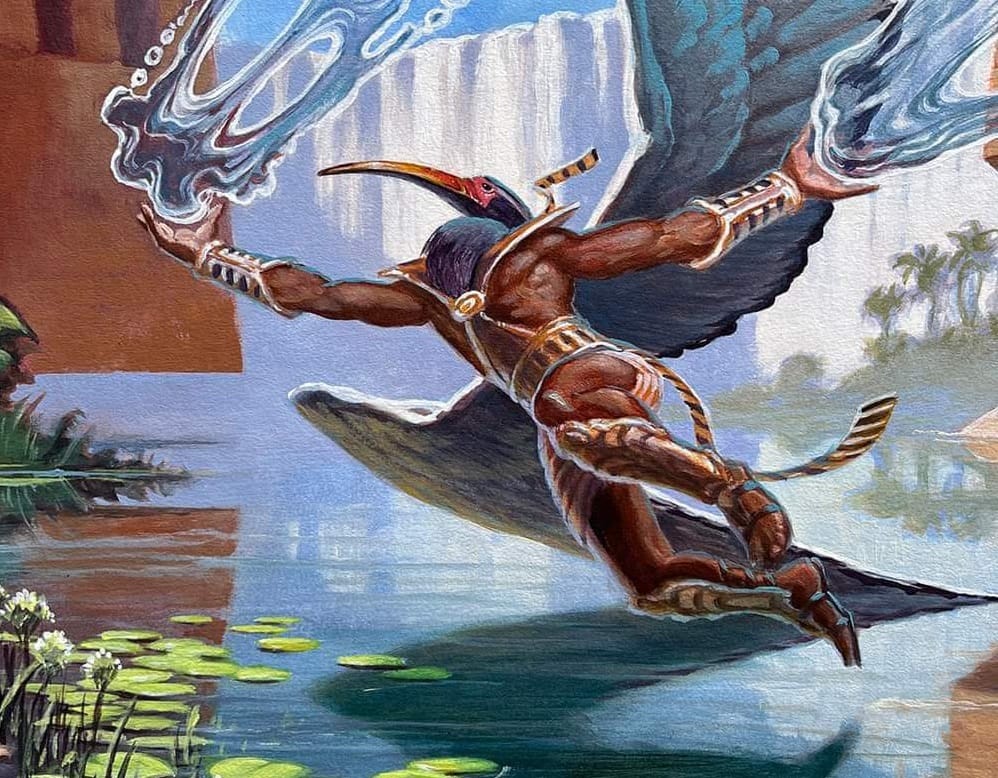
Fatefully, the first big decision made after Sheldon’s passing was in September 2024. The RC shocked the community by banning four cards at once: Dockside Extortionist, Jeweled Lotus, Mana Crypt, and Nadu, Winged Wisdom. It proved to be the most controversial decision in the history of Commander, and to call the reaction horrific and disgusting is an understatement.
Nobody particularly cared to see Nadu go, and I won’t dwell on the justifications here. But the impact of Dockside and the two mana rocks being banned was unprecedented. From a gameplay perspective, all of these bans are 100% defensible. So-called “fast mana” is a hallmark of cEDH, but these three cases were by far the most egregiously overpowered, even in the most powerful version of Commander, and many players —including members of the RC — felt that Jeweled Lotus in particular never should have been printed in the first place.
Commander players across the world lost hundreds, if not thousands of dollars in their collection’s value, resulting in an outcry and response that has been documented to death, though I will still take this opportunity to cast shame on those who sent death threats to specific individuals because of the imaginary monetary value of their shiny cardboard. Things moved incredibly quickly after this nuclear bomb, and Wizards stepped in to establish the Commander Format Panel (CFP), a new governing body consisting of a rotating group of players and content creators, with Wizards employee (and cutie pie) Gavin Verhey as the lead designer and decisionmaker.
The CFP pulls in players and voices from across the Commander spectrum, ranging from extremely casual to cEDH, which acknowledges the diversity of the Commander community at large. The CFP is larger now than the RC was, and rotations allow for a continuously-refreshing, up-to-date conversation to happen in the control room. The impact of this huge change of status quo, though, is still being sorted out today. In practical terms, the conception of the Bracket System, Game Changers list, and several appreciated unbans have been the main results in the past year and a half. So far, no new cards have been added to the banlist, though the Game Changers list is informally considered something of a “ban watchlist.” I would argue that most of these changes have been for the better, though I personally have a lot of criticisms of the Bracket System (which I’ll have to write about another day).

What We Have Today
This new system takes a very different approach to the house of mirrors concept. While the CFP is still maintaining a flat banlist, they have slowly stripped out some of the arguably less-problematic instances of banned cards. The Game Changers list seems to be the new mechanism of telling players how they think the format should be played by providing an exemplary list of individual cards that (usually) have huge gameplay implications every single time they show up in a game of Commander independent of the strategy or commander that card is supporting in each instance.
What’s interesting to me is that the Bracket System has clear parameters that shape a particular experience at each bracket level. Mass land denial (MLD) and two-card combos are forbidden until Bracket 4, and there are similar restrictions for chaining extra turns. Even so, the system isn't designed to act as a strict prescription of rules and regulations for the Commander Format at large. While the Bracket System helps players to communicate their deck’s approximate power level in untrusted play settings by providing specific terminology and benchmarks for game length and types of interaction, it is not intended to support public matchmaking indefinitely.
Instead, the Bracket System is designed more as a blueprint or template to be studied and adapted, with customized Game Changer lists and playgroup-modified benchmark metrics or categories of interaction to cultivate a specific environment for players who normally play with their friends. Unfortunately, a lot of this intention is lost in translation, as a significant portion of the Commander-playing population does not regularly play with the same people, and an even larger chunk of the population consists of new players drawn to the game by a Universes Beyond crossover product, who arguably do not have the knowledge or experience needed to navigate this kind of pseudo-game design.
Today’s Ban Announcement (or lack thereof)
As mentioned, it’s been just about a year and a half since the establishment of the CFP and a new normal for Commander. It’s clear that Gavin V. and his team are still trying to orient themselves as the source of truth for Commander rules. The Bracket System is still allegedly in a development period, though the only new updates to it were made eight months ago, and these were largely clarifications and demonstrations of guiding philosophies. Yesterday, Wizards announced B&R lists for several 60-card formats, though it’s worth noting that Gavin has explicitly said that Commander format updates should not be expected to accompany updates for other formats.
I’d be lying if I said that I didn’t find this mildly concerning. I am all for having a charitable attitude towards Gavin and the team, and I do genuinely believe that Gavin Verhey is in touch with everyday players. I also don’t expect constant input from the CFP, especially considering that (what basically counts as) game development takes a long time to suss out and fine-tune. But considering recent issues and question marks in the format, I’m wary of format leadership falling into the same traps that befell their predecessors.
The hybrid mana issue is at rest (for now), there haven’t been any game-warping mechanics or cards plaguing the format (I guess), and while the state of Magic as a whole seems uncertain and turbulent, Commander's control panel seems to seems to show all systems stable for the time being. For now, we have to trust the crew behind the mirrors.
Do you think that the new Bracket System and Game Changers concept are better for the format? Join our Discord server and start a conversation about it.
The Best Way to Play Commander Online
For the easiest way to play Commander online with your friends or meet new opponents on the field of battle, use EDHLAB.gg's Play Online feature!
EDHLAB maintains a strict policy against the use of generative AI in the production of creative media. All blog articles and images hosted by EDHLAB are made without the use of generative AI.