The Best Universes Beyond Precon? Star Trek Commander Decklists
To boldly reprint what no man has reprinted before.


As the spoiler season for Star Trek comes to a close, the Commander precons are now fully revealed and available for viewing. Despite the fact that I’m often more critical of Universes Beyond products, particularly where Commander precons are concerned, I have to admit that Wizards may have cooked pretty hard with some of the cards and reprints in this cycle. Let’s explore some uncharted quadrants of the galaxy with Star Trek Commander!
Federation Fleet

The first deck in this batch is Federation Fleet, a blue, red, and white deck focused on historic permanents and second-draw triggered abilities. For fans of Edge of Eternities from just last year, this deck plays very well with the mechanics and well-known cards from that set. Plenty of creatures in this deck use counters by gaining (or doubling) counters when you draw your second card each turn, removing +1/+1 counters to draw cards, or accumulating charge counters on Spacecraft.


From a gameplay perspective, this deck feels very similar to the Counter Intelligence Commander deck from Edge. Jean-Luc Picard, Luminary is both setup and payoff, drawing a card for every historic permanent over three mana and accelerating your counter accumulation on either creature or Spacecraft. One thing to keep in mind with this deck: remember to carefully time your second draw trigger. Attacking with creatures after gaining an extra +1/+1 counter can be attractive, but sometimes holding your second draw for your postcombat main phase is more effective.
New Cards
Federation Fleet introduces some very interesting new cards to the Commander card pool. Charge counters, +1/+1 counters, and historic permanents are all tried-and-true archetypes these days, so new toys are always exciting to shake things up.

In a surprising use of the color pie, Ezri Dax, Newly Joined is a clone spell that copies a creature card in your graveyard that went there this turn. In precon games, this won’t amount to much — you’ll likely just be recovering an engine piece after blocking an attack or eating a removal spell. But in the wider Commander format, Ezri Dax can interact with a variety of Aristocrats decks, as well as other sacrifice-based strategies. She’s like a Dance of the Dead but without all the confusing mechanics and text, and with the bonus of leaving the creature in the graveyard to use with an actual reanimation spell or whatever you have in mind.

I don’t care how much of a dog person you may be, it’s impossible to hate this friendly kitty. Adorable art aside, Spot, Felis catus’ mechanics speak for themselves; generating a Food token with every nontoken legendary permanent is already a strong start for artifact decks, token decks, Food decks, legendary matters decks … need I go on? Beyond that, interaction in the form of a repeatable activated ability that can make use of excess tokens on your battlefield is a great rider to an already fantastic creature.

Second-draw trigger effects are already plentiful in the Commander format, but this deck adds depth and flexibility to the concept. Chief Miles O’Brien allows you to turbocharge almost any kind of counter in any deck that cares about artifacts and creatures. This goes quadruple if you have Faerie Mastermind–esque effects that allow you to hit two draws on opposing players’ turns as well, so as you upgrade the deck, definitely look for ways to make that happen. Your Millenium Calendar will win you the game in no time at all.

Creatures that cost four mana can be a hard sell in modern Commander, where it seems that decks are getting faster and faster all the time. Rom and Leeta, Unlikely Pair is worth the cost, though, as their triggered ability works ridiculously well with instant-speed red spells like Demand Answers or Thrill of Possibility. Similar to the Chief, this creature can rapidly spiral out of control if you can consistently draw two cards on your opponents’ turns. You might not get to use the mana right away, but untapping with eight extra Treasures on your turn is a very satisfying feeling.

I’m a sucker for making token copies of things, particularly when the copies aren’t legendary. There are plenty of shenanigans to create with Reg Barclay, Fidgety Fantasist, whether by copying creatures with valuable enters triggers, combat damage triggers, or creating blockers. The applications are pretty much endless.

Rounding out the list of best new cards in this deck is Temporal Tribulation, an interesting side-grade to the classic Ghostly Flicker. Where Temporal Tribulation is a delayed blink, Flicker is instant there-and-back, but Tribulation can be cast from the graveyard via flashback. Different applications for different needs is the name of the game to keep the Commander card pool fresh.
Reprints
For each of these precons, I’ll provide a quick breakdown of the total reprint value, as well as the top five cards reprinted in each deck that fetch the highest prices, recorded at the time of the deck’s release. Each of these is the cheapest available printing for each card.
The total reprint value for Federation Fleet is $81.40.
The top five for Federation Fleet are as follows:
- Training Center at $18.50
- Alhammarret’s Archive at $10.75
- Command Beacon at $9
- Howling Mine at $6
- Reliquary Tower at $5
Review
Using the new cards, reprints, and gameplay experience as criteria, I’ll be evaluating all four of the Commander decks in this batch and assigning them a tier. Each of these grades assumes that the deck is available at MSRP, which for the Star Trek Commander decks is $74.99 USD. Remember, never buy at scalped prices.
Here’s a quick guide to the tiers:
- S — Great reprint value, great gameplay, and great new cards. It’s rare that a deck hits all three of these parameters. Extremely worth the cost and will likely be impossible to find at MSRP.
- A — Good reprints, gameplay, and new cards, but missing a little something. The deck strategy might be too janky, the reprints might be more functional than fun, or the new cards might just hit slightly below the mark. Above average for the cost and may be one of the more popular precons of the set.
- B — Average reprints, gameplay, and new cards, but none of the three in these decks feel especially interesting or memorable. This is where run-of-the-mill precons should show up. Appropriately priced.
- C — Missed the mark in one of reprints, gameplay, or new cards. Sometimes a precon with great gameplay and new cards is brought down solely on the basis of awful reprint value.
- D — A combination of two out of overinflated reprint value, bad or boring gameplay experience, and uninteresting new cards lands a precon in D. These tend to be more or less extinct these days, as precons are much better, but you never know.

The new cards in this deck were disappointing to me. As a big fan of Spacecraft, I was very excited to see what a deck helmed by the legendary Jean-Luc Picard, Luminary, one of the finest captains of the Federation, could add to the archetype. Besides adding a second option to the archetype to accompany Inspirit, Flagship Vessel, there isn’t much to write home about. All five of the new Spacecraft added in this deck are more or less mandatory in Spacecraft decks, but that’s mostly because there weren’t very many to begin with. Only U.S.S. Prometheus, Prototype feels especially impactful for the archetype, but there are better Spacecraft synergies in the main Star Trek set. On the other hand, the second-draw synergy pieces in this deck are strong and carry a variety of effects, and I expect to see a lot of them make their way into decks soon.
The reprint value for this deck is mostly on par with what’s to be expected of Universes Beyond Commander precons, but it continues to be a sore spot that Wizards prints the Battlebond untapped dual lands into these decks instead of Magic Multiverse products. Alhammarret’s Archive hasn’t been reprinted in five years (besides Secret Lair), since OG Strixhaven, so that’s nice to see; beyond that, most of the reprints are practical, being comprised of solid cards like Loran of the Third Path, Reliquary Tower, or Supreme Verdict.
The gameplay aspect of this deck is tougher to evaluate. Having several different creatures with abilities that all trigger from the same game action can be difficult to keep track of, bogging down gameplay. Additionally, decks with a high burden of accounting can make for a more difficult learning experience for newer players. That said, the deck is still enjoyable as a puzzle to solve for more experienced players.
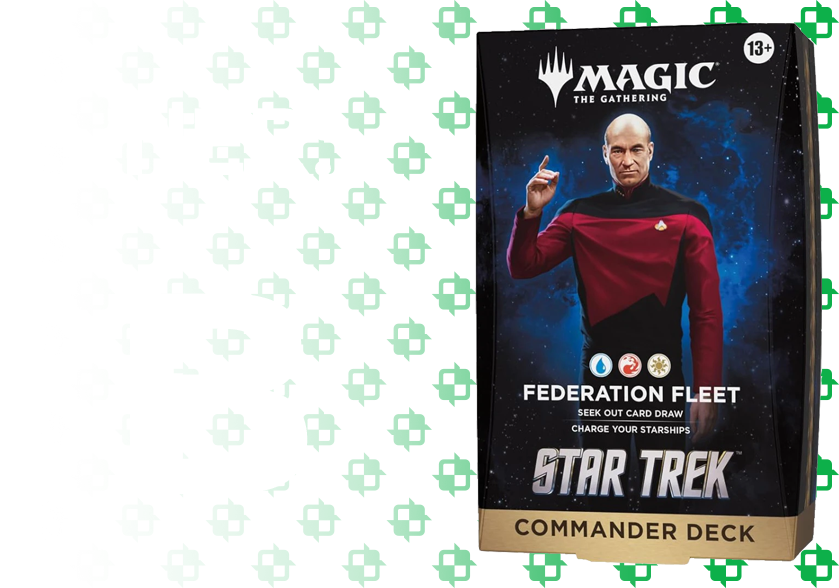
Federation Fleet settles comfortably at B tier.
Landing Party

Next up is Landing Party, helmed by the Vulcan Commander Spock, and this one is a doozy. It’s no secret that Lands Matter, Landfall, and other land-ramp-focused strategies are among the strongest archetypes found in an average casual Commander pod, and lands-focused precons have largely held up that pillar even at low-power tables. Is Landing Party on the same tier as World Shaper or Sultai Arisen? Based on my experiences in testing, I’d say yes.


Commander Spock is an advantage-heavy commander that wants to attack every turn. You’ll want to accumulate plenty of differently-named lands to increase the chances of casting a spell for free, evidently, but you also need to make sure you find ways to let Spock attack safely. Once you can establish those two channels, you can proceed with generally disgusting Simic + X color lands-based degeneracy until you’ve won by bludgeoning your opponents with your massive pile of rectangles.
New Cards
Even lands decks can have some variety. Maybe. Sometimes. While this deck introduces plenty of cards that are focused on the strange new worlds mechanic, there are some more broadly-applicable cards as well.

Not only is his name incredibly annoying to type, but your opponents will find Sam Kirk, Xenoanthropologist irksome to play into as he continuously generates Clue tokens when they cast creature spells. Paired with effects like Mister Fantastic, Reed Richards or Marneus Calgar, you can pile on card advantage extremely fast.
For Commander Clash listeners who already know just how powerful Clifftop Lookout and Open the Way are, Janice Rand, Essential Aide is immediately recognizable as proportionally potent. Being able to ramp lands by pulling them straight out of the deck allows you to make effective use of a heavily optimized landbase. If this creature sticks around long enough to see your commander enter and attack more than once, the value is demoralizing for your opponents to witness as they bemoan the lack of removal.
While not nearly as potent as Displacer Kitten, Chief Kyle, Transporter Tech does a frightening, lands-themed impression of the busted blinking kitty cat. Given how easy it is to toss multiple lands into play at a time, and how many creatures fetch lands with their enters triggers, Chief Kyle gets absurd very quickly. The flexibility is great, too; you can get up to tricks like cracking a fetchland in response to removal to blink your permanents and protect them or using a fetch effect to allow you to hold up blockers — many of which were probably already untapped on account of being blinked previously by Kyle.

As if this deck needed more help ramping, untapping with Command Chair injects a big burst of mana into your pool, provided that your commander has a sufficient mana value. Though rarer than your average three-to-four mana commanders, high mana value commanders can still pack a punch or accelerate quickly using discount or freecast effects. Its regular rate is worse than a Gilded Lotus, however, so you want to make sure that your commander — or one of your partnered commanders, if you’re saucy — has enough of a cost to make this worthwhile.

Oh, how I wish that the deck with Fleet in its name got its hands on this cool Spacecraft. U.S.S. Defiant, Mirror Migrant is a fantastic Spacecraft, and may even find its way into non-Spacecraft decks just on account of being a way to phase your commander out. Given how few defensive phasing effects exist, and that this is at a cheap-as-dirt two mana rate that can be played in any deck, I expect to see quite a bit of the Defiant flying overhead in the coming months.
Reprints
The total reprint value of Landing Party is a meaty $134.41, far and away the most valuable out of the box.
The top five most expensive reprints in Landing Party, captured at the time of writing, are:
- Exploration at a whopping $29
- Sea of Clouds at $20
- Ancient Greenwarden at $12.50
- Guardian Project at $12.50
- Echo of Eons at $9.75
Review

Landing Party is by far the easiest deck to evaluate out of the Star Trek precons. Far and away, it’s the most potent deck in the cycle just based on card quality, it’s focused on one of the strongest casual Commander deck archetypes, and has the most ramp-and-draw stapled to its commander of any other potential commander in these precons. Imagine being able to rip an Austere Command off the top of your library and cast Heroic Intervention — which didn’t even make the top five most expensive reprints — to protect your entire board against a Bracket 2 pod, let alone an all-precon pod. I think it’s possible that this is the most potent Universes Beyond precon printed so far, at least in terms of out-of-the-box playability.
In terms of new cards, Landing Party introduces a variety of different cards for different archetypes, not just new cards for the thoroughly-exhausted umbrella of lands decks, allowing for some interesting new inclusions to decks you wouldn’t have expected.
And then there’s the reprints. This precon stands head-and-shoulders above the rest by about $30 just on its face, and the reprinting of Exploration is basically all of that difference by itself. My only complaint is that I wish we got more reprints of this caliber in Universes Within products more frequently, particularly since the community has been asking for the Battlebond lands to be printed in precons forever.
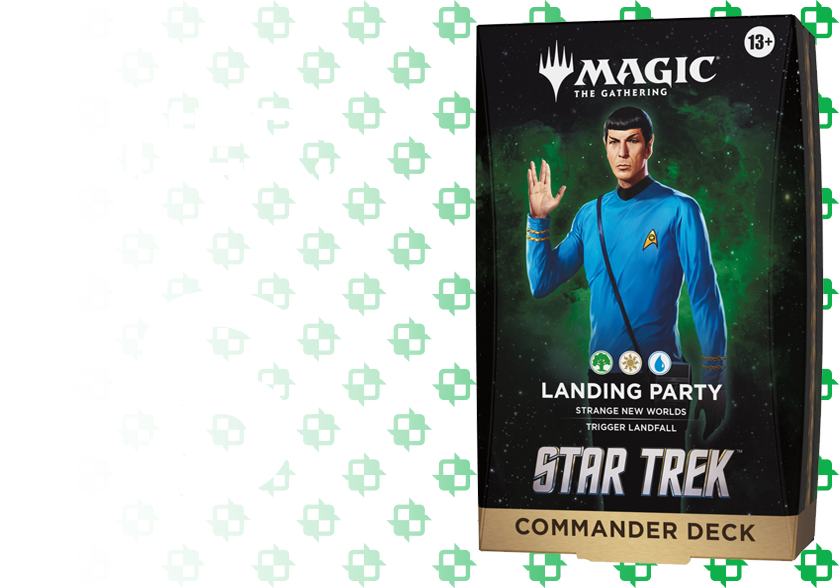
There’s no question about it, Landing Party earns a well-deserved S in my book.
Klingon Fury

From the heights of Landing Party, we descend to the lows of Klingon Fury. While this deck is by no means outright bad, I found myself frequently frustrated by the way the deck handles aggressive play, especially in comparison to recent precons like Hail Caesar or Mardu Surge that diverted away from flat-out face-rolling aggro in favor of more token-based go-wide strategies. That being said, while I may have suffered the Worf Effect, there are still plenty of interesting cards and things to see.


Worf, Defiant Commander is extremely straightforward. Cast your dudes, swing your dudes, rinse and repeat. Of course, having to split your creatures three ways every time you attack presents a challenge, but it can be a very rewarding gameplay experience to effectively pilot a combat-heavy deck that needs to attack multiple players.
New Cards
If you're a fan of the Mardu horde, fancy attack triggers, or simply turning rectangles sideways, Klingon Fury has some fun and interesting tech just for you.

I believe Kor, Cause of Vengeance is a better commander overall, and possibly for the stock decklist as well. While Worf generates more card advantage by attacking more players, Kor makes up for the difference with a more consistent combat application, allowing you to be less choosy with your attack targets. Additionally, he gives you a more controlled way to kill your own creatures, allowing you to take advantage of the small suite of death triggers in the deck.
Three mana for three cards is a rate not often seen on Magic cards, especially not outside of blue. Painful Truths is a great card in multicolor decks for this reason; Kurn, Son of Mogh allows you to gain that ability outside of multicolor decks if you wish. Though you have to attack three players, Kurn himself is a decent attacker as a 2/3 with deathtouch, meaning you only need two more attackers to have a solid draw engine every turn. Combined with the plethora of temporary token effects in red, you can easily draw plenty of cards.

While Threaten-style effects are not always in vogue, much less when they cost six mana, Grilka, Widowed Warrior uses an interesting incentive not often seen with temporary creature theft abilities. By offering you the opportunity to steal someone’s huge beater to make a ton of mana with, you can view this Klingon almost like a two-turn delayed ritual spell, similar to Rousing Refrain.

It seems that firebending has made its way across multiversal planes to appear in Star Trek Commander. Qo’noS Quartermaster allows you to get a firebending-style ability, except the mana lasts for the rest of your turn, so you can use it during your second main phase to cast more setup spells or a chump blocker. As a 2/2 with menace, he’ll be difficult to block early for plenty of decks, meaning you’ll often have access to that extra mana during your most crucial setup turns.

Though this new card is not exclusive only to this deck, I decided to review it here since it’s combat-themed. Merciful Mandate is one of the more interesting Fog-esque effects printed recently, since it’s technically two Fogs in one spell. Well, one and a half. If your board of attackers could be blocking your opponents’ creatures, had they not tapped to attack, then you can cast Merciful Mandate to untap them and end the current combat, fogging that current combat phase while setting yourself up to block for your next opponent’s combat phase. You can also use this spell to allow an opponent to get off a nasty attack on a different player, then rip this instant spell with combat damage triggers on the stack to deny your opponent the value of those abilities. Flexible spells with multiple applications that aren’t too strong are some of the best new cards to see printed in a precon.
Reprints
The total reprint value of Klingon Fury is $86.44.
The top five most expensive reprints in Klingon Fury, captured at the time of writing, are:
- Vault of Champions at $16
- World at War at $11
- Sword of Light and Shadow at $9
- Eclipsed Steppe at $5
- Shared Animosity at $4.75
Review
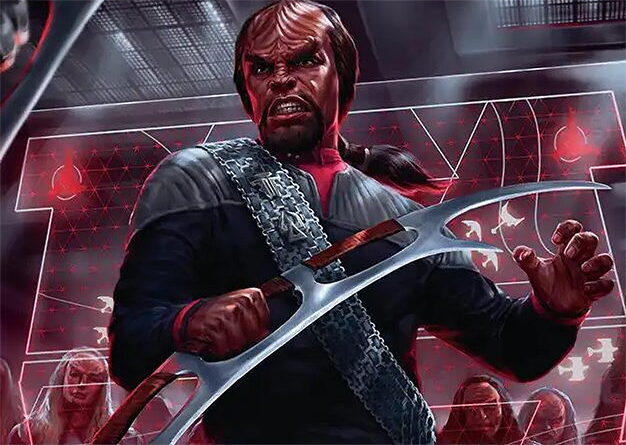
As I mentioned before, Klingon Fury was my least favorite of the precons during my testing. As a combat-centric deck that wants to start swinging at multiple opponents as early as possible, having a commander that costs five mana is already not a great start. By the time you’re casting your commander, the other decks often already have at least one or two creatures to block with. Worf doesn’t even feel that great to cast — while the token comes in with haste, Worf himself does not have any way to attack immediately, nor any combat-boosting abilities. Worse, the impulse-style card advantage feels much worse in this group of precons thanks to the incredibly robust card advantage engines the other decks are capable of, allowing them to easily outgrind you in a longer game.
The new cards in this precon are fairly interesting, at least. I like that Ambassador K’Ehleyr and Alexander, Ship’s Fool add elements of politics and group resources, while cards like Bloodsport Champion or Own the Day present interesting new twists of existing mechanics. I also enjoy the fact that a lot of the new cards specify “Klingon or Warrior,” allowing Warrior Kindred players to pick up some of the exciting new spells in this deck for their brews.
Regarding reprints, this deck is slightly above Federation Fleet in value, though the card value distribution is a lot more uniform than these precons usually see. Instead of one or two larger reprints, the deck has a much higher concentration of cards in the $3-$5 range that are flexible and staple cards for a lot of different decks. For me personally, this is a turnoff, but plenty of others might find more value in distributed staples than in one or two heftier cards. One interesting anomaly is Sword of Light and Shadow, which receives a reprint in this deck, signifying the first time a Sword of X and Y card has been reprinted in a Commander precon, though it is one of the less-valuable and less-impactful of the Swords.
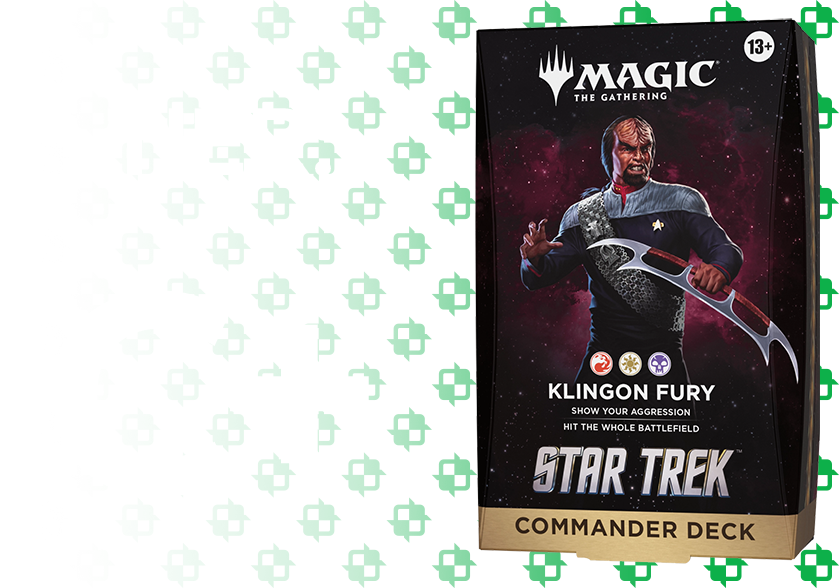
Unfortunately, Commander Worf finds himself in C+ tier.
We Are The Borg

Last, but certainly not least, is We Are The Borg, a deck built around the horrifying Borg Collective that captures and assimilates opposing factions. Sounds like some other intergalactic fascists I’ve heard of. This deck combines two of the more prominent Esper themes — artifacts and tokens — in a way that feels satisfying to put together at the table. Not only in terms of flavor, but in mechanics as well, this precon was easily my favorite of the four.


This deck does something unique with the commander that doesn’t often happen in precons these days. The Borg Queen is much less of an engine or enabler piece in the deck; at seven mana, you won’t be casting her until well after the board is established regardless. Her +2/+2 anthem to all artifact creatures hits hard at the right time after you’ve spent the game accumulating Borg tokens and assimilating your opponents’ creatures. This anthem also expresses the mechanical theme of the Borg by buffing the creatures you’ve stolen, as it aligns well with the Sliver-style abilities in the deck.
New Cards
We are the Borg. Lower your shields and surrender your ships. We will add your biological and technological distinctiveness to our own. Your culture will adapt to service us.

Splits-on-death is an existing Scryfall tag, though this particular type of token creation isn’t as common as more conventional means. Stratagem Emulator bears this attribute, and while it might not be the flashiest or most interesting creature in the deck, it takes excellent advantage of this deck’s desire to buff a wide board with lord effects. Not only does it pay off more the higher its power is, but the subsequent tokens it creates each compound the benefit of anthem abilities.

Optimization Annex is an excellent synergy piece for any strategy that deals with charge counters on artifacts, such as my beloved Spacecraft-focused decks. The Hardened Scales type of counter increase is a great benefit for multiple, repeated instances of putting charge counters on permanents. This makes crewing the Spacecraft in this deck with a wide board of tokens even easier and more efficient, so make sure to do your math carefully.

If combo-y artifact decks are more your speed, then Hugh, First of Many is a great fit as a commander for you. Replicate costs can be partially discounted by abilities like Etherium Sculptor, so you can squeeze a little extra juice from your artifacts. Don’t forget to grab a Twinning Staff, one of the best copy-synergy cards available.


I know I’m cheating by including two cards in one entry, but Borg Incursion and Emergency Regeneration are similar spells with excellent abilities and I didn’t want to take up two slots for the same style of effect. Incursion makes two Borgs and gives your artifact creatures protection from any color you choose, which is flexible for a variety of situations — attacking, blocking, dodging removal, and more. Emergency Regeneration is closer to Heroic Intervention, meaning it’s much more likely to be used defensively than anything else, but it notably applies to all artifacts, not just artifact creatures. Both are excellent pickups for your artifact decks.

Five mana for a creatureland is a hefty rate, but Shore Leave Planet’s ability to copy any creature you control, including legendary creatures like your commander, means that you have access to yet another way to find redundancy for your commander. Sure, the ritzy players will just throw Roaming Throne into every deck whose commander has a triggered ability, but this land takes up even less room in your deck, as opposed to the entire creature dedicated just to doubling your commander’s triggers (assuming you don’t have any other creatures of that type, of course).
Reprints
The total reprint value for We Are The Borg is $103.53.
The top five most expensive reprints in Klingon Fury, captured at the time of writing, are:
- Morphic Pool at $27
- Unwinding Clock at $20
- The Immortal Sun at $11.75
- Toxic Deluge at $5
- Eclipsed Steppe at $5
Review

As a regular token enjoyer who normally detests artifact-centric decks that aren’t Equipment-themed, We Are The Borg was a fun way to be drawn into an uncomfortable playstyle via a familiar archetype. It was also highly refreshing to have access to a top-end threat in the command zone that I had to wait to cast, as opposed to a low-cost commander that needs to come out as early as possible to start churning out advantage. Assimilate is a strong expression of theft mechanically that doesn’t feel overtuned or unfair, and stealing big enters triggers is a great bit of additional value to get from casting The Borg Queen.
The new cards in this deck are more narrow than some of the other designs in Star Trek Commander, but given the prevalence of artifact-based archetypes and the popularity of theft effects, I expect that some of these newcomers will make a decent splash in the format. Additionally, some of the bombs like One, Borg Evolved and The Best of Both Worlds gives me hope that there’s still room for more expensive cards to be printed into the format that feel both in-reach for the average game and powerful when it comes down.
Regarding reprints, this deck is not as packed as Landing Party, but it pulls well ahead of Federation Fleet and Klingon Fury. Morphic Pool is evidently the most expensive of the Battlebond land cycle, so hopefully this reprint will help bring the price down for some time, while cards at lower dollar amounts are still very gameplay-valuable to see printed often: Toxic Deluge, Skullclamp, Darksteel Plate, and Swiftfoot Boots are all cards that can go in a wide swath of decks.
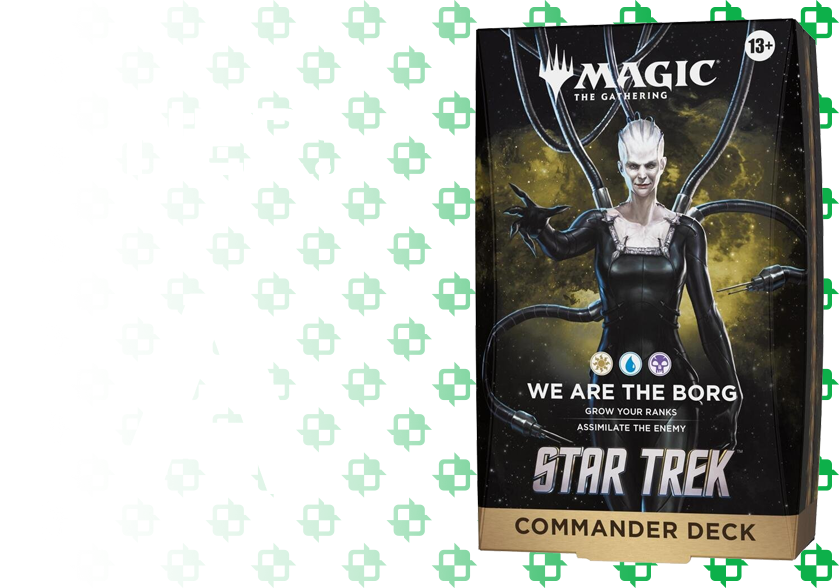
We Are The Borg lands at the well-deserved A tier.
Beam Me Up
And that is all four of the Star Trek Commander precons reviewed and graded by yours truly. I found that ranking each of the precons according to a rubric to be more engaging and thought-provoking than just trying to give arbitrary vibes-based analysis. If you enjoyed this style of review, make sure to let me know in the comments or on the EDHLAB Discord!
The Best Way to Play Commander Online
For the easiest way to play Commander online with your friends or meet new opponents on the field of battle, use EDHLAB.gg's Play Online feature!
EDHLAB maintains a strict policy against the use of generative AI in the production of creative media. All blog articles and images hosted by EDHLAB are made without the use of generative AI.