In the EDHLABoratory: Should Rhystic Study Be Banned?
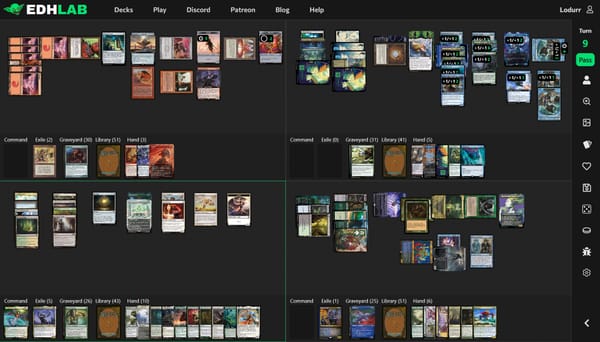
In this EDHLAB playtest experiment, I paired three Rhystic Study openers against one deck without it


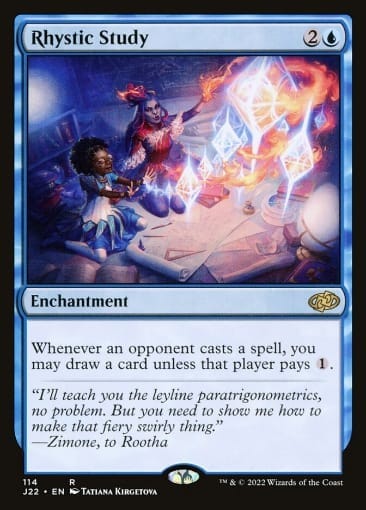
Rhystic Study is a long-debated card in the Commander format.
Last October, Wizards of the Coast's recently-formed Commander Format Panel (CFP) announced they would be looking into Rhystic Study as a potential ban target. Early this February, the CFP decided they weren't taking any action on it, stating that revisiting the subject would require seeing "pretty serious signs and public opinions change."
I'll put my own cards on the table. Gavin Verhey wrote something in that February update article that really resonated with me: "Commander is about letting people play the cards they love."
People love cards — and Magic: the Gathering — for all kinds of reasons: nostalgia, art, personal history, complex gameplay, or the social experience. Commander isn't like competitive formats. When we build a casual EDH deck, we're not trying to win with the quickest, least interactive methods possible. We choose a commander for its strengths and its weaknesses. We build decks that present a challenge and a puzzle for our opponents to solve.
In today's experiment, I took a step back from my own perspective on Rhystic Study and ban philosophy. I put my lab coat on, put on protective eyewear and gloves, and fired up a playtest on EDHLAB. I selected three Bracket 3 decks with Rhystic Study, mulliganed each until they had playable hands with Rhystic Study, and pitted them against one brave deck without it.
The Test Subjects
Seat 1: Lyse Hext
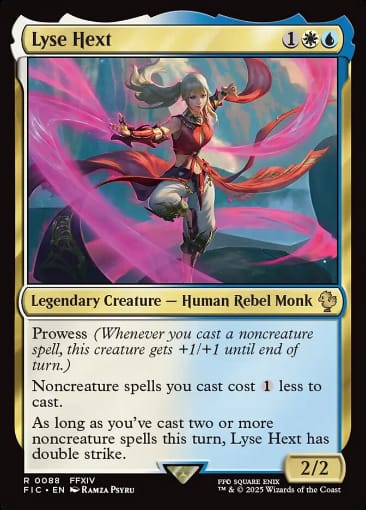
Lyse is a newer Azorius commander with cost reduction in the command zone who hits like a truck after triggering prowess a few times. This decklist contains several subthemes: generating value from casting your second spell each turn, making Lyse unblockable and equipping her with some equipment or auras, and an Aetherflux Reservoir combo finisher as a backup plan.
Seat 2: Obeka, Brute Chronologist
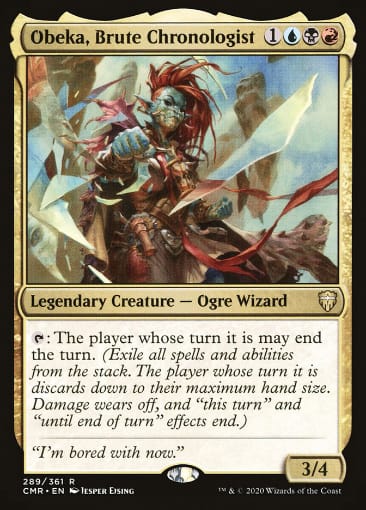
This Grixis reanimator list makes the most of Obeka's end-of-turn trigger-exiling ability. With big hitters like Archon of Cruelty and cards like Reanimate to pull them out of the graveyard quickly, casting Obeka isn't a requirement to get this deck off the ground. It uses Obeka for casting extra turn spells with delayed "you lose the game triggers" — like Final Fortune — without actually losing the game, as well as for dodging the downsides of cards like Sneak Attack and Twinflame.
Seat 3: Indominus Rex, Alpha (decklist by 3ruhMoment, submitted to EDHLAB's Community Decks)
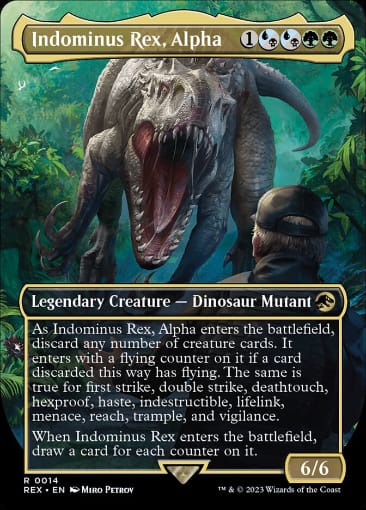
Another reanimator-focused list, this Sultai decklist brings a more impactful commander that can dump cards into the graveyard and refill your hand at the same time, all while putting a 6/6 dino jam-packed with keywords into play. This deck features powerful synergy pieces like Survival of the Fittest to put choice reanimation targets in the graveyard and repeatedly tutor your best threats.
Seat 4: Neera, Wild Mage
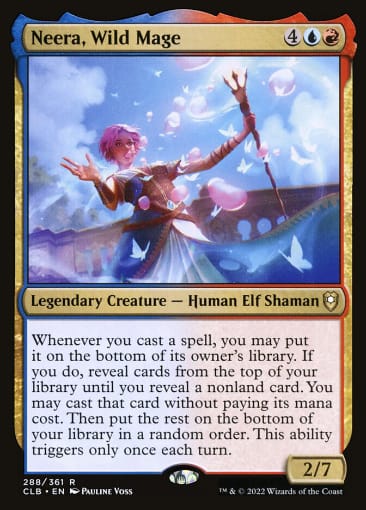
The odd one out, this decklist ditches Rhystic Study in favor of focusing on its main plan; get the commander out, use her ability to replace one cheap spell with a random one off of the top of the deck, and spin into a win. What's a win, in this case? Here are two examples:

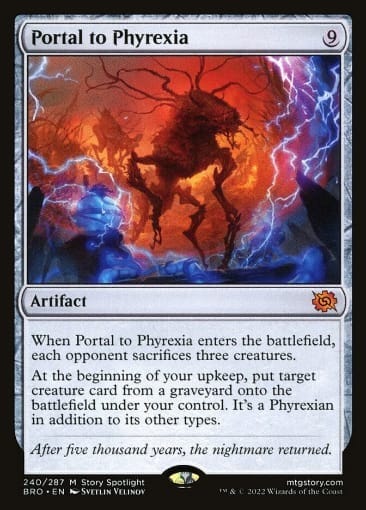
Undoubtedly disadvantaged against the gauntlet she's about to face, Neera has the ability to turn the game around in a single flip, but all the while she'll be feeding cards to several Rhystic Studies.
Game Recap
In the early game, there are mostly slow starts. On turn 2, Lyse deploys Skullclamp and Esper Sentinel. Soon, she'll be asking "Do you pay the one?" twice each turn.
By turn 4, all three Rhystics have landed. Lyse's hand sits at an absurd 12 cards. Indominus discards his Jin-Gitaxias, Progress Tyrant with Survival of the Fittest and immediately goes for Animate Dead. No one has a counterspell, but the silver bullet was sitting in Obeka's hand since the start of the game; Obeka casts Stifle targeting Animate Dead's enter the battlefield trigger, leaving it a useless "Enchant Dead Creature" card on the battlefield.
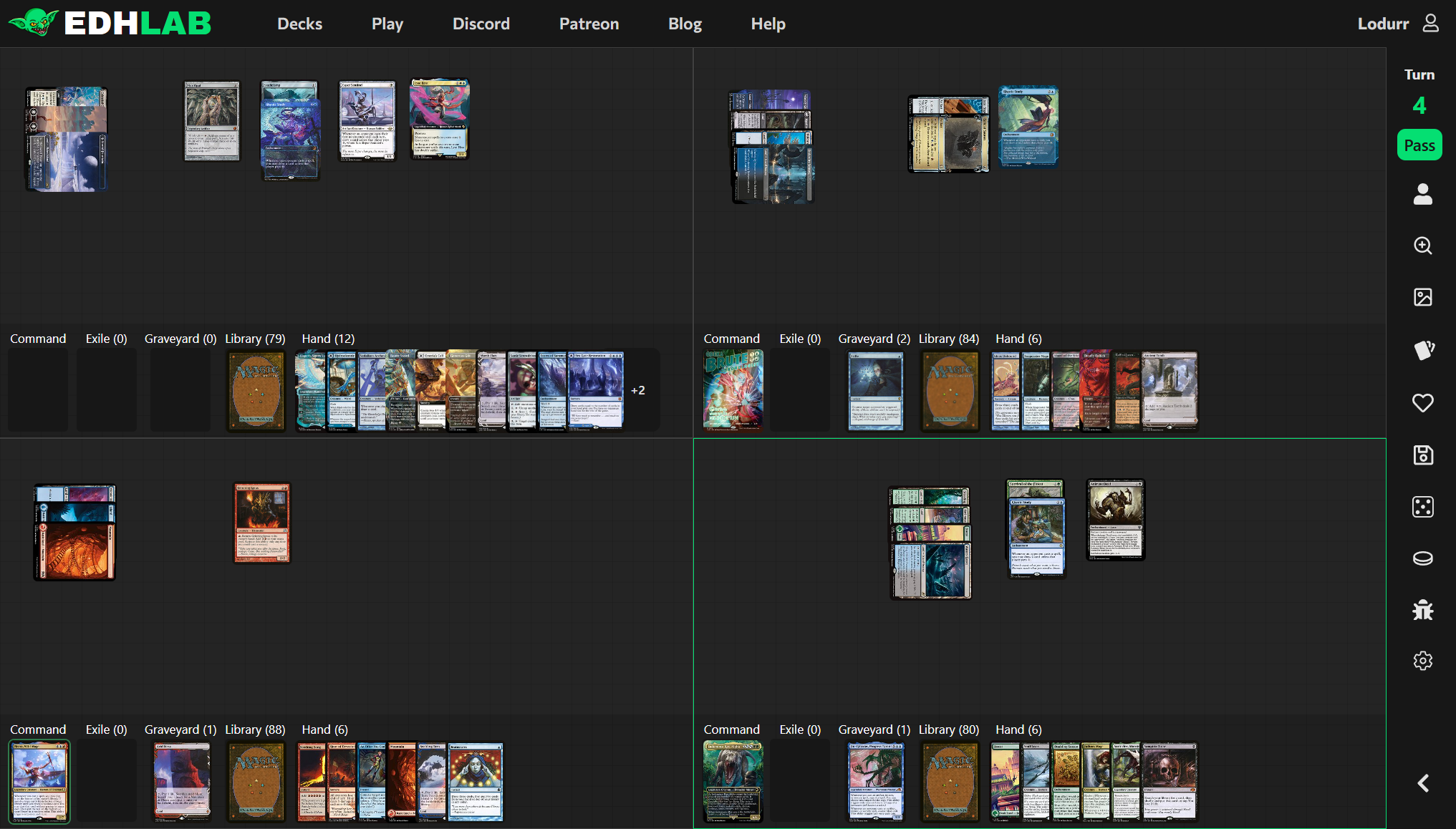
On turn 6, Neera casts her commander and passes. Lyse takes a big swing at Indominus, dealing 10 commander damage. On Obeka's turn, she casts her own Reanimate targeting Indomitus' Jin-Gitaxias. This time it resolves and the infamous Phyrexian Praetor is finally on the battlefield.
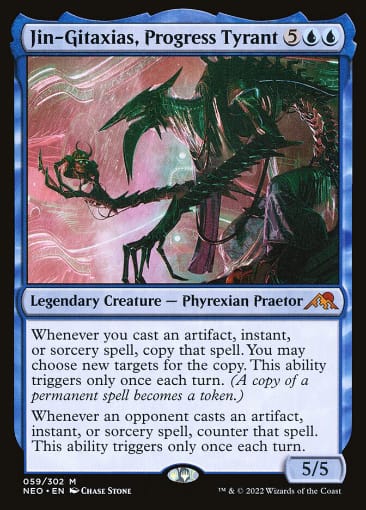
Indominus is up next and he makes a deal with Lyse; if he takes out the Jin-Gitaxias, she agrees to not attack him for one turn. I tend to accept deals I propose to myself.
Indominus casts Arcane Signet to trigger Jin-Gitaxias' once-a-turn counterspell, then casts Beast Within to destroy Jin. Indominus is left wide-open and tapped out, having spent his turn and two cards to eliminate a threat.
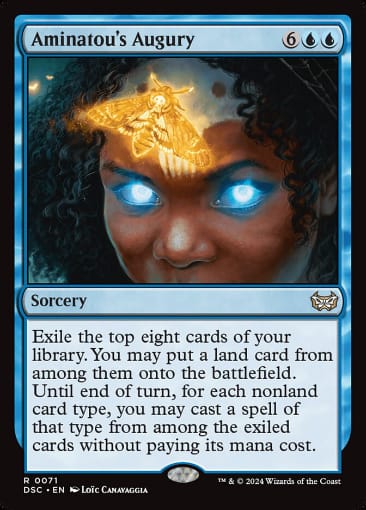
Neera finally gets to spin the wheel. She casts Grinning Ignus from hand and sends him to the bottom of the library, flipping cards off the top until she finds Aminatou's Augury. In a deck built with a high density of bombs to free cast, this is sure to turn the tides.
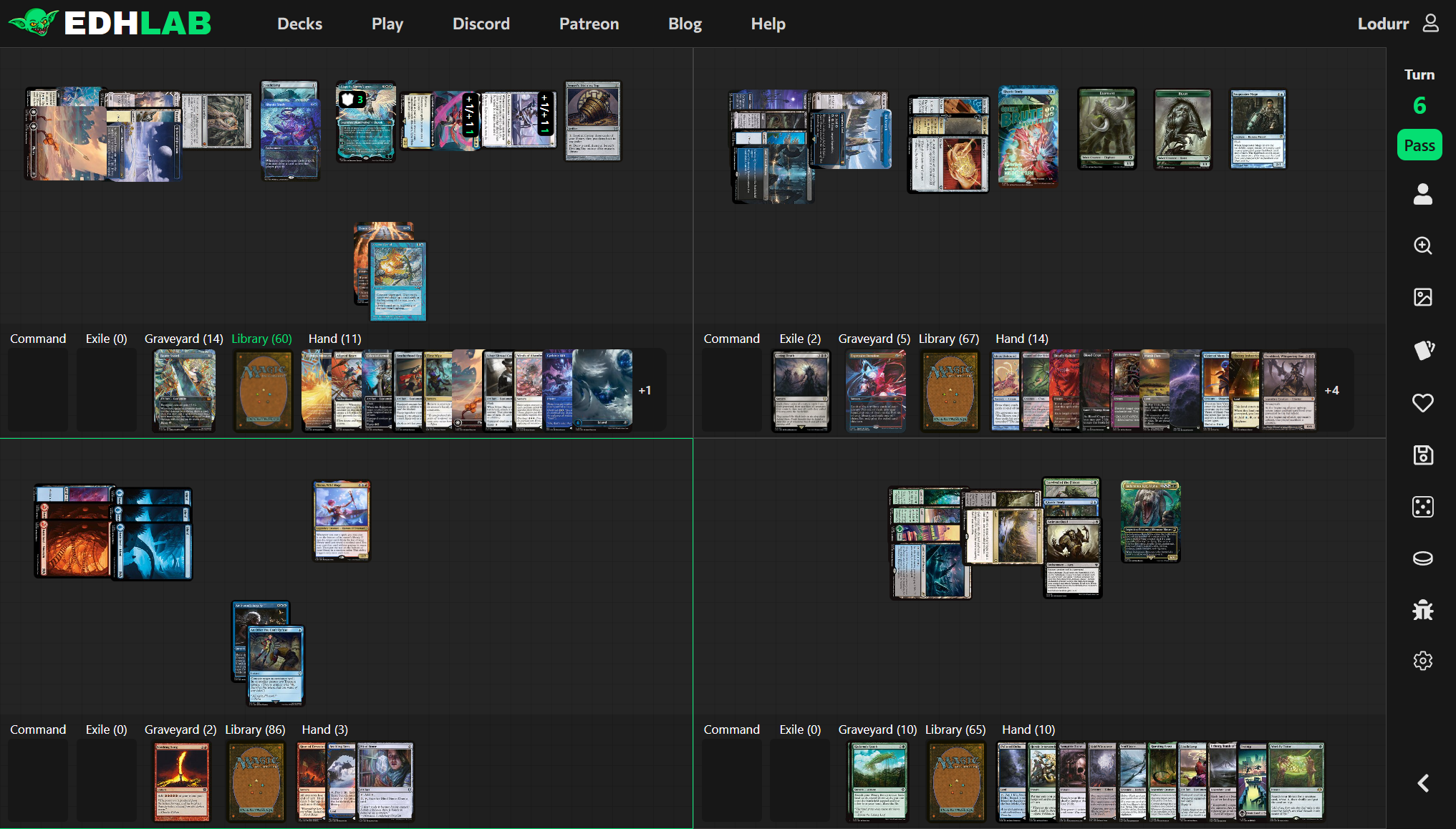
Unfortunately for Neera, her opponents have been drawing cards. Lots of cards. Neera, on turn 6, has 86 cards remaining in her library; Lyse has 60; Obeka has 67; and Indominus has 65, due almost entirely to Rhystic Study triggers.
Lyse fires off a free Fierce Guardianship on Aminatou's Augury. Neera responds with An Offer You Can't Refuse. Neera is unable to pay the one, and Lyse's Rhystic draws her an Arcane Denial. She casts it, countering Augury. Lyse is left with a hand full of action while Neera is tapped out.
To kick off turn 7, Lyse resets everyone's board with Cyclonic Rift and swings out at Obeka, bringing her down to 6 life.
While the other players rebuild their boards, Indominus casts Animate Dead (bounced back to his hand with Cyclonic Rift) on his Jin-Gitaxias, paying for all the draw triggers, and it resolves.
On turn 8, Lyse pierces Jin's defenses by casting a Fellwar Stone then overloads a Winds of Abandon. It turns out two back-to-back one-sided sweepers is a really good sequence of turns.
Lyse swings at Indominus, adding 12 commander damage to the previous 10 and takes him out. She sends her other creatures at Obeka, bringing her down to 0 life.
Now it's a duel between Lyse and Neera. Lyse has drawn at least 20 cards more than Neera this game and has a full board, but Neera has her wild magic on her side.
Neera casts Hour of Devastation to set Lyse's board back. Lyse has been holding on to Flawless Maneuver for several turns and casts it.
Here's where researcher error poisons the dataset; I forgot that Flawless Maneuver's indestructibility would be removed by Hour of Devastation. Regardless, Lyse loses her Elspeth, Storm Slayer to Hour of Devastation's 5 damage, and Neera is still sitting at 38 life.
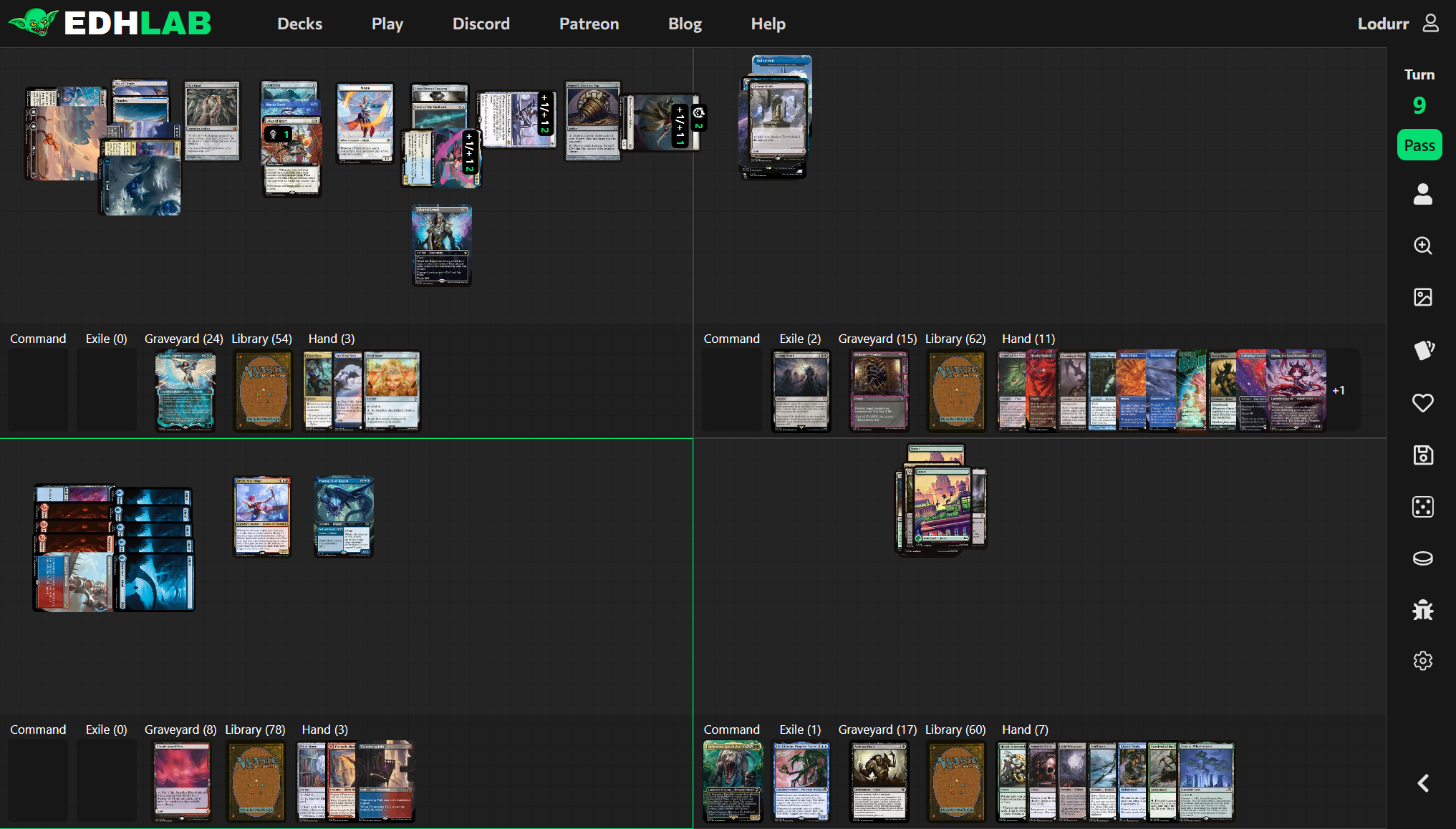
Now on turn 9, Lyse casts two spells, giving Lyse double strike, and she swings out at Neera. Neera has to make something big happen on her turn.
Neera casts her commander and follows up with Mishra's Bauble. She spins into Marang River Regent. Not bad! Not the best hit, but a big body that can immediately bounce two nonland permanents. With Regent's ETB trigger, Neera targets Lyse and Aligned Heart. Lyse casts Celestial Armor in response, giving Lyse hexproof until end of turn. With two forms of unblockability on Lyse, Neera's fate next turn is sealed.
Good game ... ?
Conclusions
I want to look at this from a couple of perspectives. Let's answer some questions about the effects of Rhystic Study itself.
Was Rhystic Study powerful? Absolutely. It's not that the Rhystic players could cast every card in their hand; it's the fact they get to pick and choose, cast the best spells, and discard excess lands and irrelevant cards.
Did Rhystic Study make the game unusually or unnecessarily long? Not in my playtest. It didn't outlast my longest playtest which was against an Aerith, Last Ancient deck whose life total got into the triple digits. That game lasted around 3 hours, whereas this one lasted just over an hour.
Did it monopolize game actions to one player? No. That better describes resolving a Hakbal of the Surging Soul combat step trigger on a board with 18 merfolk creatures, causing 18 explore triggers. Or resolving Archangel of Thune triggers with one or more Soul Warden effects in play, or managing a wide boardstate with Cathars' Crusade while new creatures enter each turn.
Now let's look at it from a subjective perspective.
Are games with Rhystic Study fun?
It would undoubtedly be pretty boring as the Neera player at that table. Neera's turns were often just a couple of spells and no attacks. The one chance she had to come out ahead — when she flipped into Aminatou's Augury — was stopped by one of the Rhystic decks drawing into multiple counterspells in a single turn-cycle.
The exciting part, though, is that Neera still had a chance. If I didn't flub her Hour of Devastation turn, she might've had another turn to keep going. If Lyse didn't draw Arcane Denial with her last Rhystic trigger, Aminatou's Augury would've resolved and changed the game completely.
Being as objective as I can and keeping the lab coat on, I can say without a doubt Rhystic Study remains an extremely powerful card. Drawing an extra 20 cards over 9 turns is a nearly insurmountable advantage. The key word, though, is nearly.
Taking the lab coat off, I like Rhystic Study in the format.
Rhystic Study has the table interacting with each other constantly. When another player doesn't pay the one, you're still affected, so you're incentivized to speak up and strategize and make deals. Magic is a social game — as they say, it's about the Gathering — and Rhystic Study, for all its faults, keeps us talking, in-game and out.
Got any more experiments you'd like to see? Join our Discord and let us know!
EDHLAB does not support the use of generative AI as a means to produce content. Any articles you read on our website will never incorporate generative AI for written or visual materials.