
From Booster to Battlefield: A Beginner’s Deckbuilding Guide, Part 1
How I learned to stop freaking out and close the EDHREC tab: step 1 in my self-revolution in building a full Commander deck.


Deckbuilding in 2026 is stressful, at least for me. I used to have a large paper collection I could spend hours flipping through, pulling cards from carefully-organized boxes sorted by color and coming out on the other side with a ready-to-playtest brew, sleeved and ready. I had as many as 33 decks at one time, each frequently tuned and tinkered with — or torn to shreds and rebuilt anew.
After a couple of relocations and some downsizing in collection, I no longer have a huge repository of cardboard to draw from to build a new deck. I recently realized that, of all my current decks, I hadn’t actually start-to-finish built a single one of them from scratch. The most customized builds were older, and the newer decks were all upgraded progressively from precons. Not only was it time to reevaluate how I could adapt to building a deck in a totally new way, but I was also able to use the opportunity to document my experience and try to give something to the community — some insight as to how to build a deck, 100% fresh, using available online tools.
Today’s article is going to take you through my process of constructing the foundation of my deck by focusing on several specific features of the commander I chose and how I wanted to express support for those features in my deck.
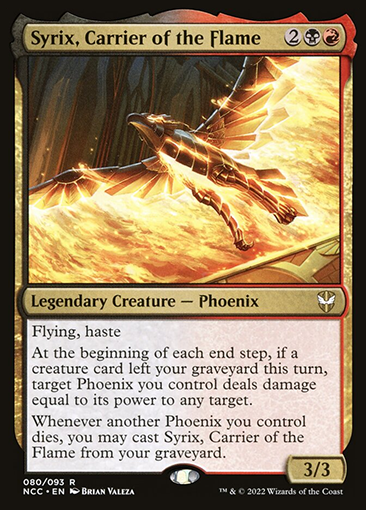
The commander I chose to build is Syrix, Carrier of the Flame. It is the sole dedicated legendary phoenix in Magic, and is therefore the only way to play a non-Changeling commander for a massively undersupported kindred type — phoenixes, evidently — despite its essential nature in the overall fantasy canon. I enjoy red as a support color in Commander decks but do not often build it as the “primary” color and did not often build black-inclusive color identity decks in the past, largely because I find that I do not enjoy many of the best strategies available to the color. Therefore, the black-red color pairing is outside of my comfort zone in deckbuilding terms and I would be forced to work harder to build a competent deck.
Adapting to a whole new way of brewing decks was a difficult process for me. I used to know what types of decks I could build based on what was located in my war chest of Magic cards; I was able to evaluate new commanders quickly to estimate how difficult it would be to put together a list from what I already owned. What's more, I had a well-sorted deckbuilding jumpstart kit that could streamline the grunt work of adding in staples and essential categories of cards like interaction, board wipes, and so on. I set myself up for success quite handily based not just on my collection, but my years of experience building and playing Commander decks. The first Scryfall tab I opened made my mouth water and my fingers tremble.
With the dramatic stage set, let’s take a brief look at my process.
Tools of the Trade
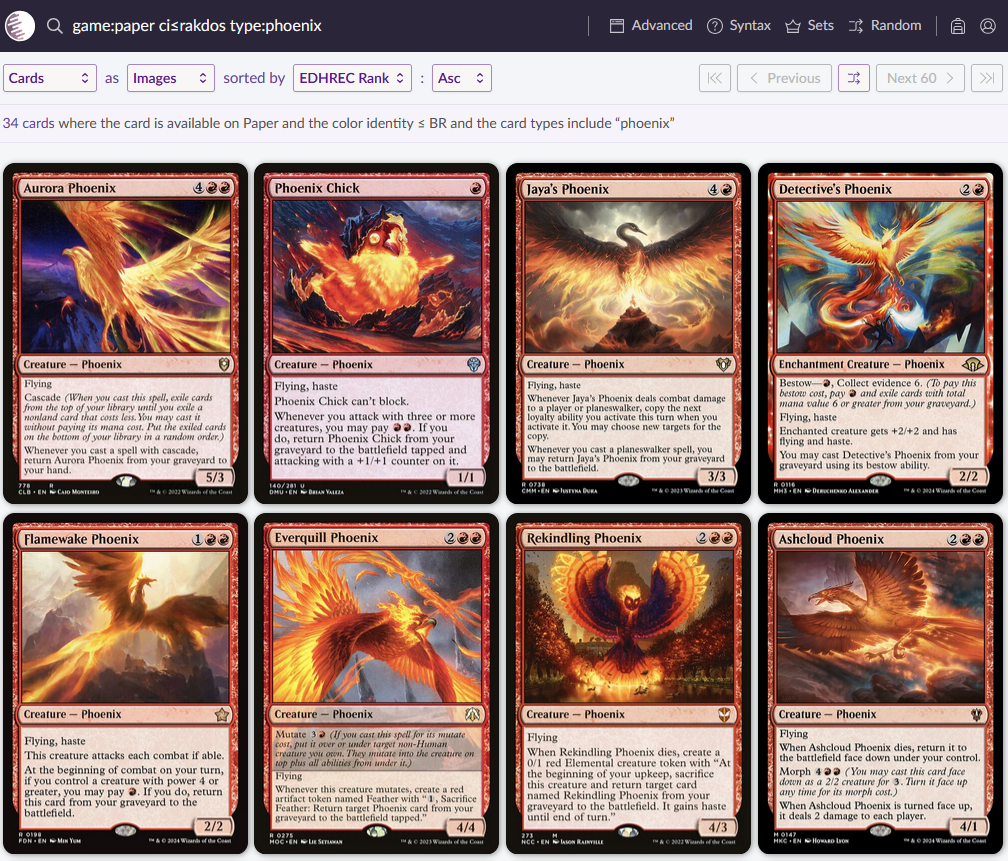
The two most important tools for building a new deck are a place to find cards, and a place to list them. While EDHLAB is obviously my preferred place to keep all of my paper decklists so I can playtest them against other decks, the process of organizing and visualizing a new deck is most aided by tools provided by advanced deck-tracking sites like Archidekt, which is my personal choice, and databases like Scryfall, which is objectively the most useful and sophisticated way to trawl the annals of all paper-legal Magic cards.
Scryfall is an especially powerful tool for deckbuilding if you explore the tags provided by the Scryfall Tagger companion site. It allows you to browse Magic cards categorized into tags that describe their gameplay mechanics. For example, the syntax [otag:draw-engine] fetches 1,391 cards (1,355 paper-legal cards) that are tagged as repeatable card draw sources. You can further modify this search with additional tags or ordinary Scryfall syntax to curate your search.
There are two important asides, the first of which being a disclosure that I actively avoided using EDHREC, which I would normally consider the third most important tool in building a new deck. EDHREC’s data-driven hierarchy of cards most often played in a deck led by any given commander is a massively helpful tool to learn the most popular cards associated with that commander. That being said, I would like to improve my ability to form my own conclusions about the best way to play a given commander to challenge myself as a deckbuilder and boost my skills. That being said, I did still sort my results by EDHREC rank when I felt it was appropriate just to help avoid flicking through pages worth of draft chaff.
The other brief thing of note is that I wanted to keep this deck on the affordable side in case I ended up liking it enough to try and build it in paper. I didn’t have a specific per-card or overall deck budget, but I did shy away from more expensive cards as a result. Any card that looks a bit more pricey than the average card may have be that I already own in my collection, but otherwise, you are not likely to see any cards worth about $10 USD or more.
The Flight of the Phoenix

This is a good time to establish what the actual goal of this deck will be. In this step of the process, it is highly important to investigate the actual text on the chosen commander to try and establish core synergies. Syrix’s first ability might read like an ability that synergizes specifically with phoenixes, but in reality it only cares about any type of creature card leaving your graveyard, whether by reanimation, a returning cards to hand, or even being exiled. I want to be able to put creature cards into my graveyard relatively consistently — be it by aristocrats, self-mill, or discard — and have the ability to draw them back out via cards that reanimate, retrieve creatures from the graveyard to hand, or just exile them in a pinch to get that trigger.
Reading Syrix's ability more closely, I determined that Syrix can be the only phoenix in the deck taking advantage of his first ability. Arguably this can be a more powerful strategy by eschewing the phoenix kindred theme and focusing only on buffing Syrix, making it the turret that shoots my opponents in the face repeatedly in a soft Voltron style.
That being said, I do enjoy the flavor of phoenix kindred itself, and I would like for the first draft of this deck to focus on using phoenixes. This way, I can feel out a general power level before I look at cutting down on kindred synergies to make the deck stronger. A small but important note is that Syrix causes the creature itself to deal damage to the target, which opens the deck up to abilities that trigger whenever a creature deals damage (importantly, not combat damage, though the flambéed flappers all have flying so dealing combat damage is easy). Notably, lifelink will help keep your life total up which can offset the pressure you will take from swinging aggressively. Deathtouch also allows this trigger to snipe creatures off the board with ease which can free up some creature removal slots for other things.
Syrix's second ability is where the inclusion of more phoenixes becomes more relevant to the conversation. Syrix allows the player to recast it any time another phoenix on your board dies. Since I’m going to be reliant on Syrix being on the battlefield as often as possible, I want to make sure that I have some consistent presence of fiery fowls on the battlefield to make sure that I can recast Syrix if I find myself putting it into the graveyard in some way, which allows me to evade the IRS and cheat on the commander tax I'd be paying to cast it from the command zone. This also opens up the possibility of using Syrix itself as sacrifice fodder, which can be useful in situations where I only have a one or two phoenixes available to reanimate, so long as I can use the sacrifice of Syrix to draw more cards or find other ways to put blazing birds into play.
The final concept I wanted to keep in mind is that phoenixes themselves are all flying, which means they are evasive, and several of them have triggers focused on combat or are able to buff themselves and/or other creatures to promote aggression. By using Syrix’s first ability to keep the board clear of flyers, I can consistently swing my board to pressure my opponents’ life totals and make use of combat-damage-trigger-based abilities. Unfortunately, Rakdos (black/red color identity) does not have many ways of capitalizing on combat-neutral damage triggers that can be used by Syrix, so I mostly looked at the combat damage options.
With all of the thinky, analytical bits in mind, let’s take a look at some of the specific pieces of cardboard I added to the first round of the deck.
I'm a Free Bird
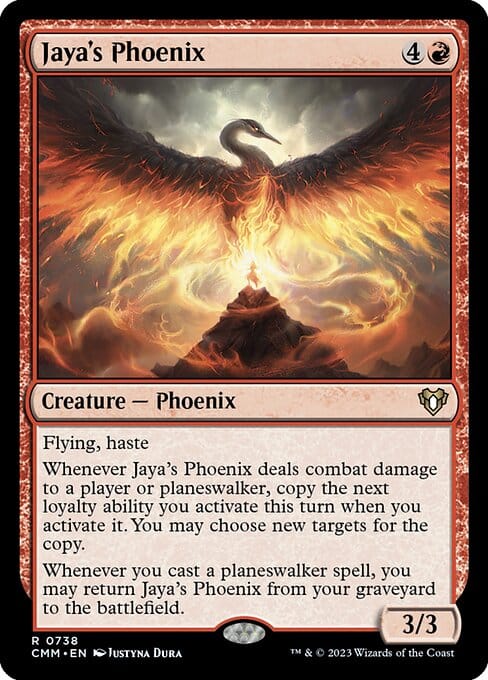
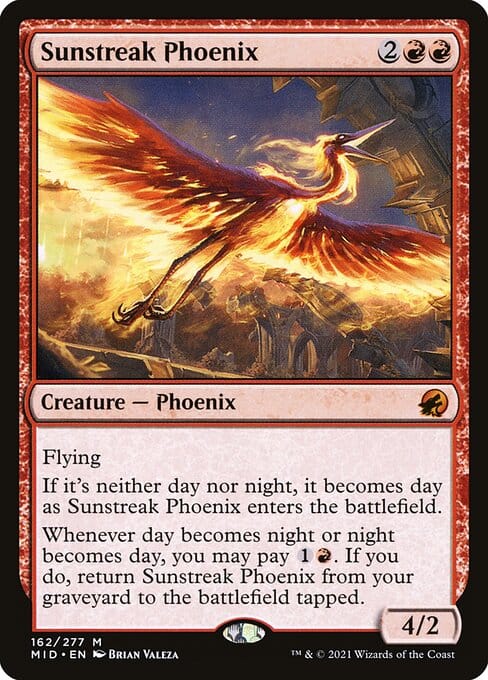
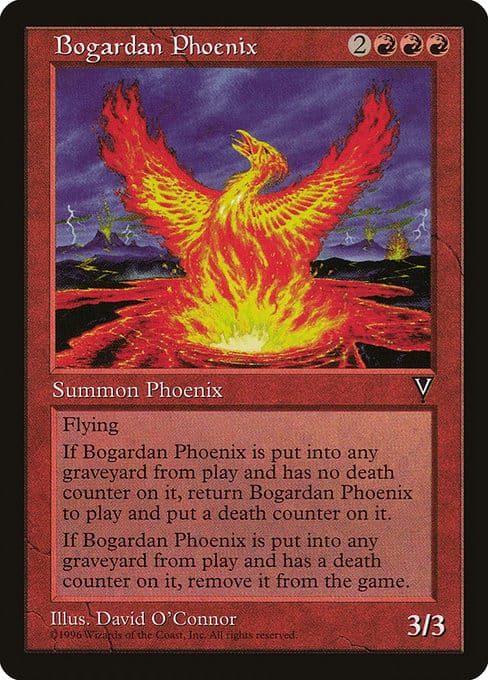
Some notable exclusions from the curated list of phoenixes I chose.
I started with the most obvious step of looking at every phoenix within the Rakdos color identity. As a result of the undersupported nature of the phoenix kindred type, I had a much smaller pool of cards to add to my list, decreasing my normally-massive amount of considerations for creatures. There are 33 paper-legal phoenixes in this color identity, not including Syrix itself, and a nonzero amount of them are absolutely awful. I chose not to include several. While I won’t take you through every single exclusion, I tried to trim out certain “categories," which were mostly ones that remove themselves from the game or simply have too complicated or specific of a trigger for “resurrection,” a trait all phoenixes have, to be able to better focus on a core gameplay loop.
For the sake of volume, I still had to include several subpar options. It would be difficult beyond this point to include support cards for every possible resurrection condition for each phoenix, but it was something I kept in the back of my mind as I continued to browse cards, and I kept a short list of the best mechanics to try and include to facilitate reanimation of some of these burning birdies.
After I finished curating a basis of crispy chickens for the deck, I moved into the damage trigger portion of my considerations. Unfortunately, there are basically no ways to take advantage of Syrix's second ability besides deathtouch and lifelink. Deathtouch, as mentioned, still has plenty of use in picking creatures off with any amount of damage, and lifelink can maintain your life total so you can keep attacking with your big birds rather than holding them back to block. I still included some combat damage triggers; special shoutout to Descendant’s Fury as it not only puts our phoenixes into the graveyard to pull out later, but it also fetches more phoenixes out of the deck. I would call it a standout inclusion for this iteration of the deck. I also like Breath of Fury as it similarly puts phoenixes into our graveyard, and presents several extra combat phases so long as the reanimate triggers on combustible chickies like Phoenix Chick, Flamewake Phoenix, and Warcry Phoenix are available. Here are a couple more combat damage triggers that I decided to include:
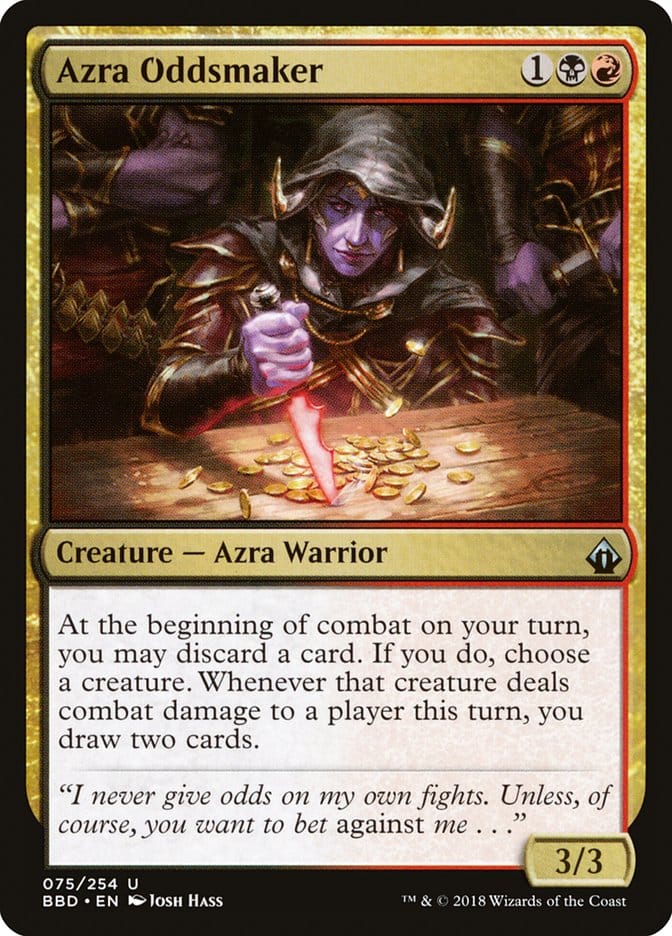
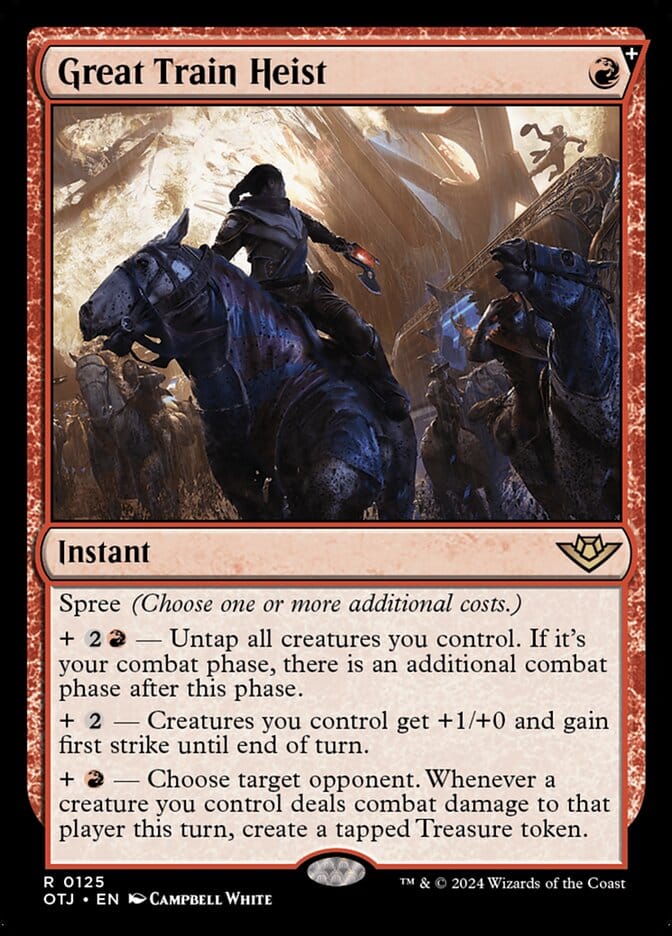
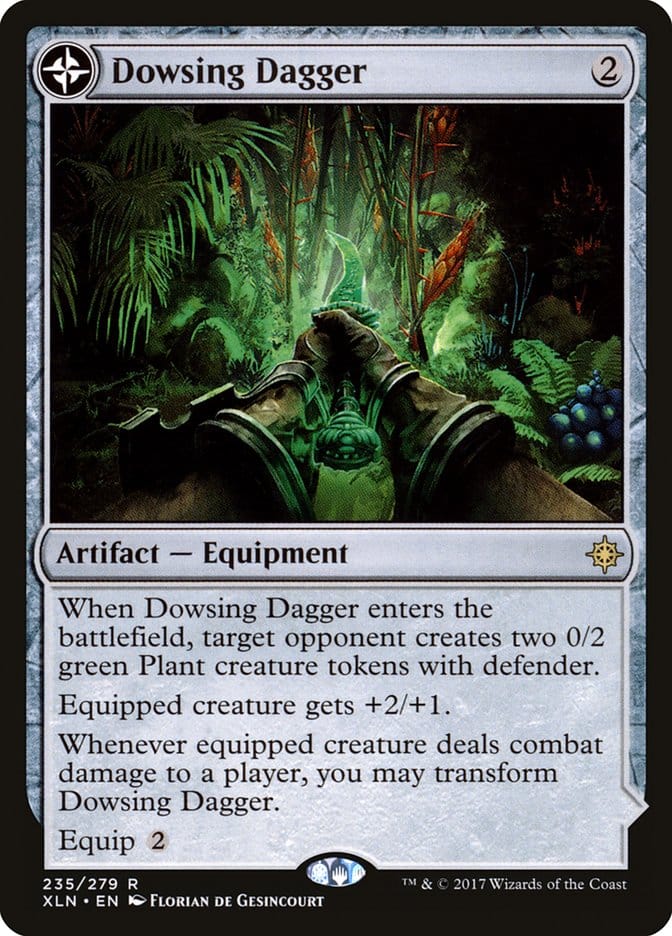
As I mentioned, phoenixes are flying creatures, sometimes with haste, that use combat damage to pressure life totals, so including cards that generate additional value from combat damage is very important. Generating card advantage and additional mana — in this case from sources like Treasures — are the two most important concepts in Commander at large, so I had to be sure to include several ways to continuously do those things while executing the deck’s regular game plan.
Finally, the deck needed a way to both put creature cards into the graveyard and pull them back out to the battlefield or to my hand. To get fodder in the graveyard, I included three types of effect.
First, conventional sacrifice outlets. As opposed to aristocrats decks, which are focused on sacrificing token permanents, decks that want to put creature cards into the graveyard usually need to vary their ways to fill the graveyard beyond regular repeatable sacrifice outlets. I included a couple of one-off effects like Deadly Dispute and Nasty End to facilitate that variance.
Secondly, discard outlets. This category can be a little bit more balanced. You want some of the best one-off effects, like Faithless Looting or Big Score, as well as repeatable methods like Chainer, Nightmare Adept (which also lets you reanimate your phoenixes manually), or Hazoret’s Monument (which is a source of ramp by discounting red spells as well). Shoutout to Tortured Existence which is one of the most efficient ways to put phoenixes into the graveyard while also pulling out another creature which will trigger Syrix.
Lastly, a way to put creatures directly into the graveyard from the library. This strategy isn’t very well-positioned to run a ton of self-mill synergies, so I opted to include some Entomb-style cards that tutor a card directly to the graveyard so I didn’t have to risk milling impactful enchantments or other noncreature cards that I wouldn’t be able to recur reliably. I only included a couple of these effects since this starts to get a little closer to running straight-to-hand tutors which is not a pattern of play I personally am interested in. There are a couple of pretty fair ways to tutor cards into your graveyard so I was sure to include them.

Arise Chicken, Arise!
At this point, the main deck for Syrix is 58 cards. I am including the link to the decklist here so that you can browse all of the cards that I’ve added so far. Keep in mind that most of these cards will not be permanent fixtures of the deck. In all likelihood, several of the non-essential cards like Quietus Spike or Vampiric Link will more likely than not be cut by the final round of this entire process. But for now, I like the roles they play in this decklist and present good candidates for the rounds of cutting cards that I’ll be detailing in an upcoming article.
Hopefully you were able to learn something about my deckbuilding process from this article. My goal is to try and help new or casual players feel less intimidated and overwhelmed by the prospect of choosing 99 cards to put underneath the cool and interesting commander they want to build, and possibly teach a trick or two to veteran players and deckbuilders as well. Feel free to give me a shout on Discord if you want to discuss some of the specific cards, general concepts, or anything else in this article that made you think. Tune back in next week for the next article in this series!
Continue Improving Your Commander Gameplay
For tools designed to help you build smarter Commander decks, analyze synergy, and refine your strategy, visit:

When Ben Alban-Berth isn't taking awkward promotional selfies and casting Craterhoof Behemoth on empty boards, he plays roguelikes and Dota 2 and promises people that he will finish his novel soon (he won't).
EDHLAB does not support the use of generative AI as a means to produce content. Any articles you read on our website will never incorporate generative AI for written or visual materials.