Class, Let's Begin: Secrets of Strixhaven Debut Highlights
Insights for the Secrets of Strixhaven Debut stream aimed at Commander players.


It's one of the most exciting times of the last two months. We finally got another official Magic: the Gathering Debut stream for Secrets of Strixhaven, and we got a broad overview of what to expect in terms of set mechanics, art styles, and more. Strap yourselves in for a rapid-fire read, because we here at EDHLAB are going to give you the best of the best when it comes to upgrades for your current Commander decks and shiny new legendary creatures to head up new brews.
Want the best way to play Commander online so you can test out this truckload of new spells to sling? Check out our Playtester app on EDHLAB.gg or join the ranks of our Mythic Patreon tier to preview our Online Play multiplayer game mode (full release coming soon)!
The Elder Dragons of Arcavios
The Elder Dragons who founded Strixhaven University make a bold return! And surprising absolutely nobody, the cycle of Elder Dragons from this Strixhaven set look mechanically chonky. All of these abilities are simple lines of text, but they make a huge splash. It's always a simple pleasure to me when the "obvious commander contender" legendary creatures in a set are cleanly designed like these. It means that deckbuilding will be straightforward for new players, but wide and deep for players with the experience and gameplay chops to digest the full range of flexibility offered by simplicity.
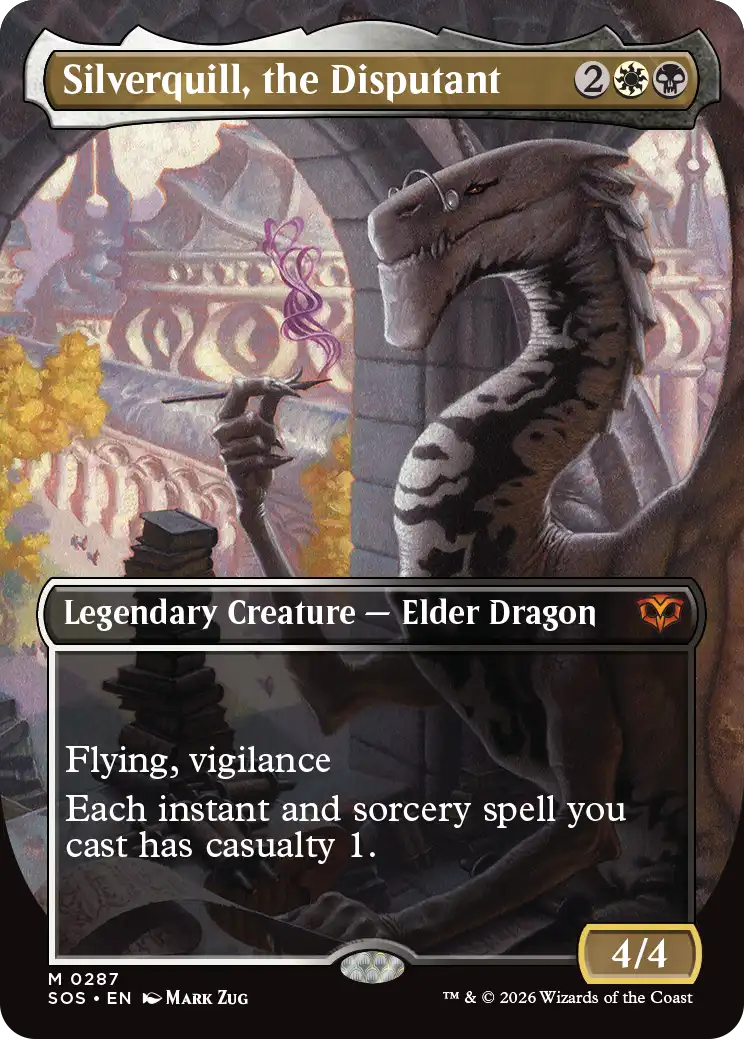
Silverquill, the Disputant is possibly the easiest of the bunch. The white-black pairing is a juggernaut of token generation, with plenty of options for durdle generation in the form of weak but plentiful creature tokens. Even simpler than that, both white and black are replete with one-and-done creatures like Helpful Hunter and Spirited Companion in white, or recursive sacrifice fodder like Reassembling Skeleton in black. Double-spelling with cheap removal in white or efficient draw spells in black that becomes copied by the casualty mechanic is a narrow but effective formula for value generation, and you can always use casualty to copy huge drain spells like Debt to the Deathless or dominate the board by copying Finale of Glory. Get some cheap fuel, load up on low-to-the-ground cantrips and removal or huge, bombastic instants and sorceries, and Silverquill will sing like a really fat, nerdy-looking bird with scales.
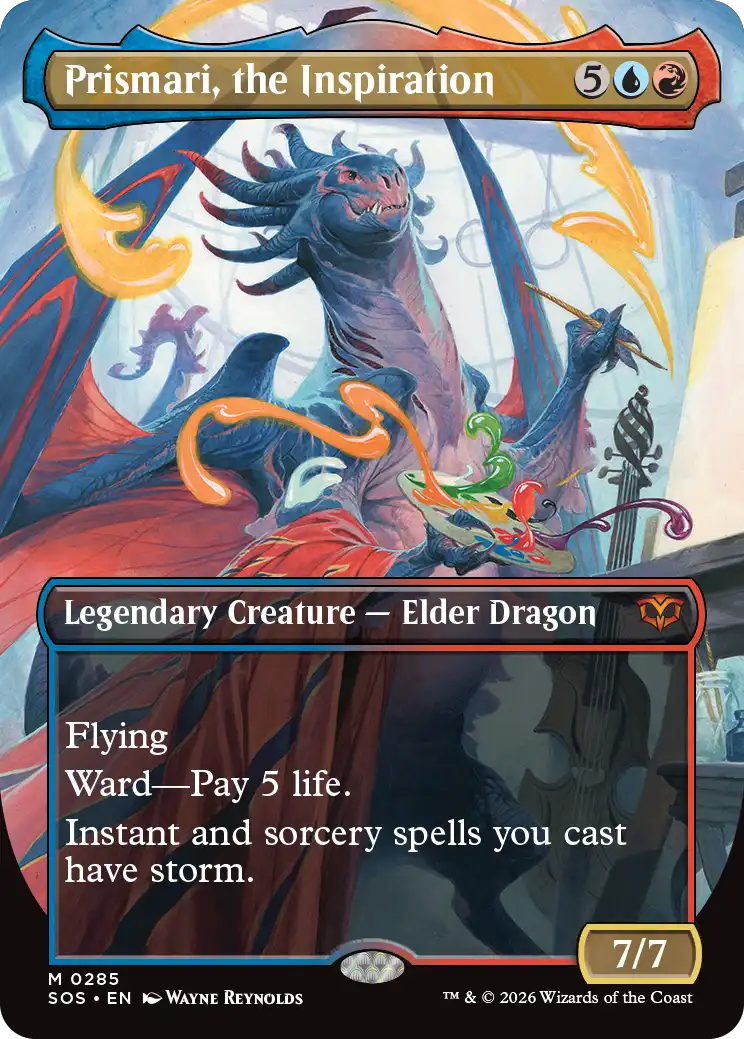
Prismari, the Inspiration is probably the least unique of the cycle, but covers of famous hit songs are popular for a reason. They take the best qualities of nostalgic tunes and modernize them with power creep and power/toughness stats. Confused analogies aside, though, Thousand-Year Storm has been preparing us for this day since 2018. A staple of lower-power storm brews, the ability to multiply your number of resolved spells per turn is a high-ceiling effect that launches your turn timer into the stratosphere. There isn't much to say here that hasn't already been done a thousand times in blue-red Spellslinger — eat your vegetables, cast your ramp, cast four cantrips in a row, then cast Crackle with Power for a storm count of five and kill as many things as possible on the table.
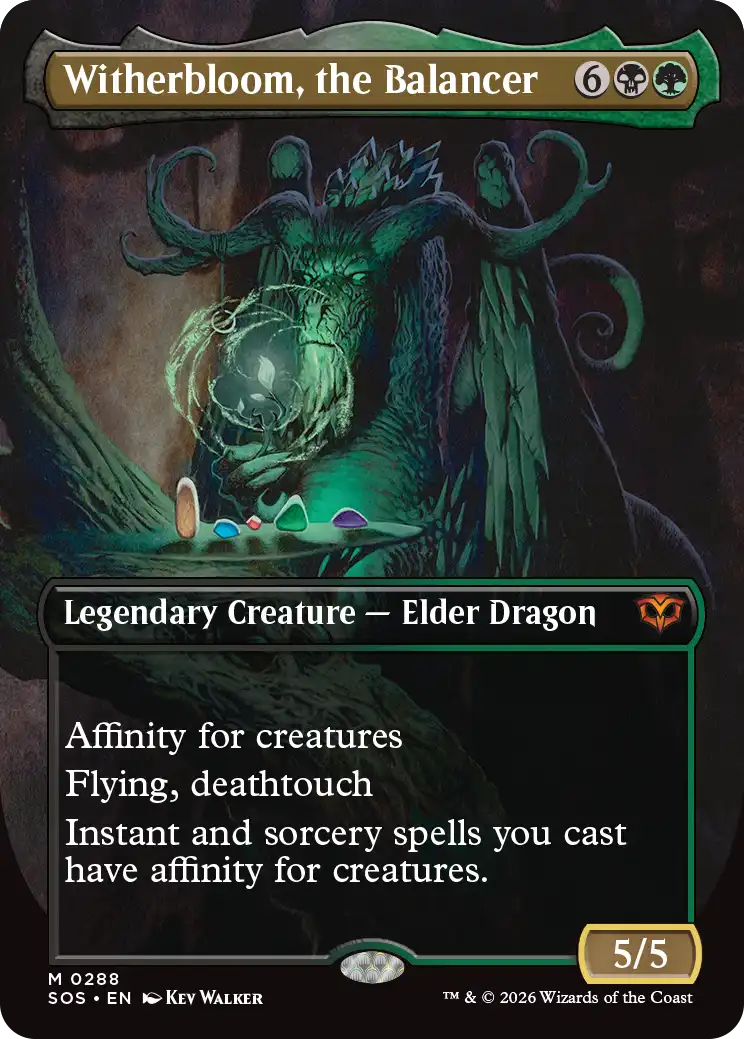
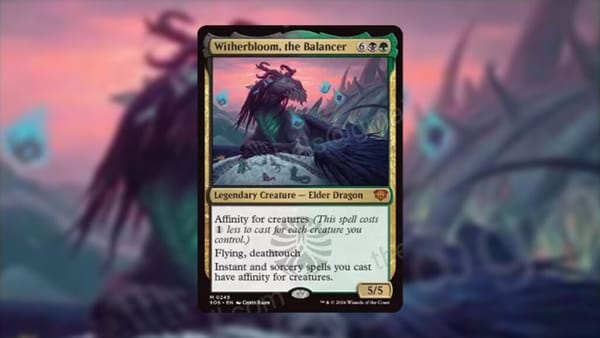
Witherbloom, the Balancer has the potential for the highest ceiling from a power level perspective. I detailed several strategies and suggestions in an article I wrote when she was leaked last week, but here are a few quick highlights: Witherbloom turns every creature in your deck into ramp for instant and sorcery spells with large generic mana requirements or X in the casting cost. She also discounts herself, which makes her super resilient to removal, and is yet another highly powerful payoff to having a large board in green. Make a lot of tokens, cast a lot of big spells, and travel back in time to buy Sprout Swarm when it was a dollar.
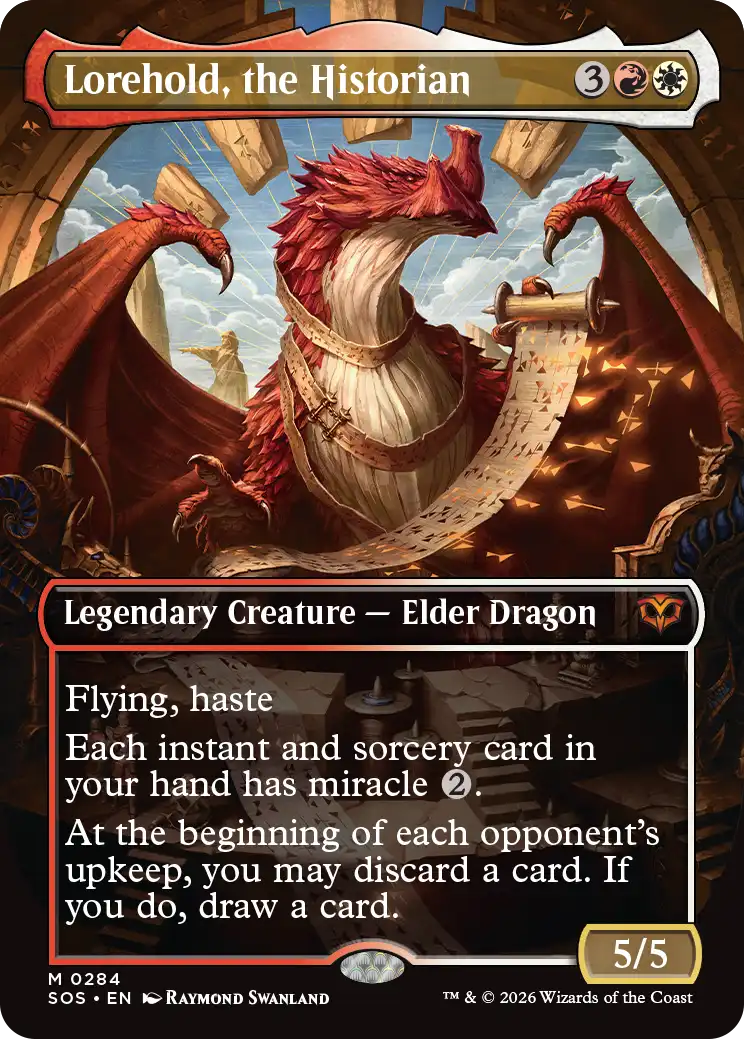
Lorehold, the Historian takes the title for most original use of its anthem mechanic by emphasizing one of Magic's coolest but least-seen keyword mechanics in miracle. With a little bit of cost reduction and topdeck manipulation, you'll be able to justify running all sorts of horrifically greedy high-cost instants and sorceries with the ability to cast them, completely free of charge, during each of your opponent's turns. Stack your deck with Library of Leng, cheapen your bombs with cost-reducers like the color-appropriate Medallions, and watch the table groan as you cast four free spells per rotation, eating up time during everyone's turn before putting them all out of their misery with Approach of the Second Sun.
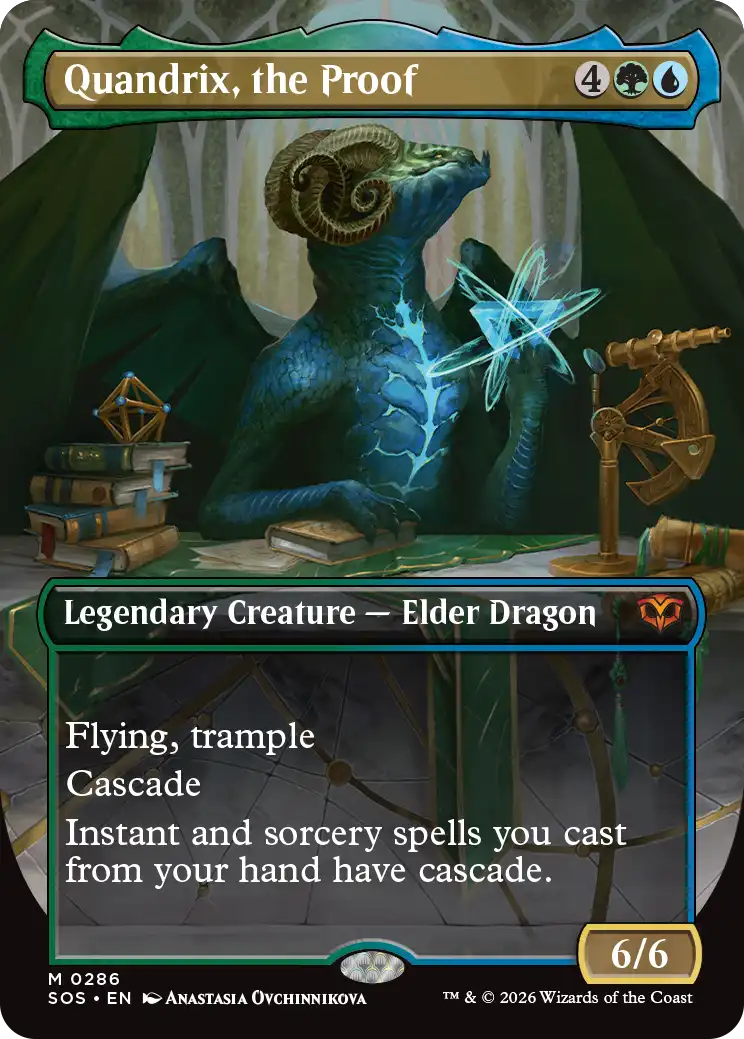
Finally, we have the sassiest and scaliest mathematician this side of the multiverse in Quandrix, the Proof. No frills, bells, or whistles required here. Your typical Simic player degeneracy will turbo you into a six-mana commander by turn 3, which will cascade you into some more degeneracy, and then on turn 4 you can cast the greediest and most disgusting ramp spell on the planet, spin into the mana-tripling Nyxbloom Ancient, then use the rest of your mana to play Mind's Desire, then storm or cascade into Seedborn Muse and High Fae Trickster because you're just that skilled, and then you can just keep casting spells with no clear win condition until your opponents enter metabolic comas from the lack of nutrition. This one might be the one for me. I really hope my group of quarter-life-crisis-aged friends have gotten their wills updated.
The Signpost Students
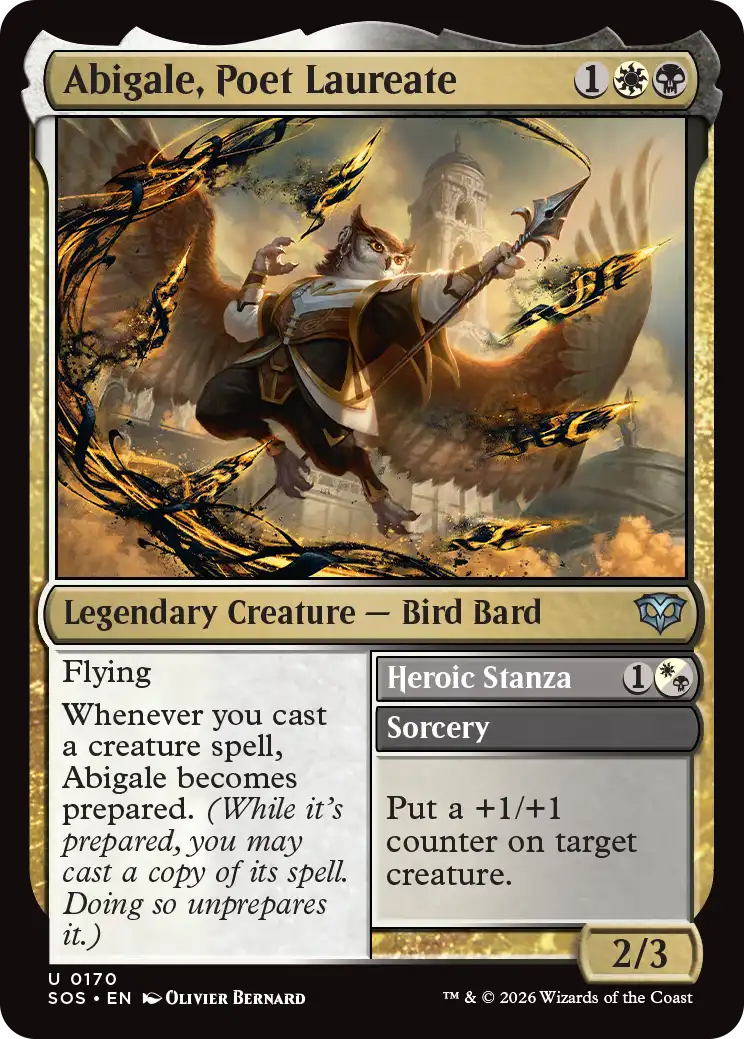
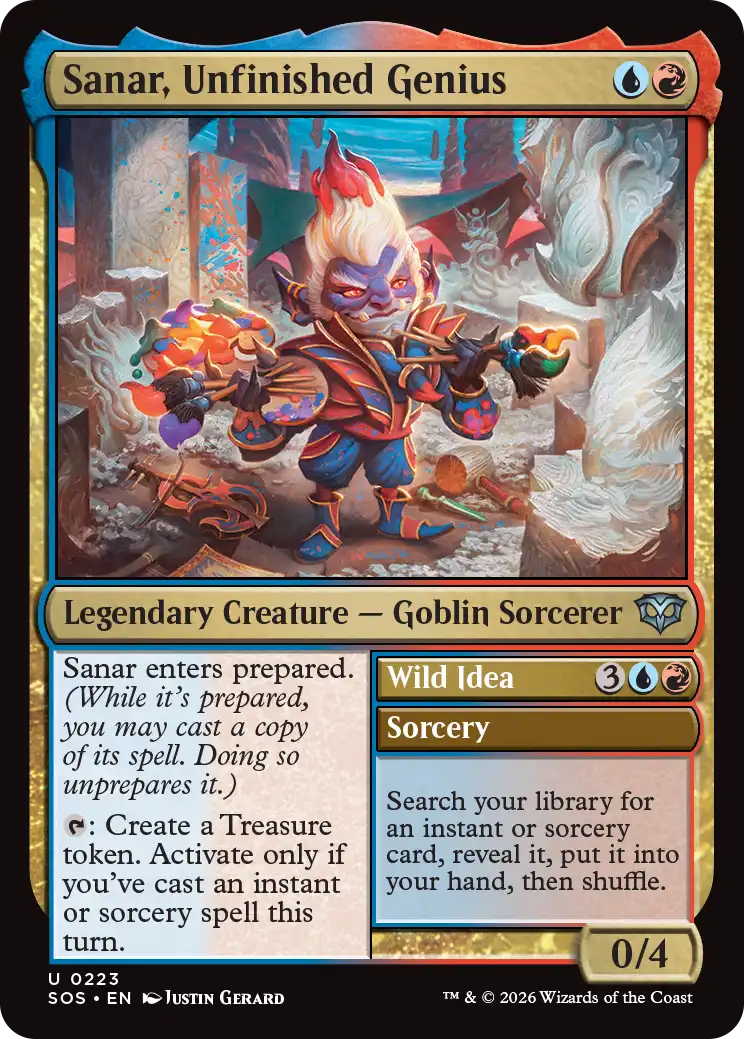
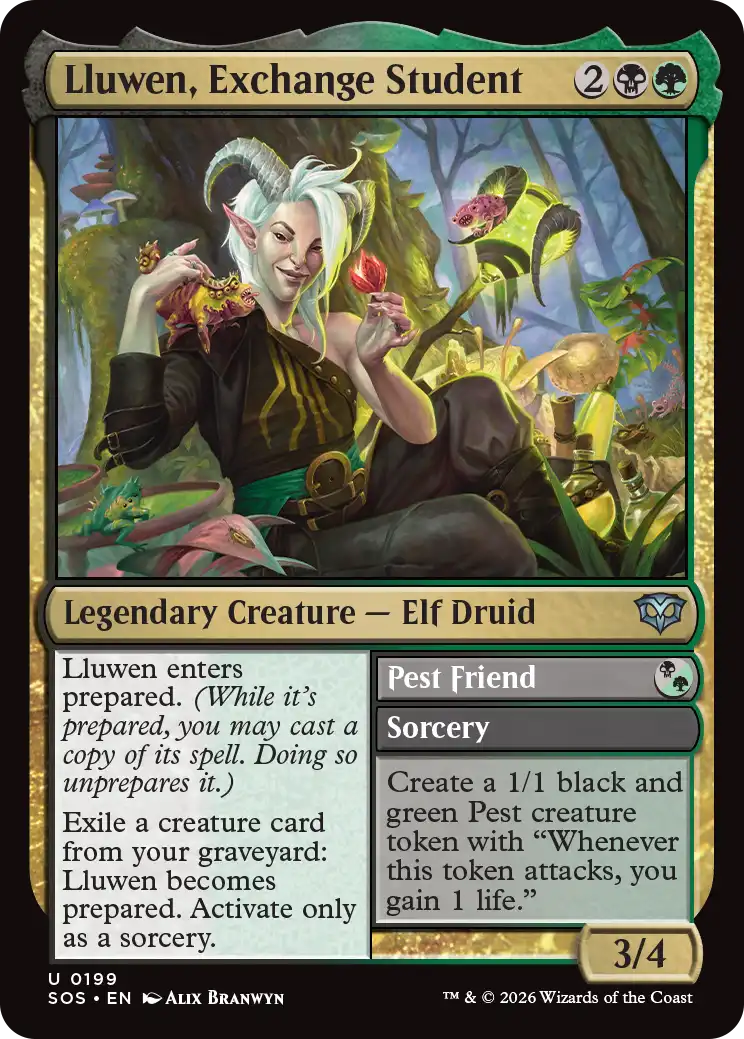
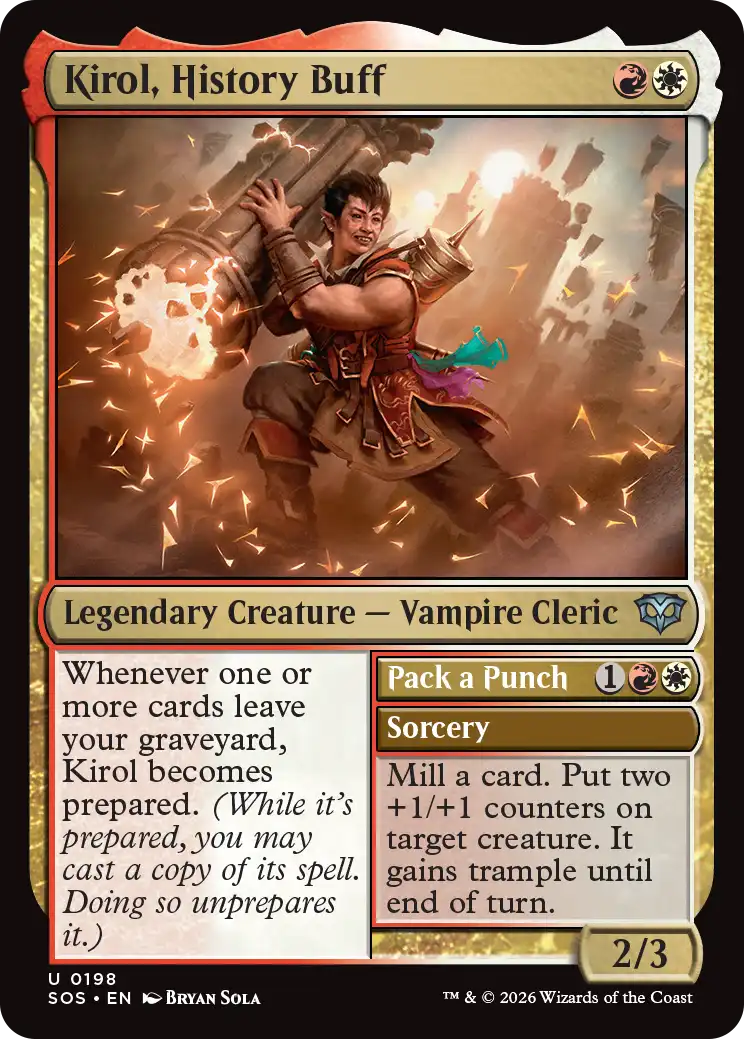
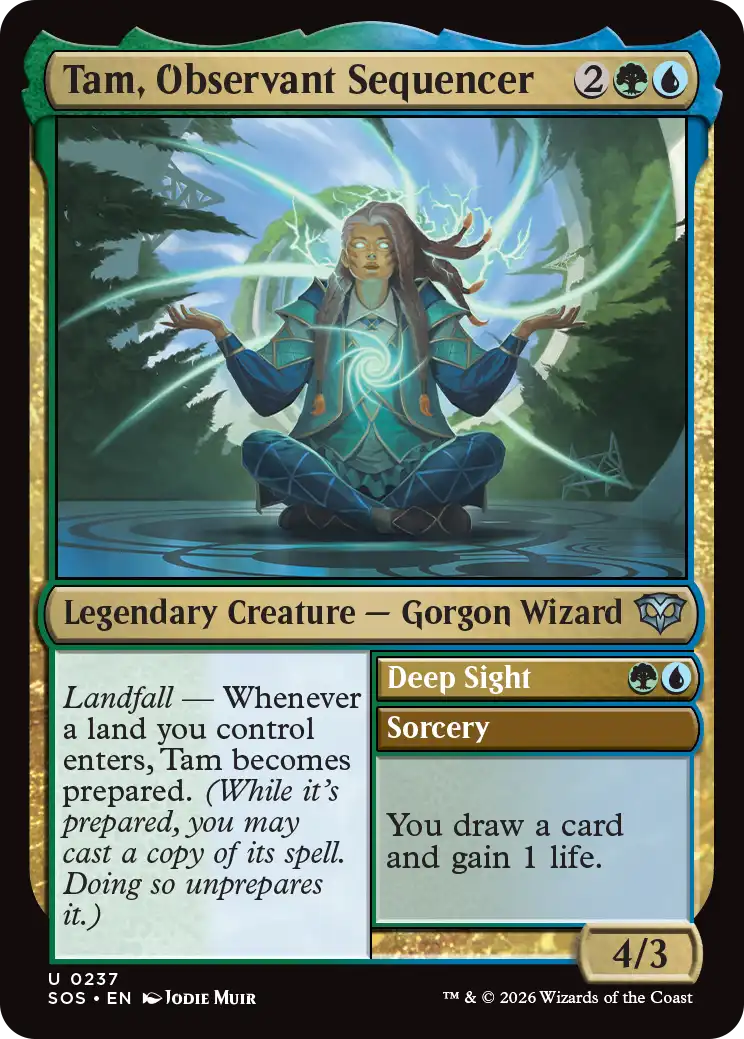
At the uncommon rarity, we have the most beautiful thing I've seen to come from Magic: the Gathering in several years. Personal vindication. Last week saw some speculation about the prepared mechanic and its functions, and while I was off the mark in the specific language used to describe the mechanic, the signpost uncommons in this cycle demonstrate an eerily similar action to my proposed rules text for prepare that took the Twitter misinformation factory by storm. I'm not going to take credit or pat myself on the back today, I'm just going to appreciate how elegant this mechanic is. Oldheads will remember the old Spellshaper creature class, a type used to subtly print word-for-word copies of spells onto creatures as a way of "allowing" creatures to cast spells, instead of the planeswalker represented by the player. This new card frame, which beautifully mirrors the Adventure frame, is an awesome way to give new creature cards some much-needed visual variety and a whole new dimension of gameplay implications to explore.
Another fun consideration is Pauper Commander (PDH), a low-rarity subformat of Commander that features only uncommon legendary creatures or any creature at the uncommon rarity as legal commanders with fully-common main deck inclusions. These students will be excellent and flexible new spaces to brew for in PDH! If this sounds exciting to you, check out the subreddit and PDHREC for a new, budget-friendly twist on your favorite format to get your friends into!
Mechanical Masterclass
Next in this deluge of debut cards are the Strixhaven College signature mechanics! When we last visited Arcavios, each of the five Colleges of Silverquill, Prismari, Witherbloom, Lorehold, and Quandrix had a loose mechanical theme tied together with the Magecraft ability word and a friendly little mascot to provide some mechanic-agnostic presentation. This time, each of the five colleges has a clear-cut ability word of its own to properly demonstrate the core tenets of each institution.
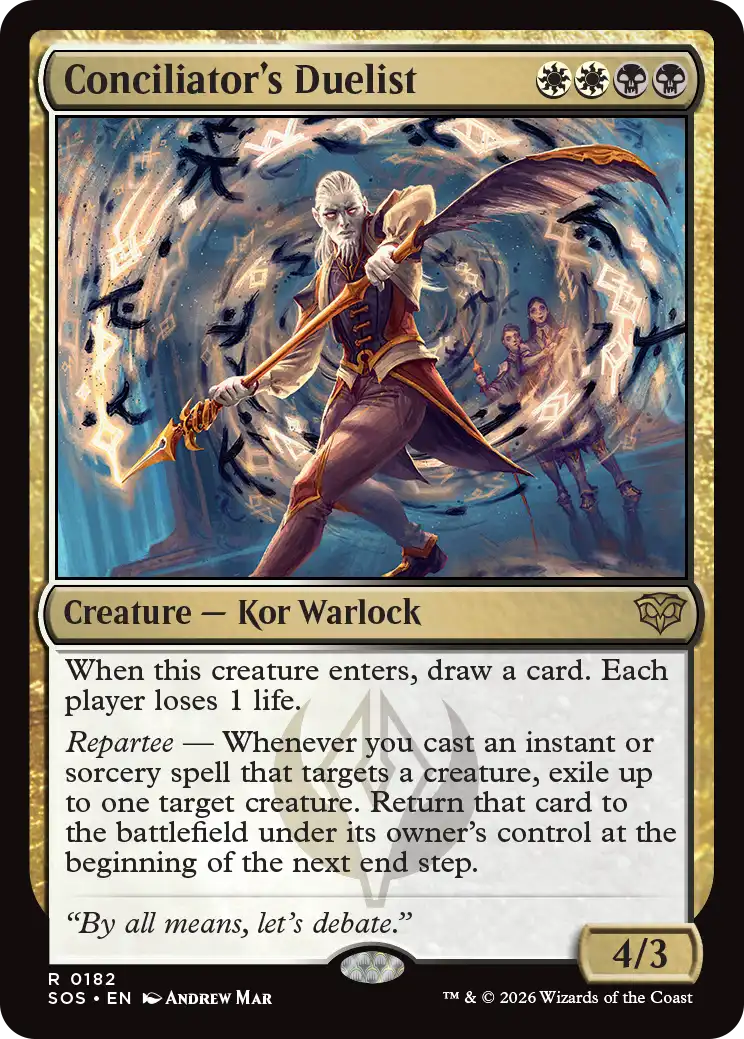
Previously, Silverquill's trademark was to emphasize spells that target creatures by providing removal spells with discounts or buffs, or making targeted spells (be they instant, sorcery, or enchantment) that enhance your creatures cost less. This time around, Repartee codifies a stricter theme. You are rewarded for casting spells that target your own creatures, which gives Silverquill mages that much more reason to play solitaire by casting blink and flicker spells to repeat valuable enters triggers.
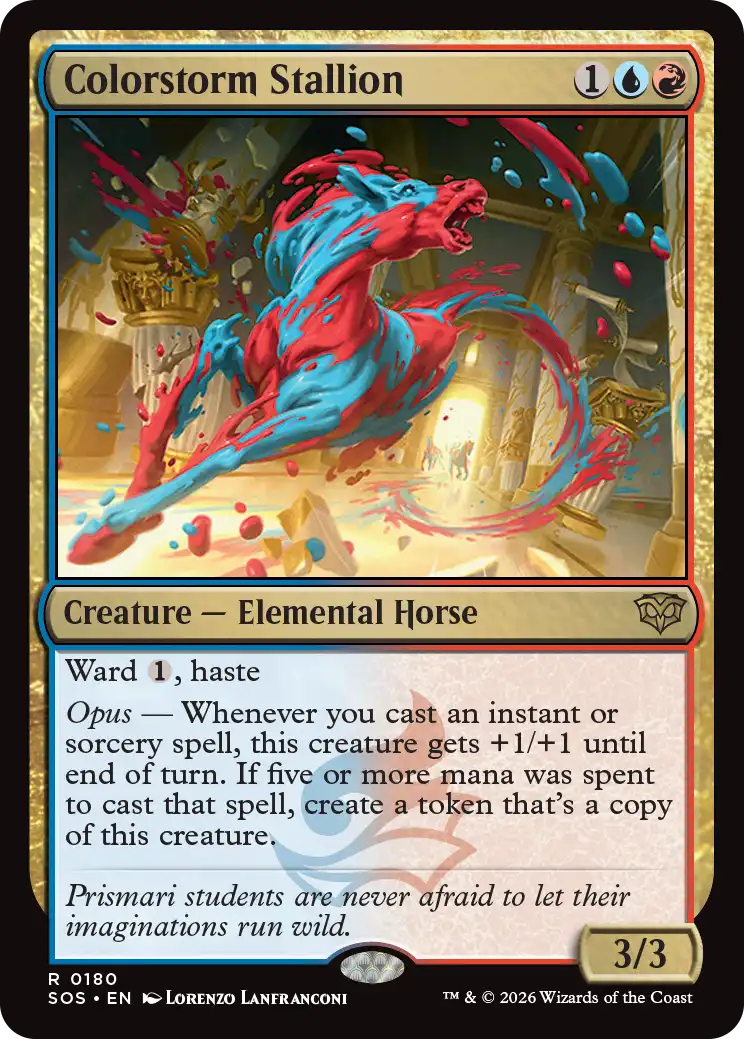
Prismari is the place for artsy folks, theater kids, and dope-smoking musicians, known best for grand, emotional performances represented by spells with huge price tags. Opus is less all-in on the big spells, which is a pretty big benefit, as the ability triggers for any instant or sorcery you cast. The provision from Magecraft that included copying spells is gone, which makes the mechanic much more balanced, and to combine this with the importance of the spell's mana value, Opus grants extra benefits to spells that cost at least five mana, a bonus that can even apply to lower-mana-value spells with X in the casting cost that total to at least five mana paid overall.
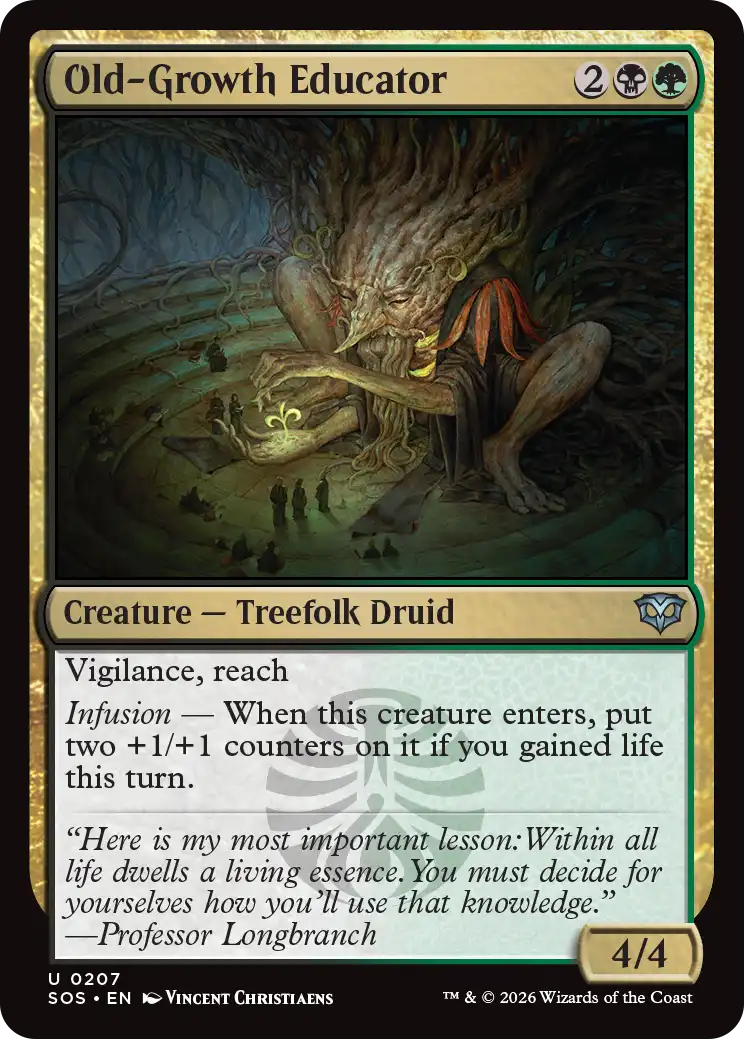
Previous Witherbloom cards dealt with life in several forms, whether it was caring about the amount of life gained or lost, or simply triggering every time you gained life. Infusion treats lifegain as a sort of kicker cost. If you gain any amount of life, your spells with this ability word get an extra benefit for the rest of the turn.
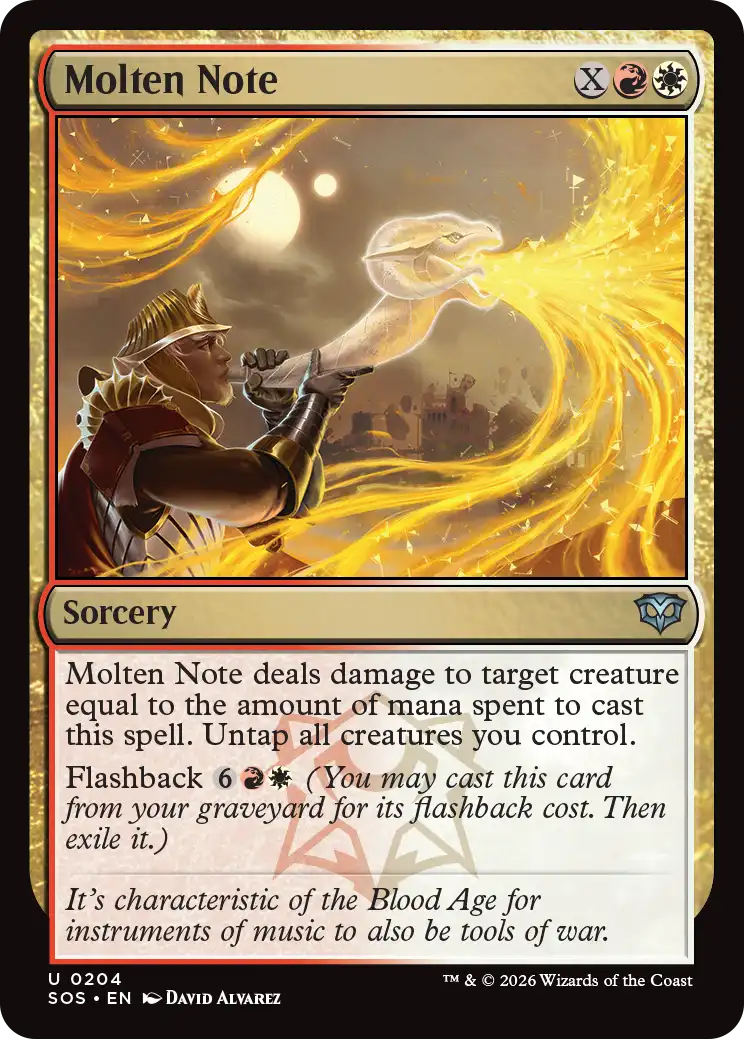
Lorehold's big makeover of the white-red color identity was a huge event, especially for Commander, during the first trip to Arcavios, and the reintroduction of the flashback keyword helps to contribute to that makeover. While Lorehold cards still care very much about cards leaving your graveyard, the design team has returned to a time-tested standard for utilizing your graveyard in a way that will always exile the spell, providing a consistent way to trigger all of your favorite archeologists.
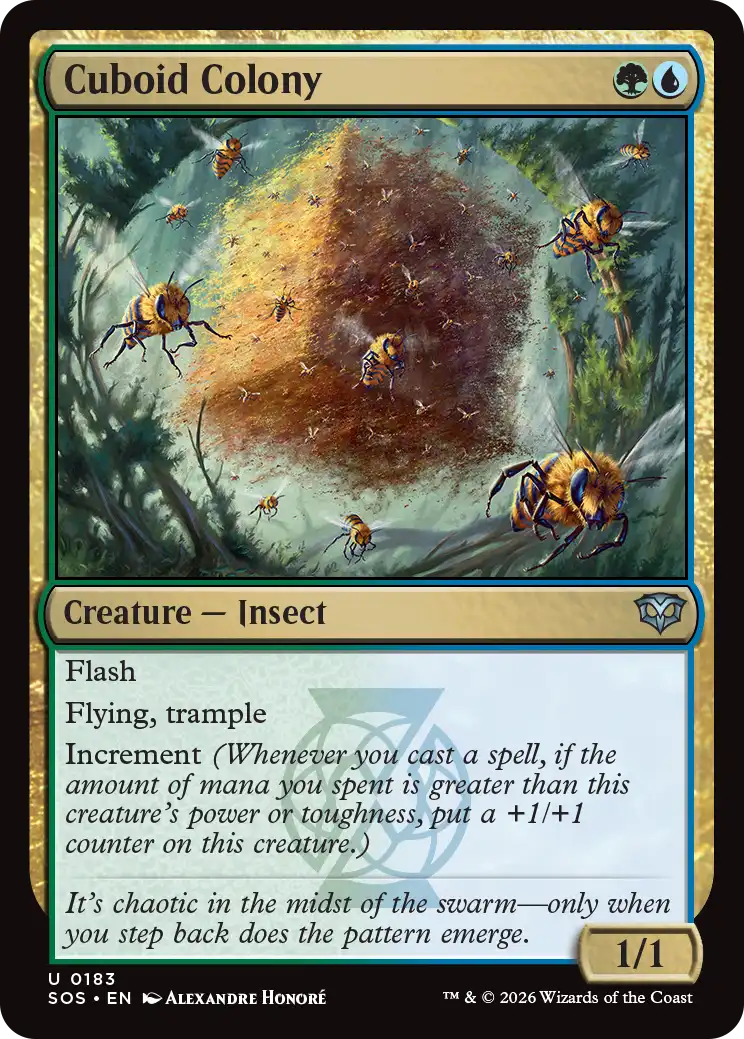
Last, but certainly not least, the increment keyword stands with Repartee, Opus, and Infusion as a clearer definition of the mechanical identity of the Quandrix campus. The old ways to play Quandrix were putting counters on Fractals and...having equal power/toughness stats? I guess? These have been taken to a simpler play pattern by growing your creatures with increment every time you cast a spell with a mana value greater than either the total power or toughness of the creature in question. Simple, straightforward, and still somehow nerdy, increment joins the flexible ranks of +1/+1 counter synergy mechanics with a new, albeit mundane, take on beefing up your board.
Lucky Charms
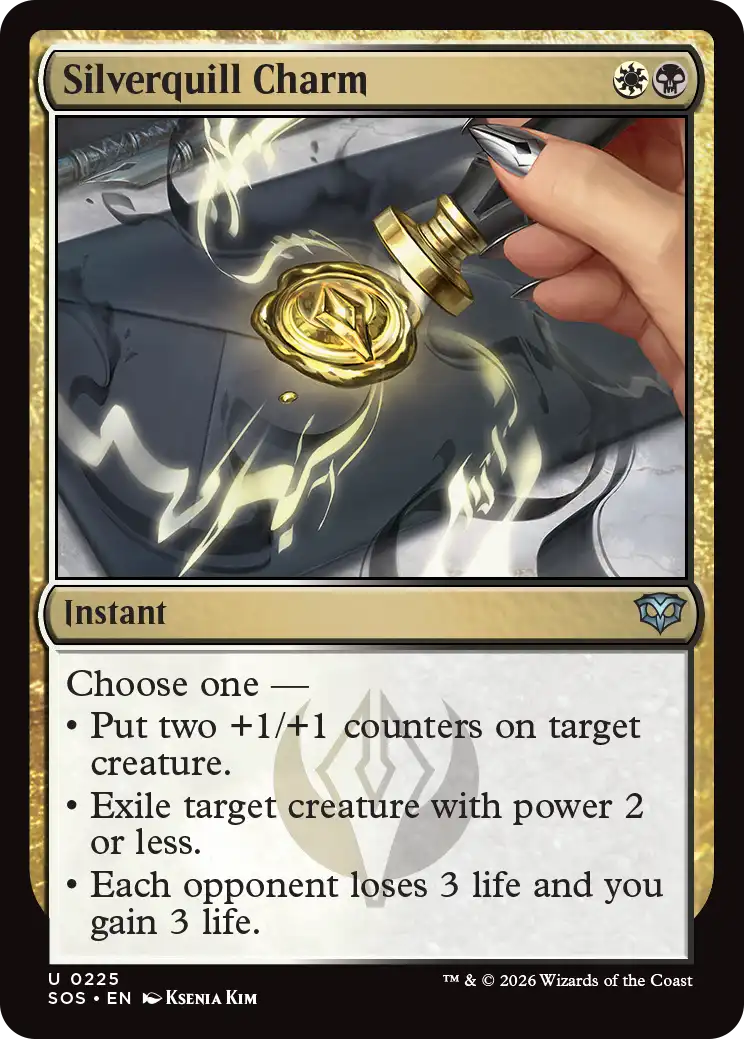
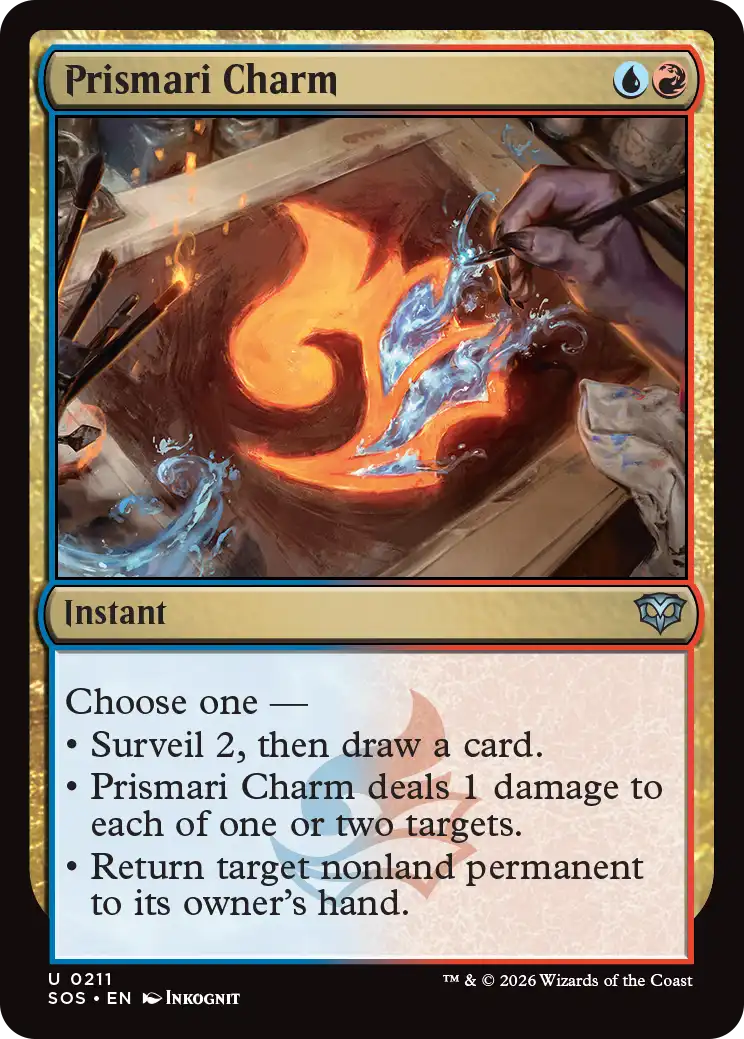
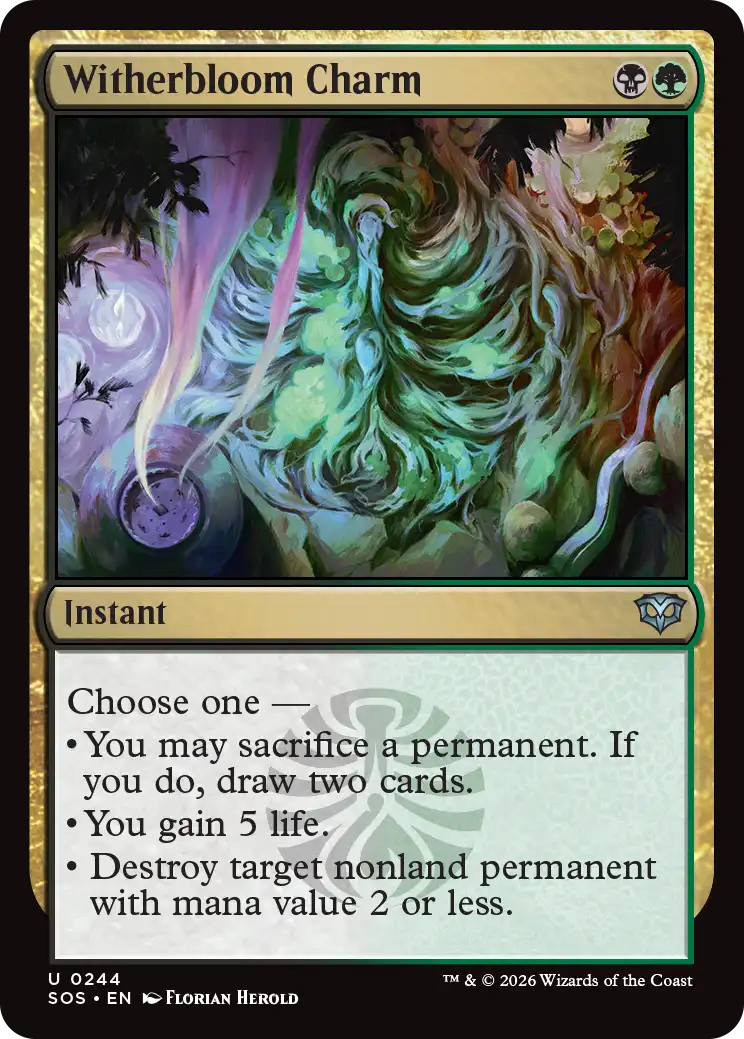
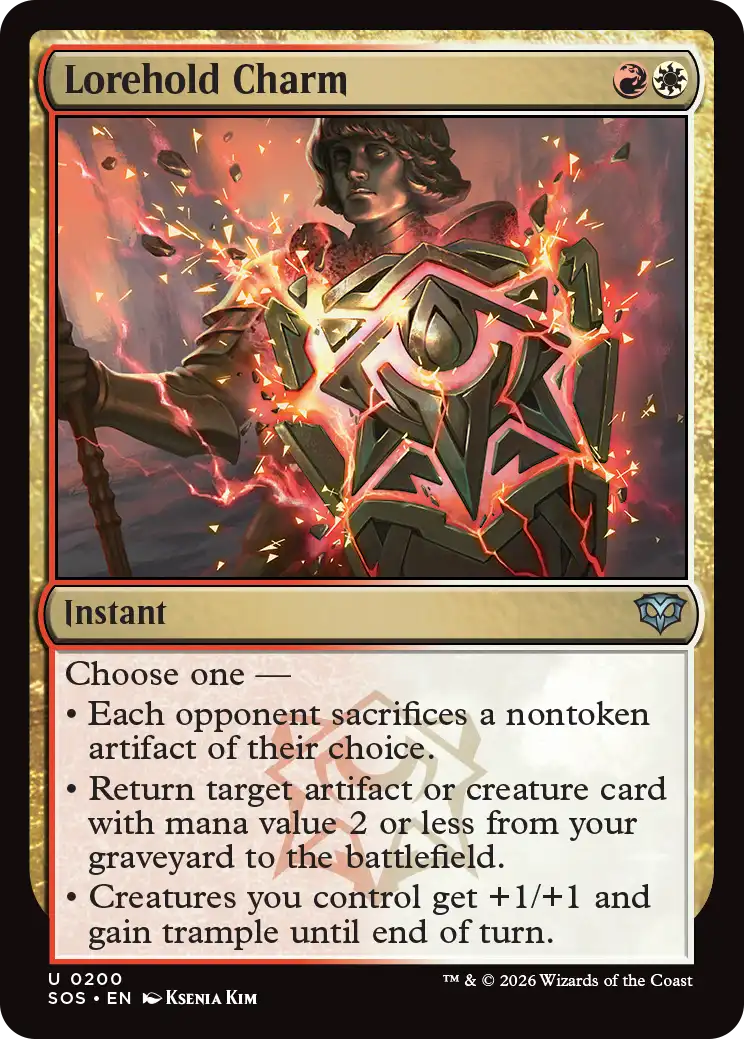
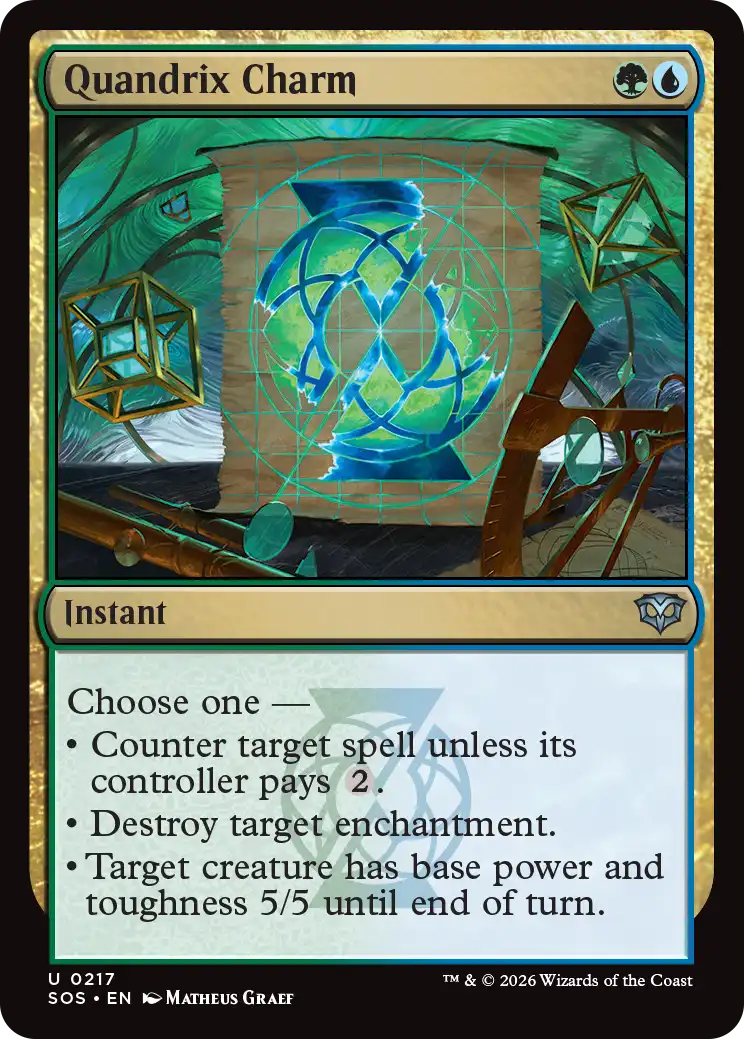
Some of the most buzz I've seen so far has surrounded the charm spells for each college that were partially spoiled last week. At a guaranteed two mana a pop, these spells strive to emulate the successful cycle of charms from Return to Ravnica, a type of spell with its origins in the Mirage set of yesteryear (maybe yesteryesteryesteryear). From a perspective of power level, these charms may just check that box. For once, I actually find it difficult to identify an effect on any one of these charms that seems especially situational or difficult to use effectively. I would keep an eye out for these charm spells in your prerelease kit, as I expect that these charms will become highly-sought-after staples to go in a huge variety of strategies that include these colors.
Mascot Mummery
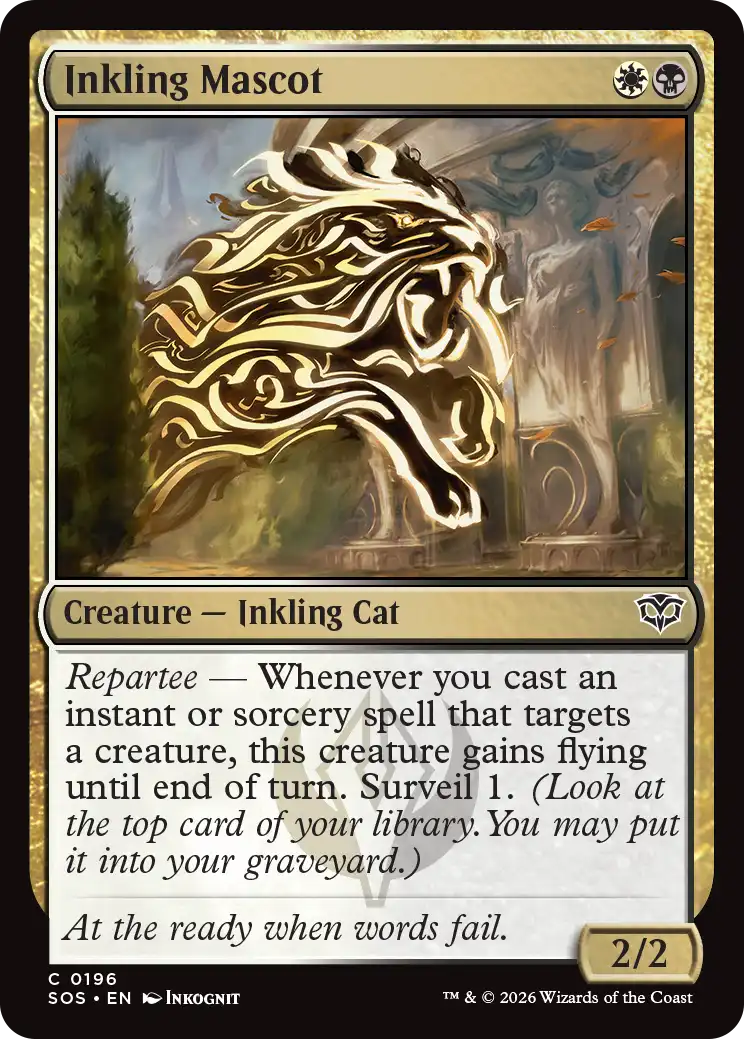
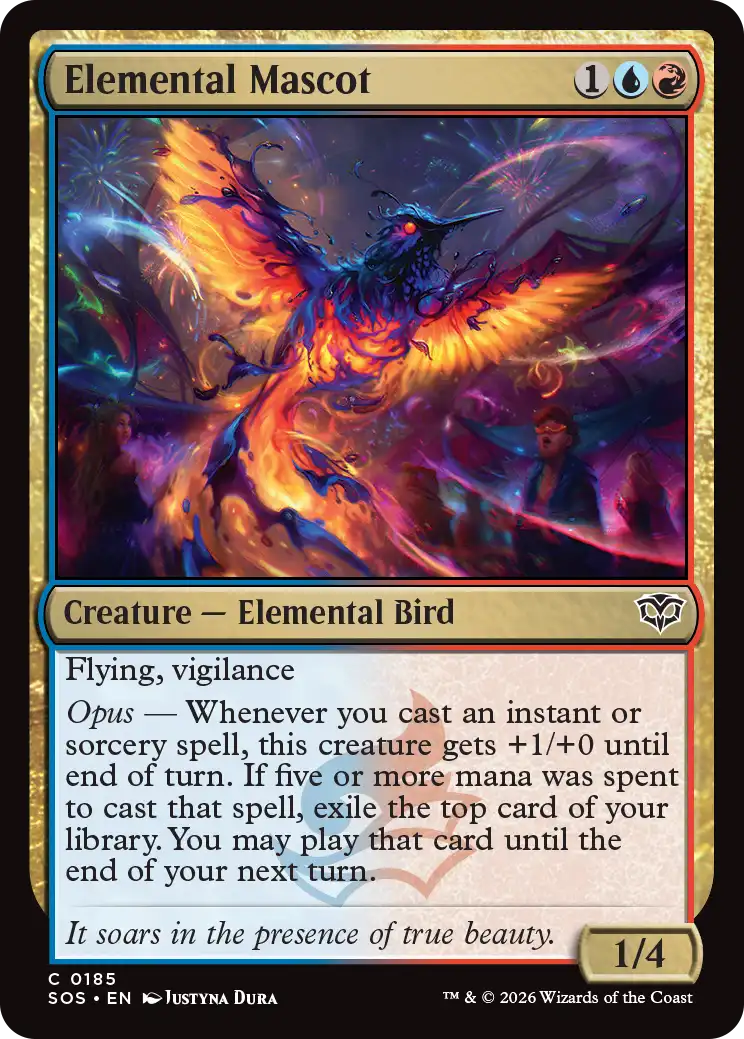
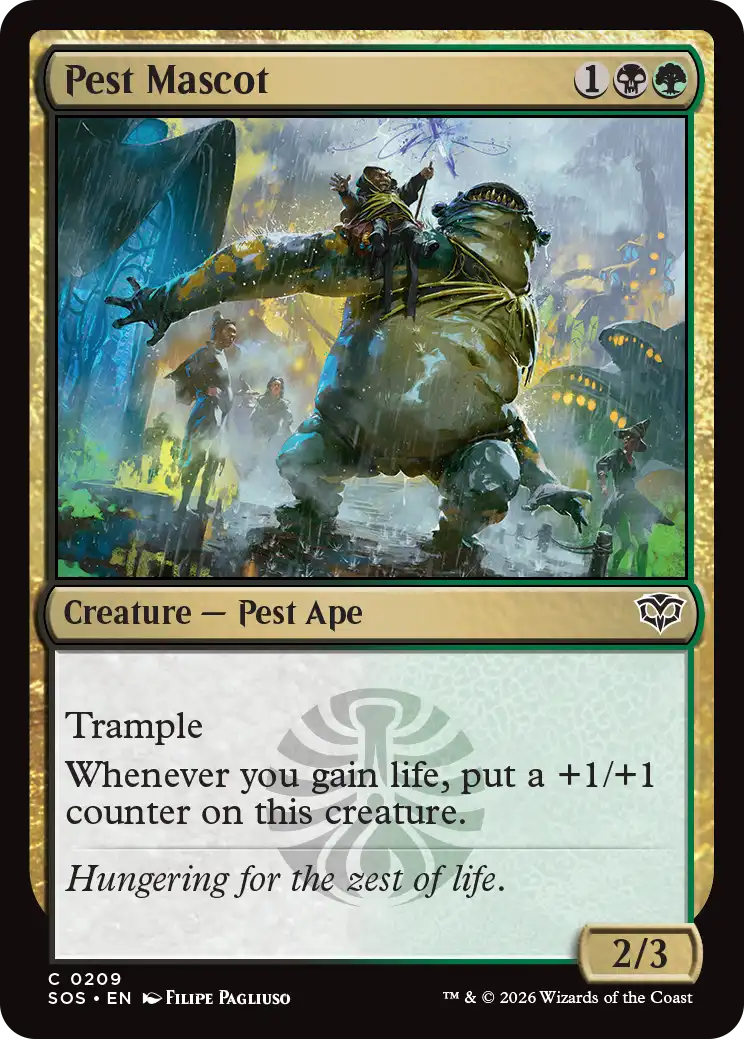
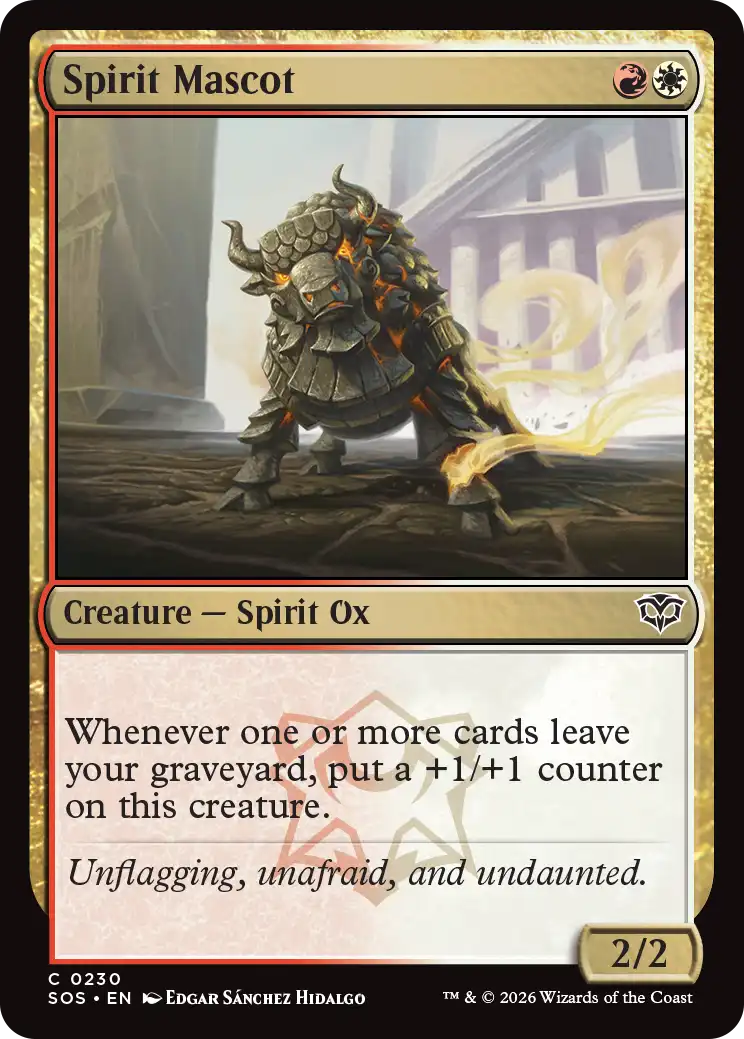
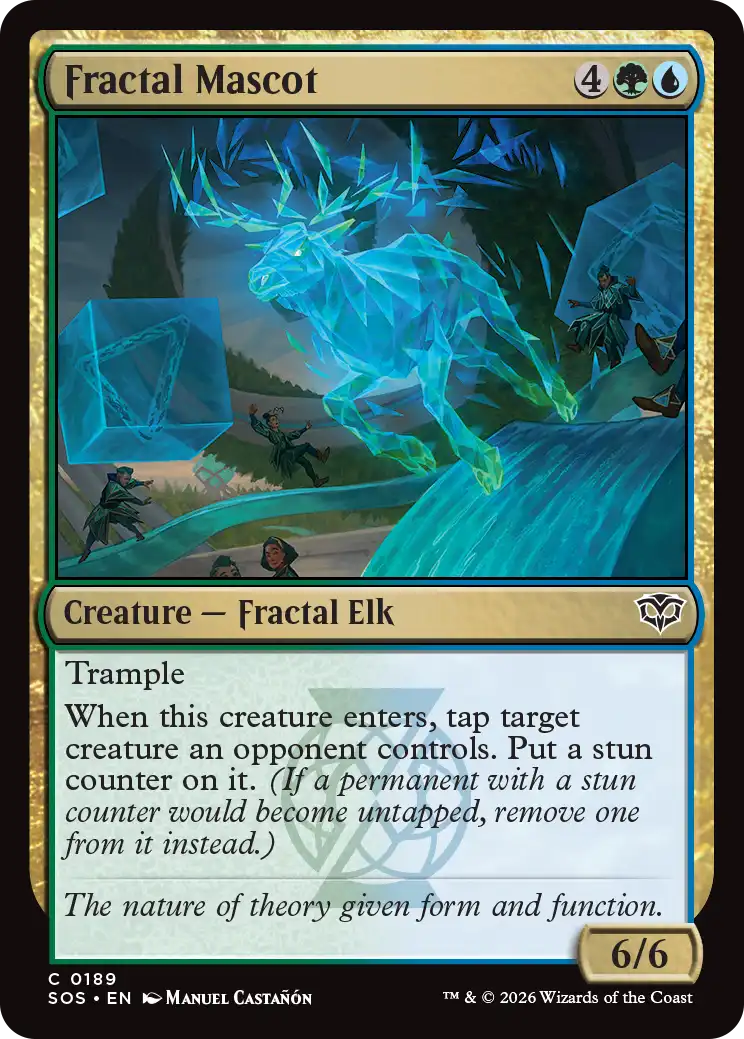
In a fun little retread of an original Strixhaven trend, the unique mascot for each college has been upgraded from token form into tangible nontoken creature spells. They're mechanically cutesy and look way more cool and fun than a pet owl. Each of the mascots interacts with the college mechanics in some way, except for Fractal Mascot, which for some reason stuns your opponent's creatures. Well, at least the word "counter" is relevant.
Shifting Paradigms
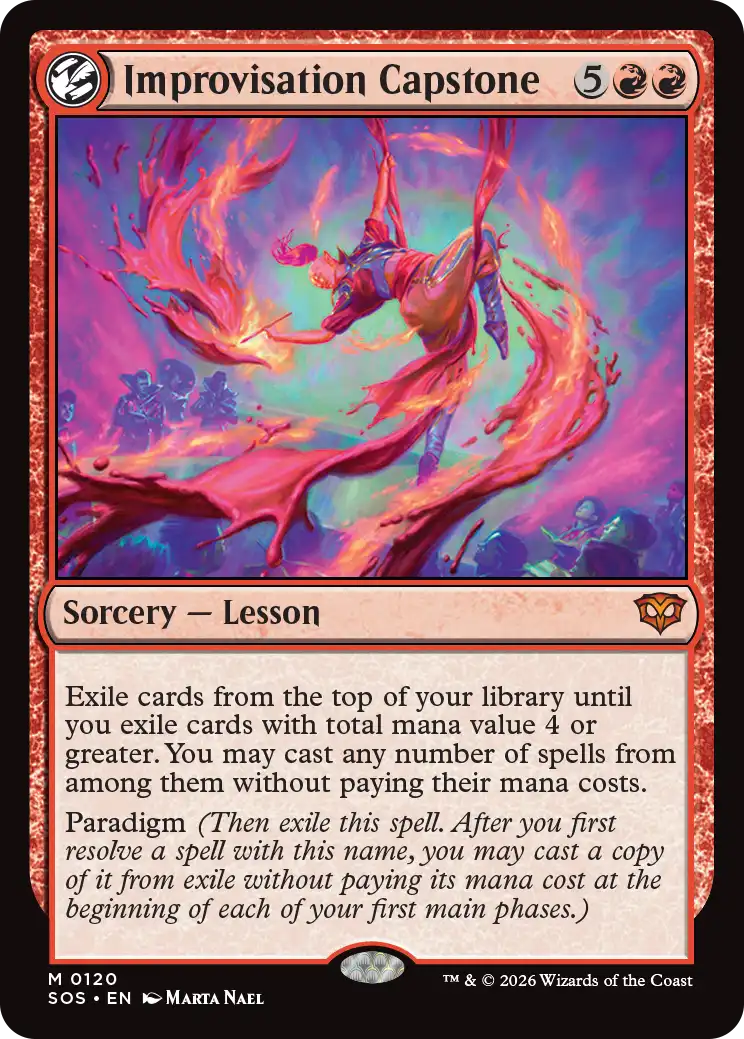
One of the most interesting developments to come from Secrets of Strixhaven is an unexpected fix to an old and truly miserable keyword from Magic's heyday. As a bizarre callback to Saviors of Kamigawa of all things, paradigm is a reinvention of a cycle of spells sporting epic, a keyword ability that essentially replaced the entire rest of your game with a single spell once a turn. Sure, you could still activate abilities of permanents that might copy a spell, but for the most part you were pretty much locked out of the game. Paradigm modernizes the language of the rules text and fixes that game-breaking restriction, allowing you to permanently recur the same effect for the rest of the game, barring Riftsweeper shenanigans, to accrue more and more value.
The Slow Lands Reprinted
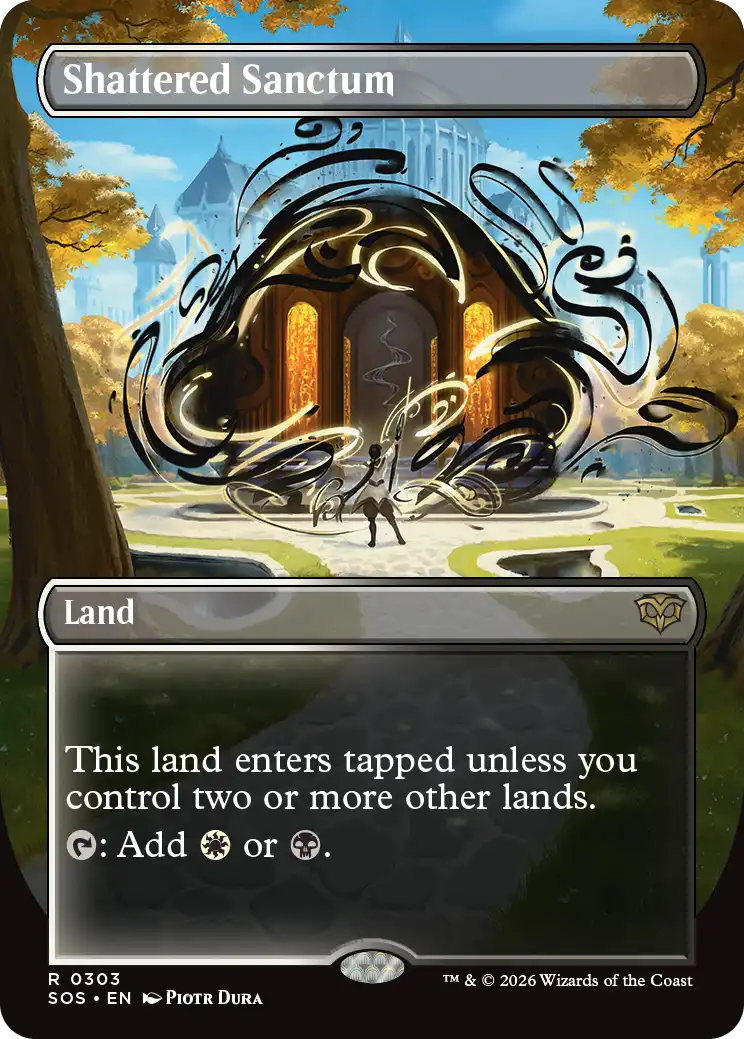
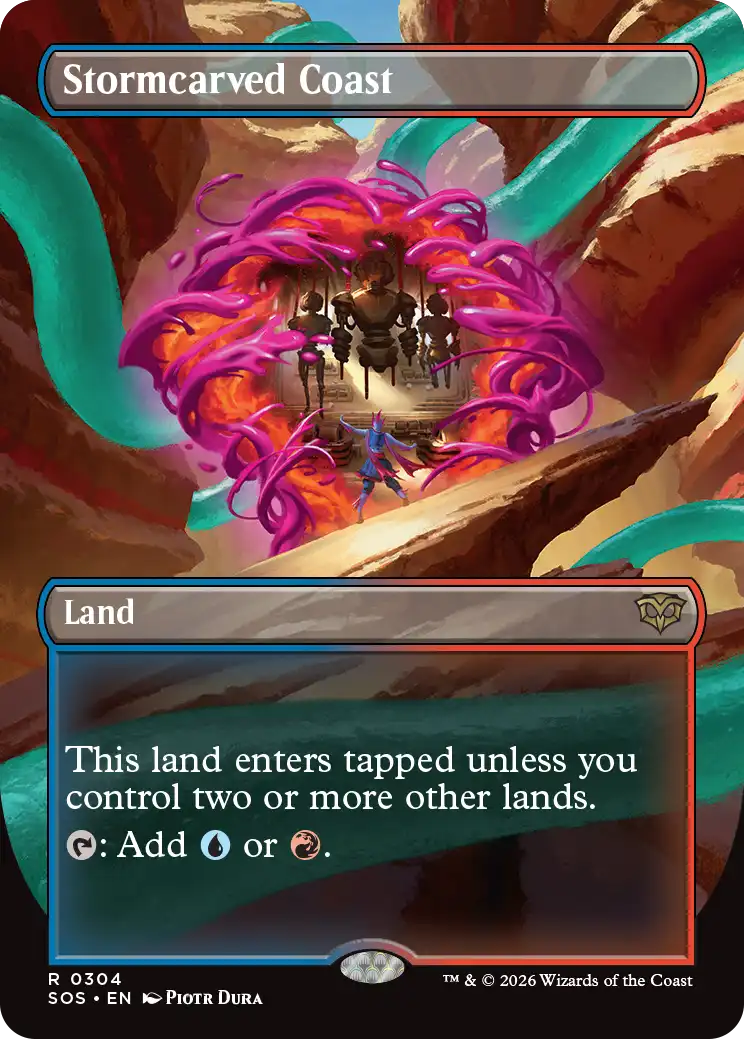
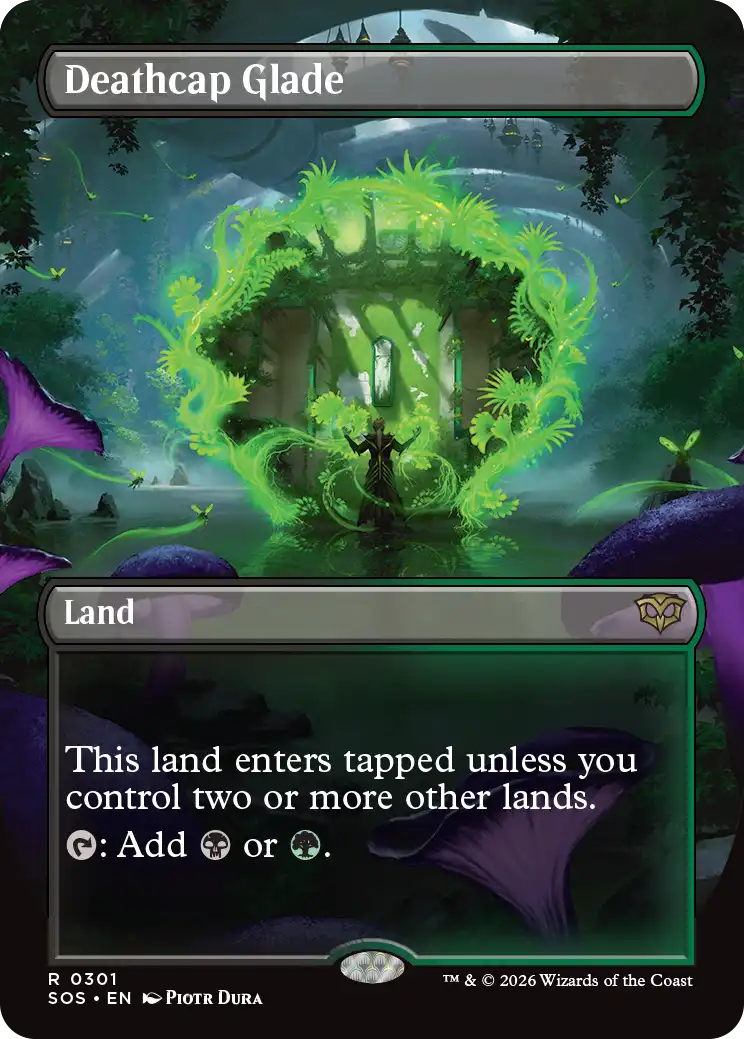
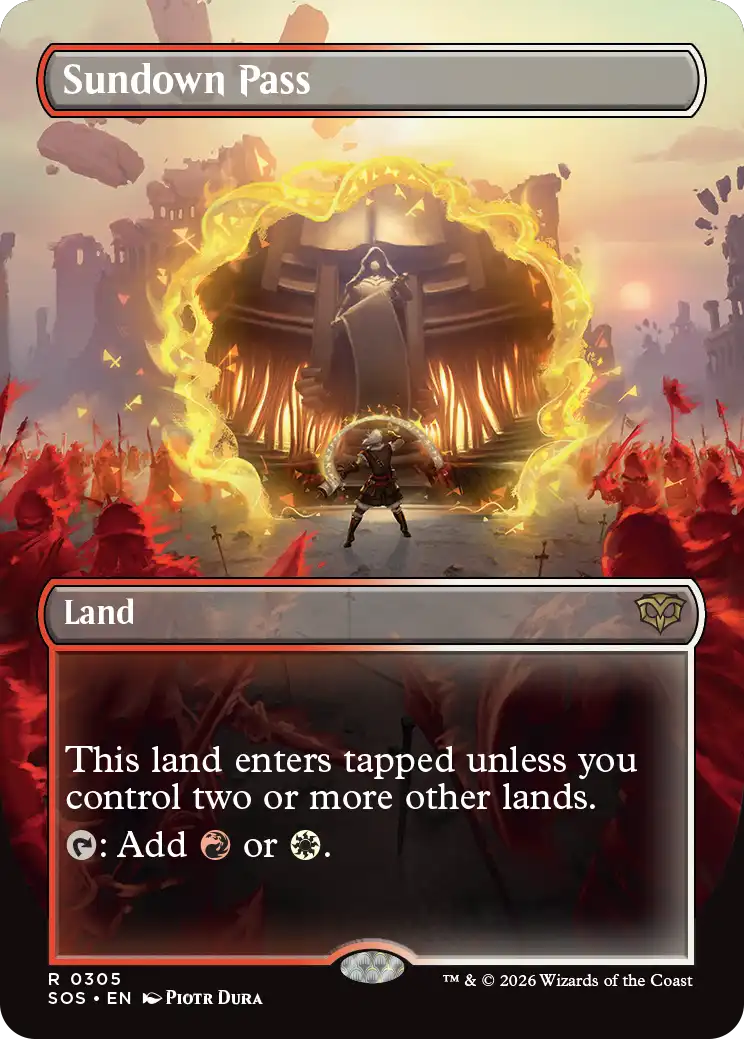
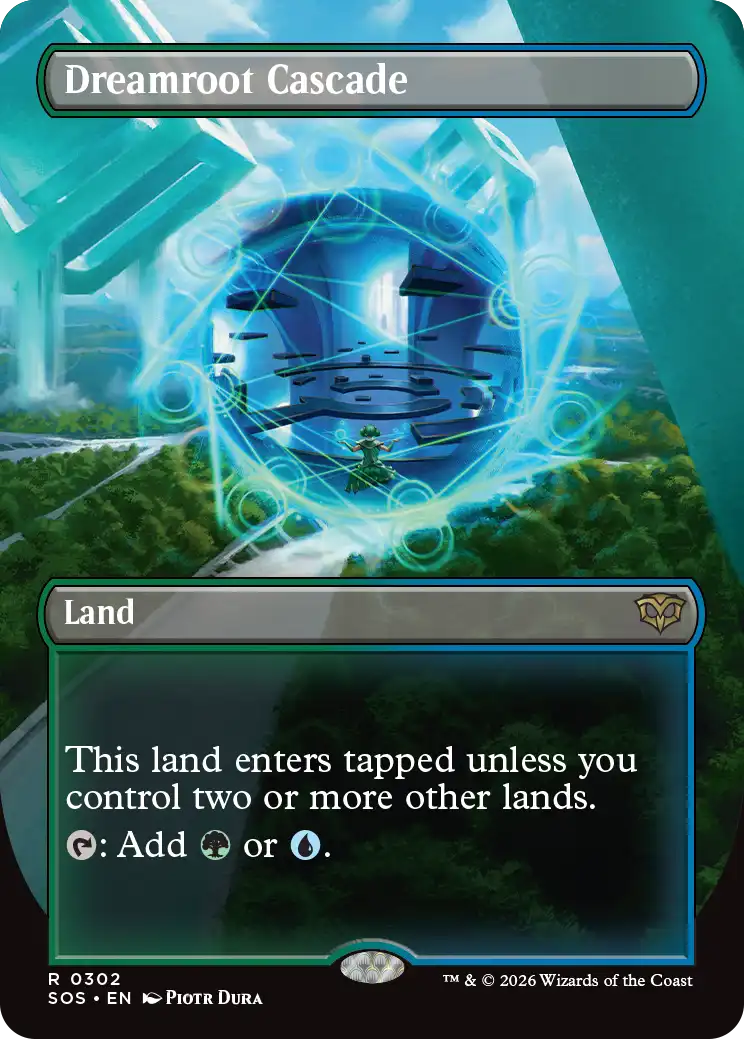
In the realm of reprints, we got confirmation that the so-called "Slow Lands," which require two additional lands to exist on board to come in untapped, are being reprinted into Standard. While these lands don't offer the same consistency as the Verge cycle, they are nonetheless an affordable option for players on a tighter budget to include in their decks and not have to sacrifice much in the way of speed and variety in their mana bases.
Looking Ahead
Over the next several days, various content creators will continue to put out spoilers and previews for Secrets of Strixhaven on several platforms. We here at EDHLAB can't wait to see what else is in store from this set, and we'll be putting out coverage after every day here on our blog. If your head is already spinning from just today's volume of new information, sign up for our mailing list! Next week we'll be sending out a newsletter summing up the spiciest Strixhaven spoilers, talking about thaumaturgic tricks, and detailing delightful new deck techs. Come join our Discord server and have a chat with us about your favorite new cards!
Continue Improving Your Commander Gameplay
For tools designed to help you build smarter Commander decks, analyze synergy, and refine your strategy, visit:

When Ben Alban-Berth isn't taking awkward promotional selfies and casting Craterhoof Behemoth on empty boards, he plays roguelikes and Dota 2 and promises people that he will finish his novel soon (he won't).
EDHLAB does not support the use of generative AI as a means to produce content. Any articles you read on our website will never incorporate generative AI for written or visual materials.