Bracket System Controversies and Hot Takes
What counts as a combo? Does Bracket 1 exist? Is the deck that just pubstomped me a cEDH deck? I weigh in on these controversial questions and more!


The Commander Brackets system is officially still in beta, but even when it's fully released people will debate the finer points about what's appropriate for which bracket. I reviewed some of the biggest controversies in the bracket system's current iteration and decided to weigh in.
Some Commanders Don't Belong in Some Brackets
Meet Vivi Ornitier:
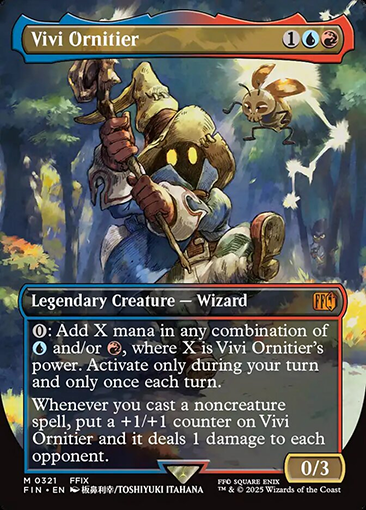
As a popular and powerful Spellslinger commander who is both a mana generator and a damage dealer, Vivi is generally not appropriate in Brackets 1 or 2 due to power level concerns. The incidental value of having Vivi on the battlefield is just too much for an average pod to handle, and with a few powerful synergy pieces, this little troublemaker is almost unstoppable.
Brackets are made to help guide "untrusted play" — in other words, games with strangers at an LGS, at a convention, or in an online multiplayer lobby. Your friend can build a Bracket 2-appropriate Vivi deck with a lot of care and attention towards making it fair for the table, but someone you just met assuring you, "It's not one of those Vivi decks" might just let you down, so proceed with caution.
Other commanders who should be kept to Bracket 3 and above are too numerous to list here, but I'd like to give dishonorable mentions to The Ur-Dragon, Edgar Markov, Korvold, Fae-Cursed King, and Voja, Jaws of the Conclave. These are decks that, with the barest additional synergy pieces, can spiral out of control.
A Combo Means Ending the Game
The consensus from many sources like various Magic-related subreddits, the Wizards official Discord, and my own discussions with other long-term players is that a combo is not a combo unless it effectively ends the game.
EDHREC is an excellent site with great statistics on card usage rates in different decks. They decided to try and solve that "What Bracket does each combo belong in?" question by running a poll. Did you hear about the poll? Did you participate in it? I didn't know it existed until it was long over. The poll turned up some impossible and absurd results. Here's one:
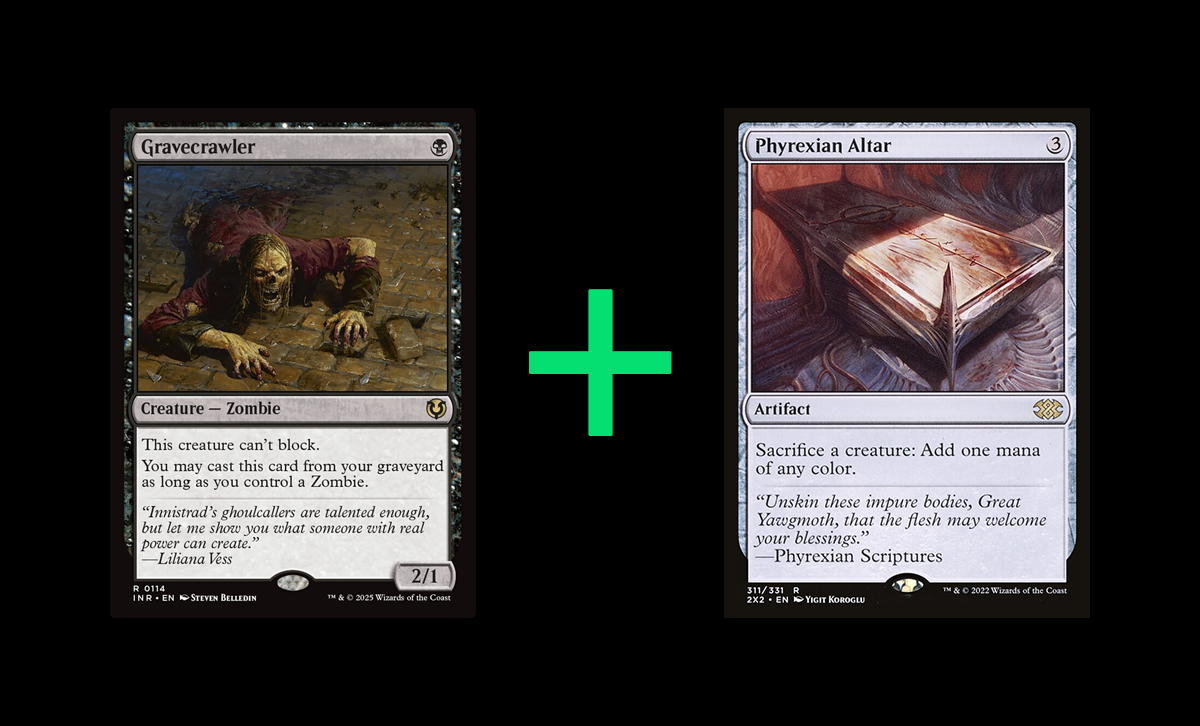
Do these two cards combo together? Let's game it out: you play Gravecrawler. Then you play Phyrexian Altar. Then you sacrifice Gravecrawler to Phyrexian Altar, generating one black mana. Was that a combo? According to EDHREC, it was an early two-card combo and can only be played in Bracket 4 and above. In reality, you need both another zombie in play and a pay-off for infinitely casting and sacrificing your Gravecrawler. There are many zombies and many pay-offs (and a small handful of zombie pay-offs) that could work in this combo, but the real point is that it takes three to four cards to execute, not two.
It seems pretty clear to me that there was a bias in their sample group against combos in general, and so there are many baffling results like that one.
From what I've read and heard from other players, the signpost for an appropriate two-card combo in Bracket 3 is this:
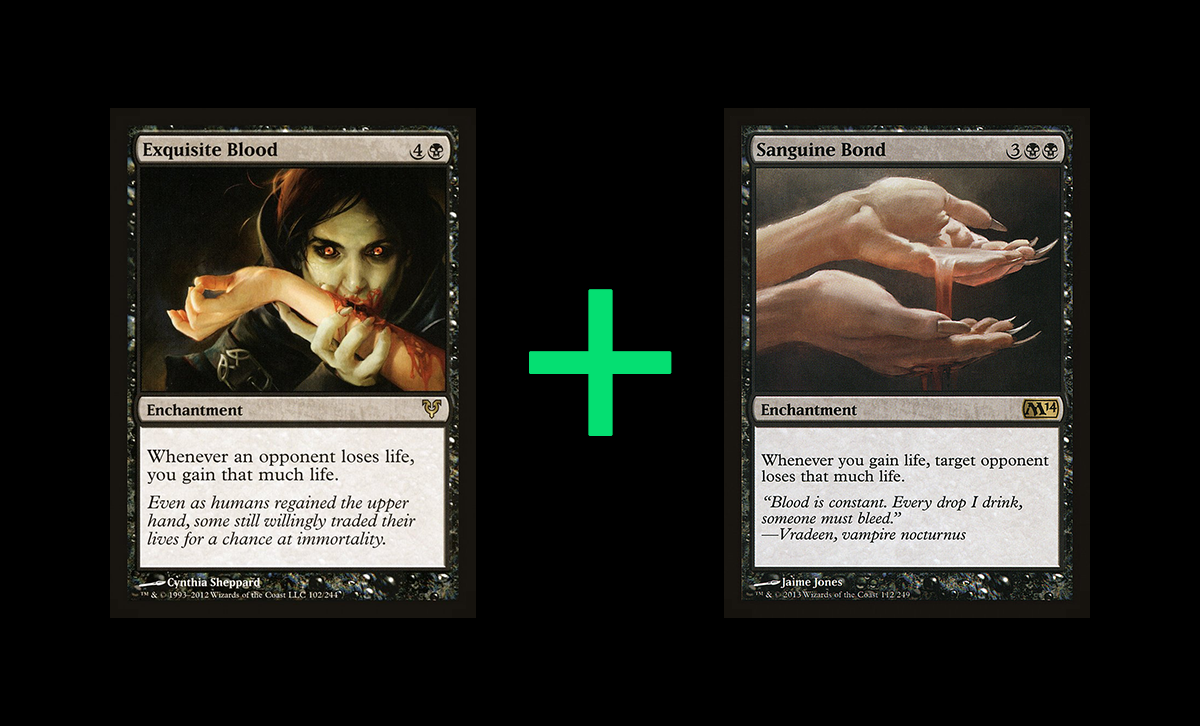
Exquisite Blood and Sanguine Bond both cost five mana, so unless it's late in the game, you won't be able to cast both on the same turn. After they're in play, there's a pretty trivial requirement of either gaining one or more life or making an opponent lose one or more life, so this is effectively a two-card combo. But the consensus among Bracket 3 players is that it's completely valid in Bracket 3 because it is sufficiently late-game and telegraphed.
Variations on this combo need to be scrutinized a little. For example, instead of Sanguine Bond you could run Starscape Cleric, a two-mana version of a similar effect that will combo with Exquisite Blood and end the game. This is generally not okay for Bracket 3 games (always ask the table in your pre-game discussion if you're not sure). The key difference of shaving three mana off of one of the two combo pieces makes it much easier to cast on an early turn.
Turns to Win is Better than Turns to Lose
The October 2025 update to the Commander Brackets beta introduced the terminology "turns before you win or lose" to bracket definitions. Previously they said, regarding Bracket 2 for example, that Bracket 2 games "generally go nine or more turns." This change has been universally criticized to the point that I don't think I've seen anyone defend it online. Some strategies, like Voltron, rely on being able to take out one player early, because they can't win the game in one single turn and it will take them three turns to kill three opponents.
Some decks deal damage to themselves for on-board value, like a Rowan, Scion of War deck draining themselves to below 20 life in the early game. Are they untouchable because they used their life as a resource? That wouldn't make sense. It's an abusable rule that tips the favor in the direction of some decks over others, and thus most people disregard it and continue with "turns to win" as a rough — not precise — expectation of when a game could end.
Infinite Extra Turns Can Sometimes Just Be a Combo
While Bracket 3 specifies "NO Chaining Extra Turns," most players understand that having a way to infinitely chain extra turns — so long as you have an alternate win condition that you can achieve — is the same as having a game-winning combo. The issue with chaining extra turns is that sometimes they're not guaranteed to infinitely combo off. Instead they are likely to draw a new extra turn spell, or another way to cast their extra turn spell from the graveyard, and they carefully play through many turns in a row while the rest of the pod has mentally checked out many turns ago.
As long as you can say, "If no one can stop me from chaining extra turns I have a combo to win the game," then an infinite turn win condition is okay in many players' books. To be safe, clear this one with the table if your deck has an infinite turns combo.
Bracket 1 Is Real
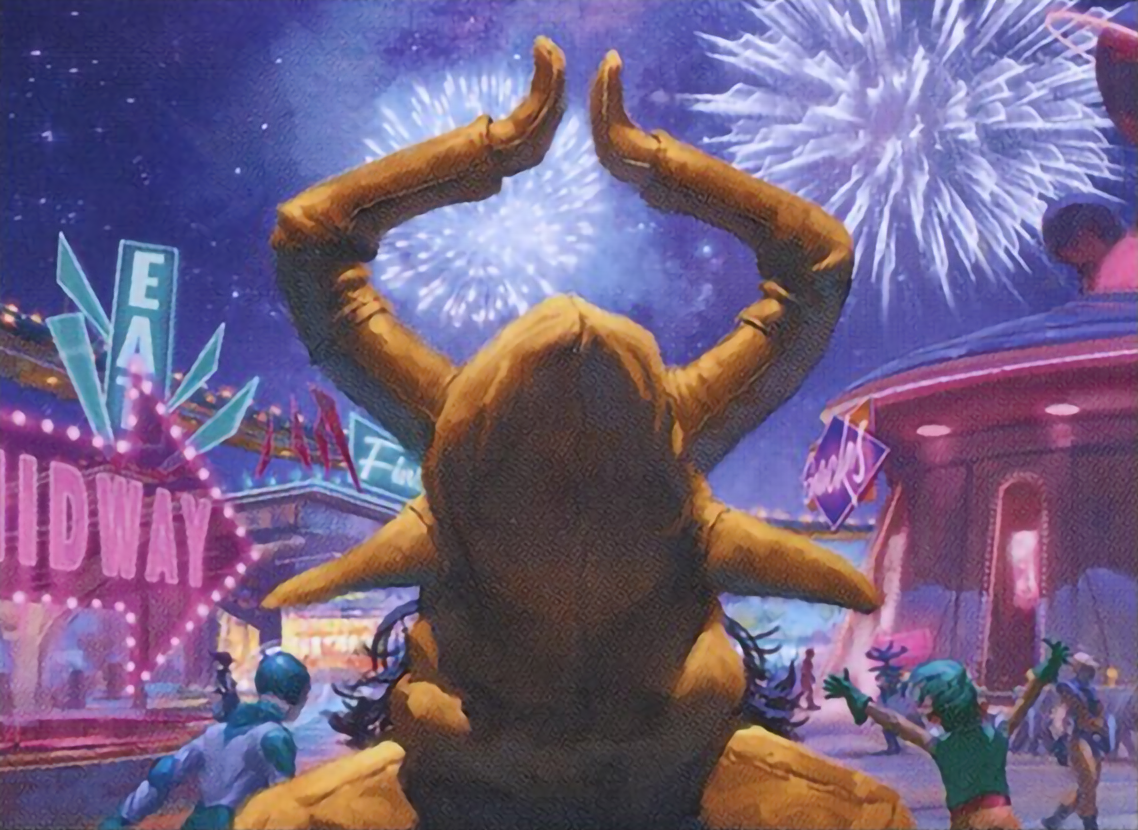
You might not have seen it played, its definition may be inscrutable and vague, but it's real. Bracket 1 is not like any other bracket. Bracket 1 is where you're most likely to see a banned card because it won't be used in the way that led to its banning. It's for decks that don't prioritize winning but prioritize themes, stories, art, jokes, chaos, anything that sparks joy. It's also where you might see illegal Un-set cards.
A Bracket 1 deck is a fun and useful thing to have for when you want to break up the pace of your normal Commander game night. Just don't expect to play it often, or repeatedly, as they usually don't function very well on a gameplay level and their gimmicks can get old.
Every cEDH Deck Can Pubstomp, But Not Every Deck That Pubstomps is a cEDH Deck
A competitive EDH (cEDH) deck is purpose-built to play against other cEDH decks. Flusterstorm is a powerful card, but how often will it be relevant in a Bracket 2 game? It often becomes a weaker version of Force Spike in games where people primarily cast creature spells. Yet nearly all cEDH decks with a blue color identity run Flusterstorm.
A cEDH deck at a table of Bracket 2 decks will almost always be able to find a combo win on their second, third, or fourth turn, but I can certainly imagine a world where a tuned Bracket 5 Magda, Brazen Outlaw deck loses to a table of precons because the other players know to remove Magda every time she's cast. At some point, the Magda deck would be unable to get off the ground and the combat damage pressure would start to build up.
The most common win condition in cEDH, the infamous Thassa's Oracle plus Demonic Consultation combo, requires a counterspell or some creative way to force the combo player to draw at instant speed to thwart it, but that player probably has one or two free counterspells ready as backup when they decide to go for the win.
What players most often mean when they accuse a deck of being cEDH is that the deck didn't meet their expectations for the game. That doesn't mean the accused is automatically guilty. Sometimes the accuser is mistaken and their deck just didn't perform well due to variance or their own deckbuilding. Bad beats happen, and so do power level mismatches, but that doesn't make a deck cEDH.
Discourse Is Part of a Healthy Game
A lively and opinionated community is part of Magic's charm. Whether my takes resonated with you or grinded your gears, keep the conversation going on social media, with friends, and share your feedback with Wizards any chance you get. That's how community tools such as the Commander Brackets system improve.
Did any of my takes miss the mark? Do I represent everything that's wrong with Commander players today? Come let me know in the EDHLAB Discord!
EDHLAB maintains a strict policy against the use of generative AI in the production of creative media. All blog articles and images hosted by EDHLAB are made without the use of generative AI.